

Politics
INEC Continues Efforts To Ensure Security Of Infrastructure Ahead 2027 Elections
and improve institutional preparedness

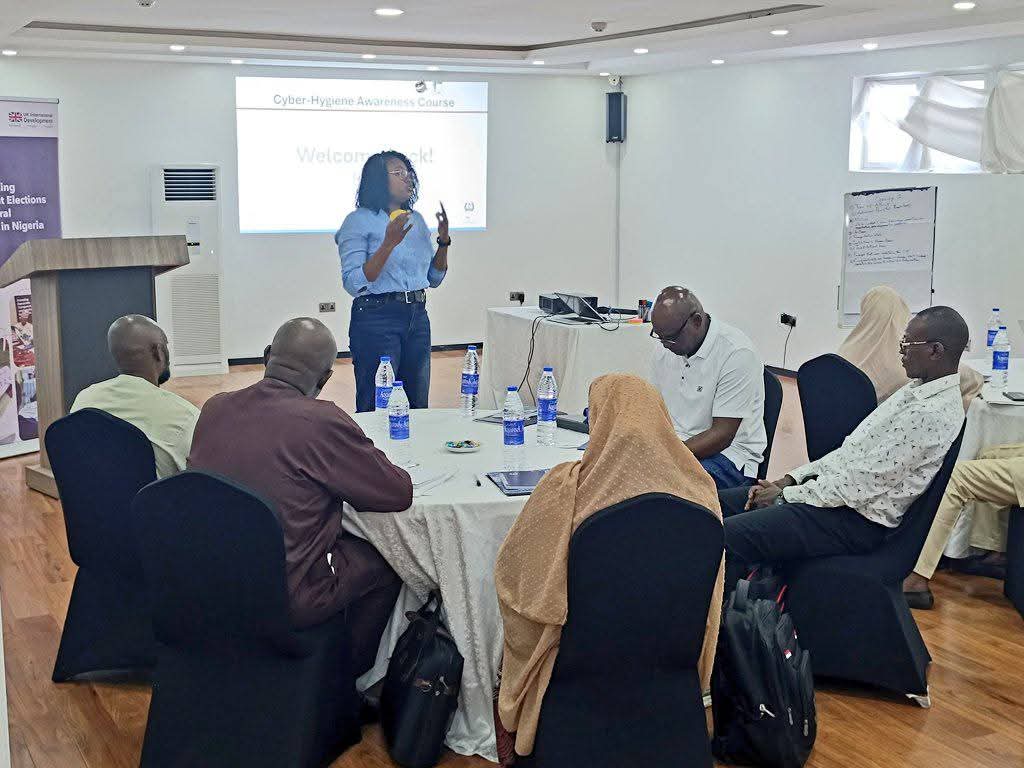
The Independent National Electoral Commission (INEC), in collaboration with the International Foundation for Electoral Systems (IFES), on the second day of its Cyber Hygiene Awareness Technical Workshop focused on practical measures aimed at strengthening cybersecurity practices among staff of the Commission.
The training forms part of INEC’s ongoing efforts to enhance the security of its digital infrastructure and improve institutional preparedness ahead of the 2027 General Elections, particularly as the Commission continues to deploy technology in the management of Nigeria’s electoral process.
Activities for the day commenced with a recap of the key lessons from Day One of the workshop, followed by an overview of the programme for the concluding sessions. The review session allowed participants to reflect on previously discussed cybersecurity concepts while setting the context for the more practical and operational topics scheduled for the day. Facilitators emphasised the importance of continuous learning and awareness in ensuring that all staff remain vigilant in safeguarding the Commission’s digital systems and sensitive information.
Participants were subsequently taken through a session on Cybersecurity in the Workplace, with particular emphasis on the Clear Desk and Clear Screen Policy. The session highlighted the need for staff to maintain a secure working environment by ensuring that confidential documents, login details, and sensitive information are not left exposed on desks or computer screens. Facilitators explained that simple practices such as locking computer screens when away from workstations and properly storing sensitive documents play a critical role in preventing unauthorised access to information.
Another key session during the day focused on Account Security, where facilitators stressed the importance of creating and maintaining strong passwords as a first line of defence against cyber threats. Participants were also introduced to the importance of using Two-Factor Authentication (2FA) as an additional layer of protection for official systems and digital platforms used by the Commission. The discussion highlighted how combining strong passwords with multi-factor authentication significantly reduces the risk of unauthorised access to critical systems and official data.
The workshop also featured dedicated sessions on the security of mobile phones and computers, recognising the increasing role of these devices in both personal and official communication. Participants were guided on safe usage practices, including securing devices with passwords or biometric authentication, avoiding suspicious links or applications, and ensuring that devices are regularly updated to protect them from emerging cyber threats. Facilitators emphasised that maintaining the security of devices used for official work is essential to protecting the Commission’s broader technological ecosystem.
A major highlight of the day was the session on Attack Surface Mapping, where participants were introduced to the concept of identifying potential entry points through which cyber attackers could attempt to gain access to digital systems and networks. The session provided insights into how organisations can systematically assess their digital infrastructure, identify vulnerabilities, and implement appropriate safeguards to mitigate risks before they can be exploited.
IFES
UK in Nigeria
Ifes Nigeria