

Business
French Foreign Minister Visits BUA Booth At PIAS 2026, Signalling Deeper Agro-Trade Ties
reinforced growing commercial momentum between Nigeria and France

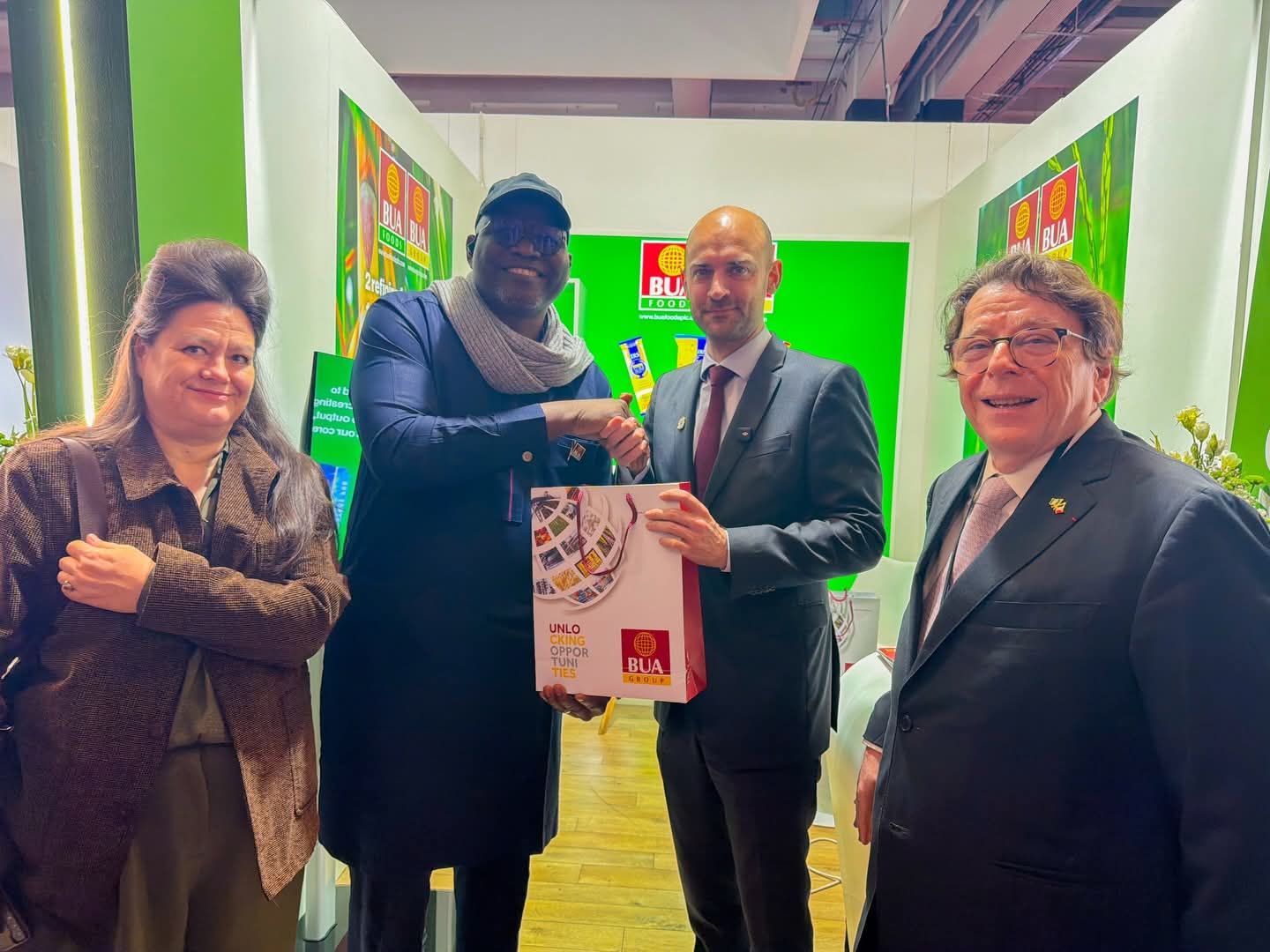
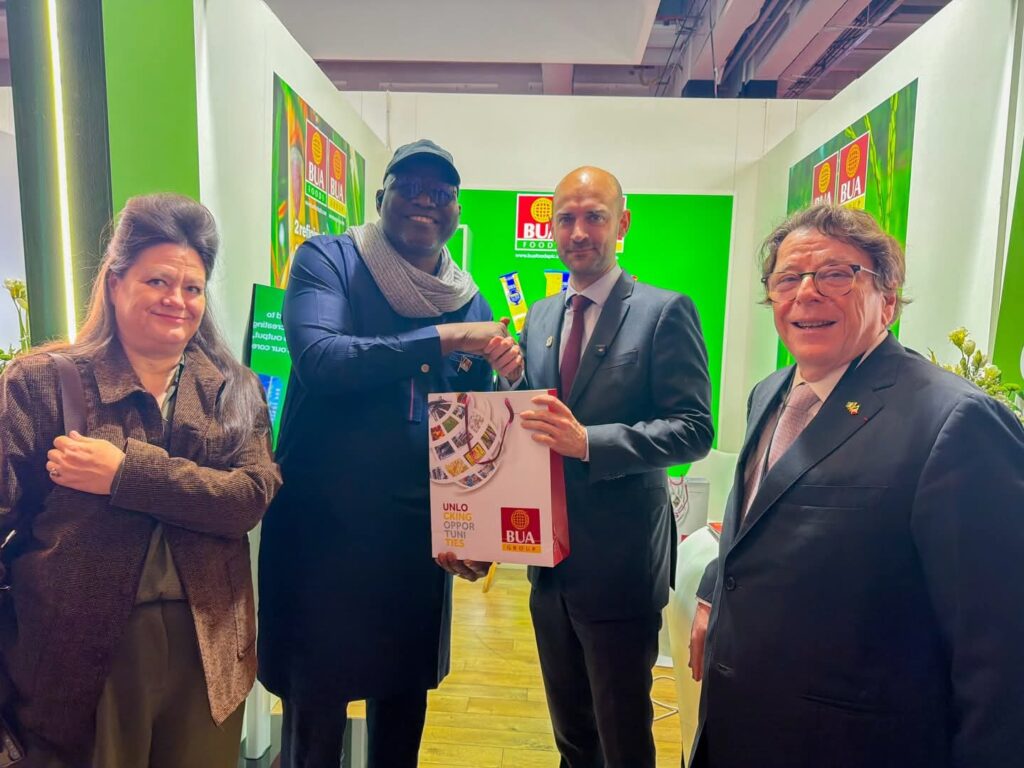
The visit of France’s Minister for Europe and Foreign Affairs, Jean-Noël Barrot, to the exhibition booth of BUA Group at the ongoing Paris International Agricultural Show (PIAS) 2026 has reinforced growing commercial momentum between Nigeria and France in the agro-industrial space.
Barrot, accompanied by Emmanuelle Blatmann, Director for Africa and the Indian Ocean at the French Ministry for Europe and Foreign Affairs, engaged senior executives of BUA during a tour of the company’s stand, underscoring Paris’ increasing interest in private-sector-led partnerships across Africa’s food value chain.
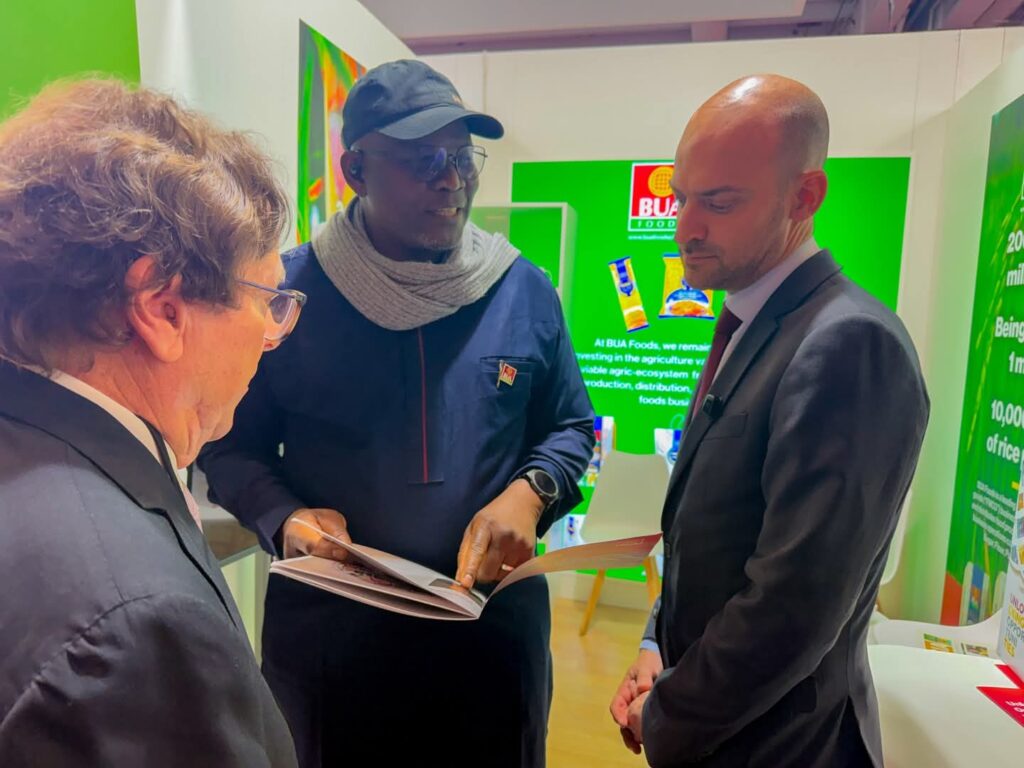
The presence of the French foreign minister at the booth of one of Nigeria’s largest food and manufacturing conglomerates signalled more than diplomatic courtesy.
It reflected a broader policy thrust toward strengthening agro-industrial cooperation, trade flows and sustainable food systems between Europe and Africa at a time when global supply chains remain under strain.
Industry observers say the optics are significant.
France has been seeking deeper commercial engagement with Africa beyond traditional development finance frameworks, while Nigerian conglomerates are positioning themselves as export-ready players capable of meeting international quality standards.
The engagement at PIAS — one of Europe’s largest agricultural exhibitions — offered a strategic platform for that alignment.
Officials at the booth described the visit as “a strong affirmation of the role of private enterprise in advancing cross-border agricultural collaboration.”
They noted that discussions centred on agro-processing capacity, food security, and the long-term sustainability of supply chains linking African producers to European markets.
Also present during the visit were Engr. Ayodele Abioye, Managing Director of BUA Foods, and Jean Haas, Secretary-General of the France Nigeria Business Council, reflecting the blend of corporate and institutional actors shaping the next phase of bilateral trade engagement.
For BUA, the diplomatic spotlight comes as it continues to scale investments in food processing and agro-industrial capacity, positioning itself as a key private-sector vehicle in Nigeria’s drive for food self-sufficiency and export competitiveness.
For France, the visit aligns with a strategy that recognises Africa’s expanding consumer markets and the need for diversified food partnerships amid shifting geopolitical and climate realities.
While no formal agreements were announced at the exhibition stand, the symbolism was clear. As one participant put it, the engagement “signals a shared commitment to building resilient food systems through investment, innovation and trade.”
At PIAS 2026, diplomacy and enterprise converged — offering a glimpse into how statecraft and corporate ambition are increasingly intersecting in the evolving architecture of Africa–Europe agro-trade relations.