

Business
Tinubu Backs ₦4tr GENCOs Debt Clearance, Orders Verification Of Claims Dating Back To 2015
federal government has commenced the process of verifying and validating

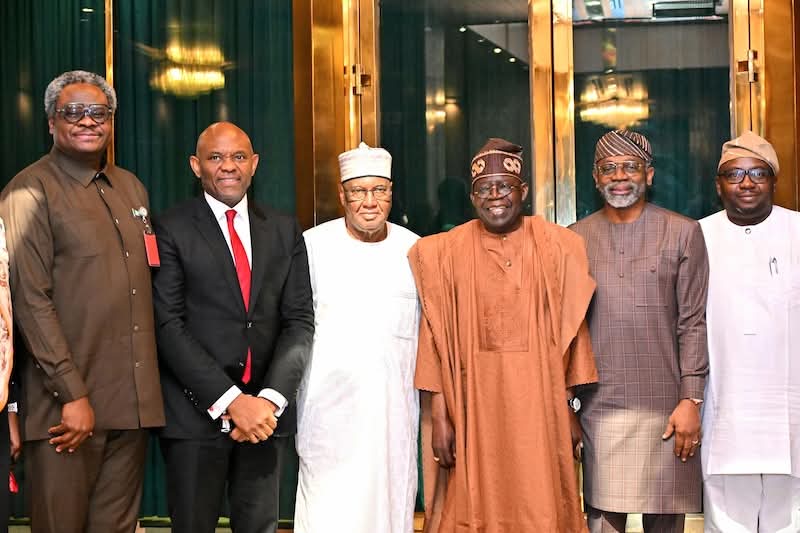
President Bola Tinubu has assured power generation companies (GENCOs) that the federal government has commenced the process of verifying and validating debts totalling ₦4 trillion, accumulated since 2015.
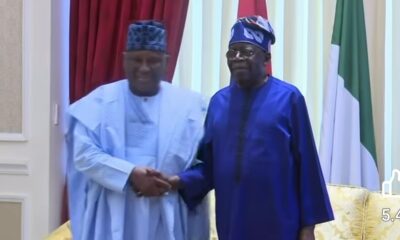
The President, who met with members of the Association of Power Generation Companies at the Presidential Villa in Abuja on Friday, said his administration was committed to resolving the decade-long liquidity crisis in the power sector.
He appealed to the GENCOs to exercise patience as government agencies work to reconcile inherited liabilities dating back to previous administrations.
“I accept the assets and liabilities of my predecessors, and there is no question about that,” Tinubu said. “But that acceptance must be on credible grounds. I need to wear the audit cap of verifiability and authenticity.”
The meeting, led by Col. Sani Bello (rtd), was also attended by top government officials, including the Chief of Staff to the President, Femi Gbajabiamila; Minister of Power, Chief Adebayo Adelabu; and Coordinating Minister of the Economy, Wale Edun.
Olu Verheijen, Special Adviser to the President on Energy, said Tinubu had given anticipatory approval for a ₦4 trillion bond programme to address verified debts.
She explained that the debts originated from “unfunded tariff shortfalls and market deficits” that had built up over a decade.
“We have since sat with 27 GENCOs to review their power purchase and gas supply agreements. The GENCOs claimed about ₦4 trillion from 2015 to 2023. Of this, ₦1.8 trillion has been validated so far,” she said.
She added that while the bond programme had been approved in principle, only debts verified through a robust audit process would be included in the eventual settlement to be issued by the Debt Management Office (DMO).
President Tinubu urged financial institutions not to move against indebted GENCOs with foreclosures. “Sharpen your pencils, but keep an eraser handy,” he said. And added, “Let’s persevere together.”
He reiterated his administration’s belief in a market-driven electricity sector, saying longstanding challenges were now receiving deliberate government attention.
“This is a longstanding issue that is now being dealt with. I know how much we’ve been able to save on fuel subsidies. We introduced CNG to bring relief to the people,” the President said.
Power Minister Adelabu praised the President’s reforms, noting that investor confidence had improved under his leadership. He highlighted key milestones, including the Electricity Act 2023—which decentralised the power market—and the launch of a national electricity policy after 24 years.
According to Adelabu, the sector has attracted over $2 billion in private capital and recorded a 70 percent increase in revenue, from ₦1 trillion in 2023 to ₦1.7 trillion in 2024, helping to reduce government subsidies by over ₦700 billion.
He also said the country’s installed generation capacity had grown to 14,000MW, while the highest peak generation of 5,801MW and a record energy delivery of 120,370MWh were recorded on March 4, 2025.
The minister, however, warned that the sector was at risk of collapse without immediate financial support. “The risk of a nationwide shutdown of generation assets is real,” he said, calling for partial debt repayment over a defined period.
Business leaders Tony Elumelu and Kola Adesina also made passionate appeals for urgent intervention, citing threats of bank foreclosures and gas supply issues hampering power generation.
“We’ve come to you as a last hope,” Elumelu told the President. “The generating companies are heavily indebted to banks, and foreclosure threats are real—not because we’re not doing our jobs, but because the system owes us trillions.”
He urged the President to view power as a critical enabler of economic transformation, not an afterthought.
Adesina raised alarm over underperformance in the Afam axis due to unpaid gas obligations and proposed unlocking 800 million cubic feet of gas through NLNG to ease the crisis.
President Tinubu reassured stakeholders of his administration’s long-term commitment to sectoral stability, saying electricity remains central to human dignity and national development.