

Society
Shettima Calls for Stronger International Collaboration to Advance Nigeria’s Human Capital Development
With HCD 2.0, Nigeria is signaling a bold intention

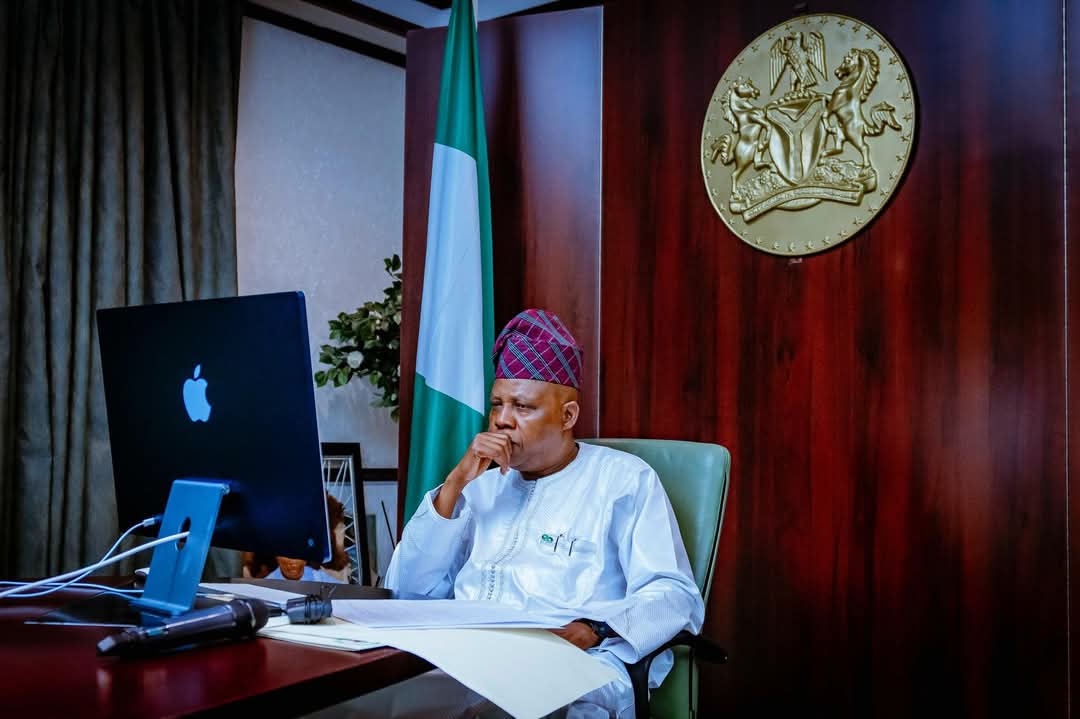
In a renewed push to place human capital at the heart of Nigeria’s national development strategy, Vice President Kashim Shettima has called for stronger international collaboration to support the country’s Human Capital Development 2.0 (HCD 2.0) agenda.
Speaking virtually on Friday night at a high-level roundtable on the sidelines of the 2025 World Bank/International Monetary Fund (IMF) Spring Meetings in the United States, Shettima reaffirmed the administration of President Bola Tinubu’s commitment to elevating Nigeria’s human potential as a foundation for long-term national growth and global competitiveness.
“Our administration recognizes that the true wealth of any nation lies in its people,” Shettima stated during his intervention. “The Human Capital Development 2.0 programme is designed to significantly improve Nigeria’s Human Capital Index (HCI) and equip our citizens to thrive amidst evolving national and global challenges, including climate change, technological disruption, and the demands of a digital economy.”
He emphasized that the success of HCD 2.0 will rest heavily on the adoption of data-driven, evidence-based interventions and the demonstration of sustained political will at all levels of governance.
Shettima noted that while the government is committed to mobilizing domestic resources and policy action, international collaboration remains indispensable for scaling the impact of the initiative.
According to the Vice President, Nigeria’s Human Capital Development agenda envisions a future where investments in education, health, and workforce skills are prioritized as strategic pillars for national prosperity. Through HCD 2.0, the government aims not just to prepare Nigerians for today’s opportunities but to position them as key players in shaping the future.
“Strengthening partnerships with international development institutions, donor agencies, private sector actors, and knowledge partners is critical,” Shettima said. “Such collaboration will ensure that our efforts are aligned with global best practices and are equipped with the technical expertise and resources needed to drive measurable outcomes.”
He also pointed out that the initiative is more than a policy document; it represents a shift towards a more resilient, inclusive, and sustainable model of growth. Shettima called on Nigeria’s partners to work hand-in-hand with the country to foster innovation, close inequality gaps, and unlock opportunities for millions of Nigerians, especially the youth, who represent a significant portion of the population.
The Vice President’s remarks come against the backdrop of growing global consensus that human capital — the knowledge, skills, and health that people accumulate — is the most critical factor driving economic resilience, innovation, and inclusive development in the 21st century.
With HCD 2.0, Nigeria is signaling a bold intention: to move beyond rhetoric and take concrete steps that will enable its citizens to compete and lead on the global stage.