

Business
Details Of Costs That Will Help You Take A Position On Nigerian Telcos’ New Tariff
Nigerian Communications Commission (NCC), granted a 50% tariff adjustment

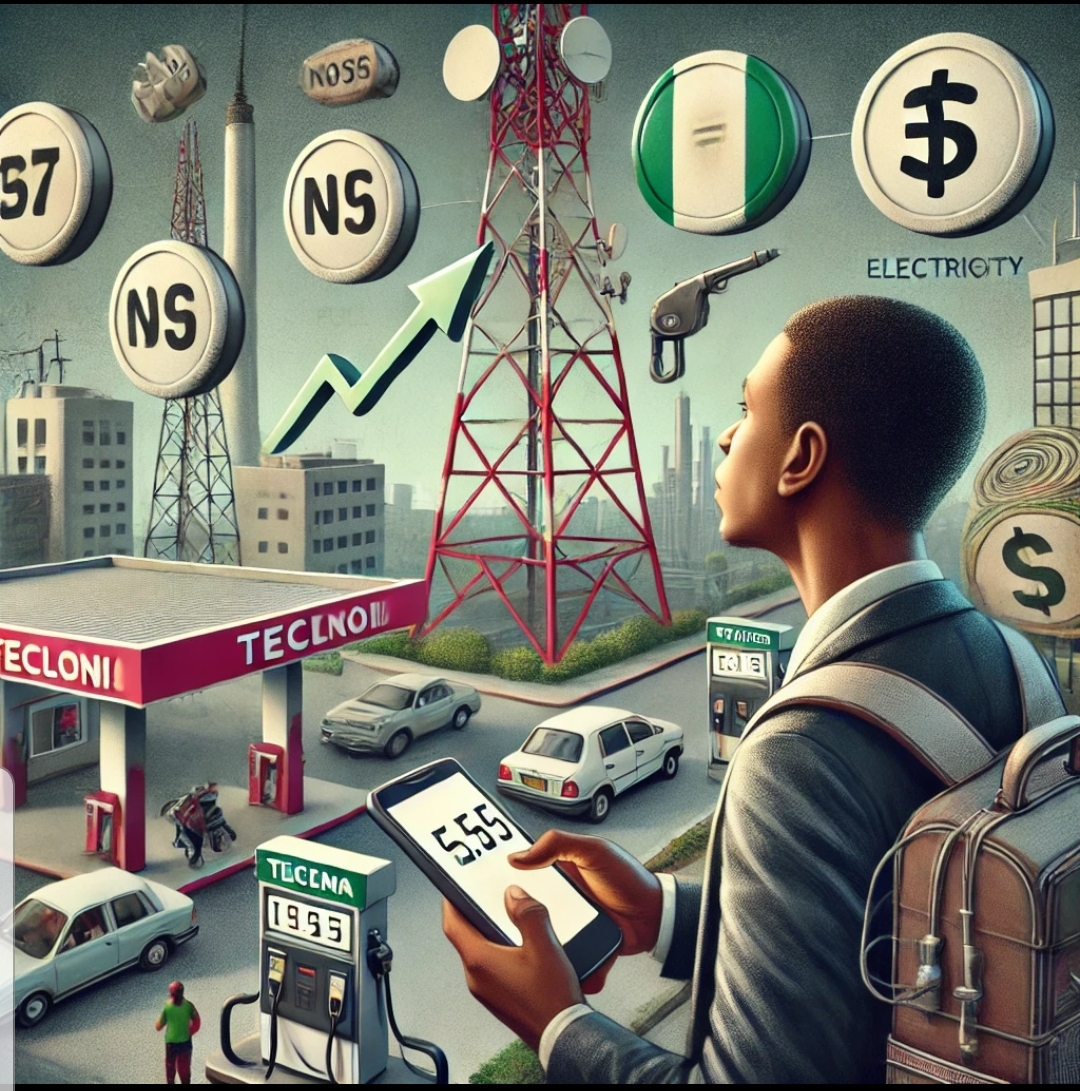
They are all affected by the same economic reality—rising costs occasioned by different factors that have resulted in inflation.
But while others unceasingly hiked prices to match economic realities and ensure sustainability and profit, the Nigerian telecom sector, which is the bedrock of the nation’s modern prosperity, has maintained the same tariff for the past 12 years.
Faced with near collapse as top companies posted back-to-back losses (MTN Nigeria recorded a ₦514.9 billion loss in the first nine months of 2024, while Airtel suffered an $89 million net loss in FY 2023/2024), stakeholders under the umbrella of the Association of Licensed Telecoms Operators of Nigeria (ALTON) jointly requested a 100% tariff increase to cushion rising operational costs, inflation, and naira devaluation.
Industry regulator, the Nigerian Communications Commission (NCC), granted a 50% tariff adjustment in January 2025.
The Minister of Communications, Innovation, and Digital Economy, Mr. Bosun Tijani, attributed the increase to global inflation and rising operational costs.
As telcos work out pocket-friendly pricing and products for subscribers, here is a look at key goods and services that experienced hiked prices with strong bearing on its operations while telecom tariffs remained unchanged over the last 12 years.
The last time there was a tariff adjustment was in 2012. At that time, petrol was ₦97 per litre. Based on last year’s price review, petrol is now no less than ₦980 per litre—an over 620% increase.
Diesel, which averaged ₦174.40 per litre in 2012, soared to ₦1,446.83 in 2024—a 729.6% rise.
Both petrol and diesel are major contributors to the operational costs of telcos because most offices and plants run on them.
Another cost that has surged in the last 12 years is electricity tariff.
In 2012, electricity cost ₦4 – ₦12 per kWh, but at present, it has experienced a steep 400% rise to stand at ₦50 – ₦70 per kWh.
Talks of a further increase are ongoing, while telecom tariffs remain the same.
Electricity is an indispensable service to all businesses—including the telecom sector.
For businesses like telcos, banks, and related service providers, air travel is a significant part of operating expenses, as executives and support staff move within and outside the country to keep things running.
In 2012, a Lagos-to-Abuja flight cost ₦15,000 – ₦25,000. At present, the same route has experienced a 900% increase, now priced at ₦120,000 – ₦250,000. This reflects similar trends across other routes.
Still on travel, in 2012, accommodation at a decent hotel in Lagos cost between ₦10,000 – ₦20,000 per night. A hotel room of the same standard now goes for ₦60,000 – ₦150,000 per night—over a 600% increase.
While the NCC has capped telecom tariff adjustments at 50%, an interesting trend has emerged in the free-market pricing of mobile phones and gadgets.
Nigeria is one of Africa’s biggest phone markets, competing closely with South Africa and Egypt.
The country also has the largest internet user base on the continent, with over 122 million subscribers driven mainly by mobile devices. Smartphone penetration is described as having a “fast-growing rate of 50% and increasing.”
Here’s the clincher: In 2012, the iPhone 5 cost ₦80,000 – ₦100,000 in Nigeria. As of 2024, the iPhone 15 Pro Max now costs ₦1.5 million – ₦2.5 million—a 2,000% increase. In 2012, the prices of the Tecno mobile phones in Nigeria ranges between ₦10,000 and ₦20,000. As of press time, Tecno offers a diverse lineup of smartphones with the Tecno Spark Go 2025 priced at ₦63,000 , while the Tecno Camon 30 Pro 5G is pegged at around ₦650,000 .
This skyrocketing cost also reflect the prices of other mobile devices amid the need for the telecom tariff adjustment—now approved at 50%—to ensure robust services that these devices are built for.