


Business
“Africa Now In Era Of Executing Vision – Says CEO Alawuba As UBA Backs Chad’s N30bn Growth Plan
while addressing the UAE–Chad Trade and Investment Forum

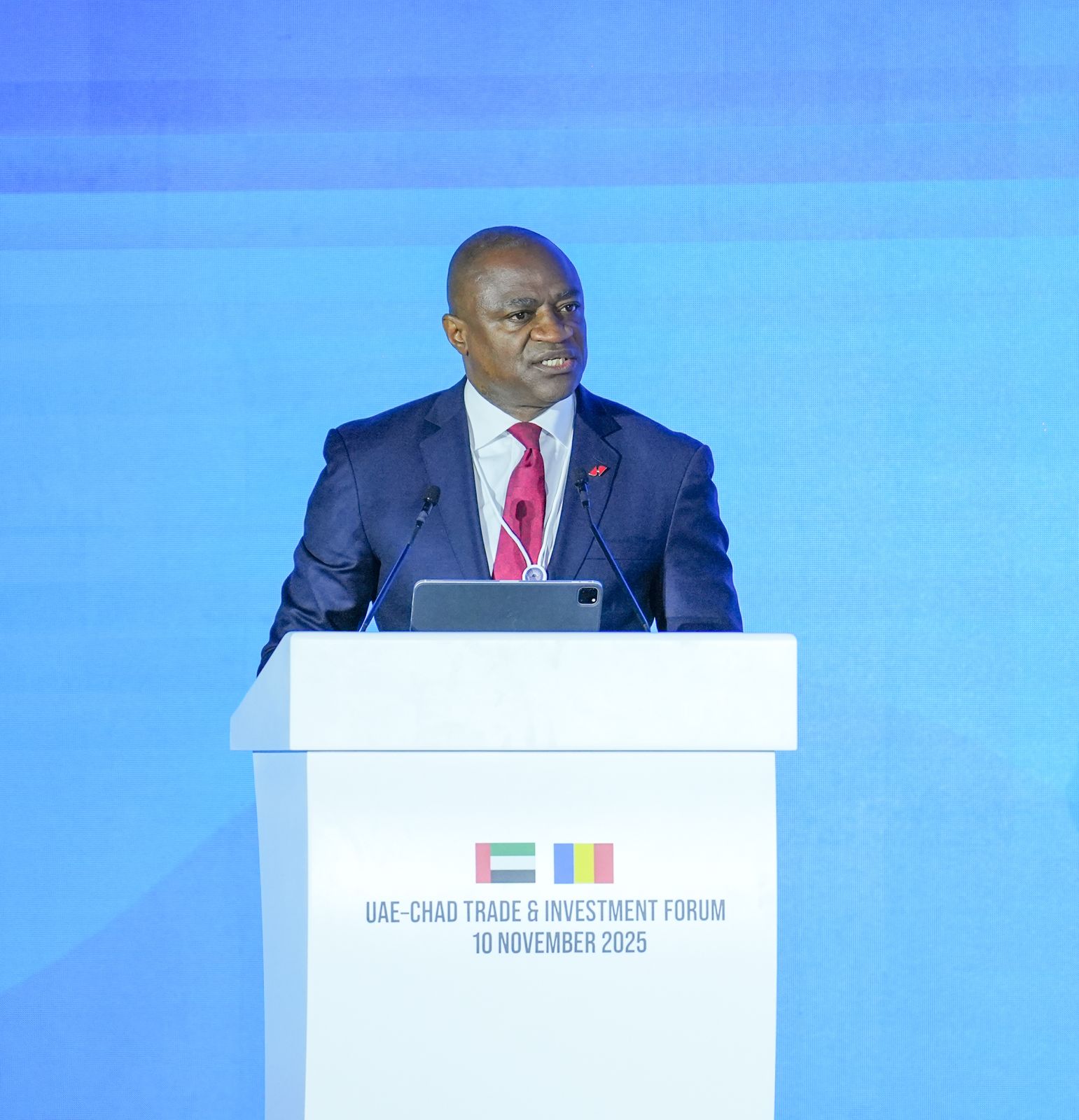
Africa has moved beyond potential and entered the era of execution, according to UBA Group Managing Director and Chief Executive Officer, Oliver Alawuba.
He made this declaration in Abu Dhabi, United Arab Emirates, while addressing the UAE–Chad Trade and Investment Forum on Monday.
Speaking on the theme “Financing African Competitiveness – Building Bridges, Powering Progress,” Alawuba described the $30 billion Tchad Connexion 2030 plan as a bold and bankable roadmap capable of positioning Chad at the heart of Africa’s new competitiveness drive.
The Chief Executive commended the leadership of the Chadian government and its partnership with the United Arab Emirates, calling the initiative a “masterclass in shifting from ambition to action.”

“For too long, the narrative around Africa has been one of potential,” he said, adding that “But I stand before you today to declare that the era of potential is over. We are now in the era of execution. And what we are witnessing in Chad is how that shift is being made real.”
The Group Managing Director reaffirmed UBA’s long-term commitment to Chad’s economic transformation, disclosing that the bank has already invested over $102 million in state securities and financed several strategic national projects. These include a $49 million domestic gas project to expand access to clean energy, a $6.7 million wind farm in Amdjarass, and ongoing funding for road maintenance and telecom modernization.
“Competitiveness is not born in boardrooms; it is built on the ground,” Alawuba stated, continuing “Our investments in energy, infrastructure, and digital inclusion in Chad are proof that we are partners in building that competitiveness.”
And, noted that UBA’s role across Africa extends from national-scale infrastructure projects to grassroots financial inclusion.
“Whether it is a farmer in Beira, Mozambique, or an SME owner in Gulu, Uganda, we are ensuring that no community is left behind in Africa’s growth journey,” he added.
Alawuba emphasized that the true challenge in Africa’s development is not the absence of capital but the misalignment of domestic resources. Citing data from the Africa Finance Corporation (AFC), he noted that the continent holds over $4 trillion in domestic financial assets, yet less than 15 percent is directed toward productive infrastructure.
“This is the gap we are bridging,” he stressed, further providing insight with “At UBA, we are not just intermediaries. We are architects of finance — building structures that make capital work for Africa’s transformation.”
The CEO also highlighted the bank’s role in landmark projects across the continent, including a $400 million commitment to Tanzania’s Julius Nyerere Hydropower Project, over $700 million in Nigeria’s power sector, and $315 million in Ghana’s road infrastructure.

The bank chief called for stronger collaboration among African financial institutions, international investors, and development finance partners to unlock Africa’s full potential.
“Africa’s infrastructure transformation requires partnership,” he explained, and elaborated that “we need international expertise and long-term capital from partners like the UAE, the local intelligence and structuring capacity of African banks, and the de-risking support of DFIs such as the World Bank and AfDB.”
The noted that such alignment can multiply investment impact. “Our research shows that strategic African anchor investment can attract international capital at a ratio of 10-to-1 or even 20-to-1. That is how Chad’s $30 billion plan becomes achievable.”
Addressing key sectors driving competitiveness, Alawuba said access to reliable power, clean water, and digital infrastructure would define the continent’s future. He cited Chad’s goal of achieving 60 percent electrification by 2030 and expanding water access to 11 million people as transformative ambitions that deserve strong financial backing.
“When we finance a road, we finance market access. When we fund renewable energy, we are investing in both climate resilience and industrial growth. When we support digital payment systems, we create the foundation for inclusive prosperity,” he provided more insights.
The Chief Executive Officer added that UBA is ready to structure public-private partnerships for solar plants, water treatment facilities, and regional energy grids, while also supporting Chad’s digital economy through e-tax and e-registry platforms.
He invoked the spirit of collective resilience embodied by the UAE’s founding father, Sheikh Zayed bin Sultan Al Nahyan. “Our forefathers survived by recognizing the need to work together,” he quoted.
“Let us combine our resources and our skills. Let us stand together to power Chad’s transformation, and in doing so, unlock a new era of African competitiveness,” the Group Managing Director emphasized.
He rounded off by reiterating that, financing Africa’s competitiveness is not an act of charity but “the smartest investment in a future of shared prosperity.”