

Opinion
A Farmer Among The People: How Farmer Mohammed Umaru Bago Is Redefining Power, Unity And Grassroots Governance In Niger State
not in distance or elitism, but in proximity and inclusion

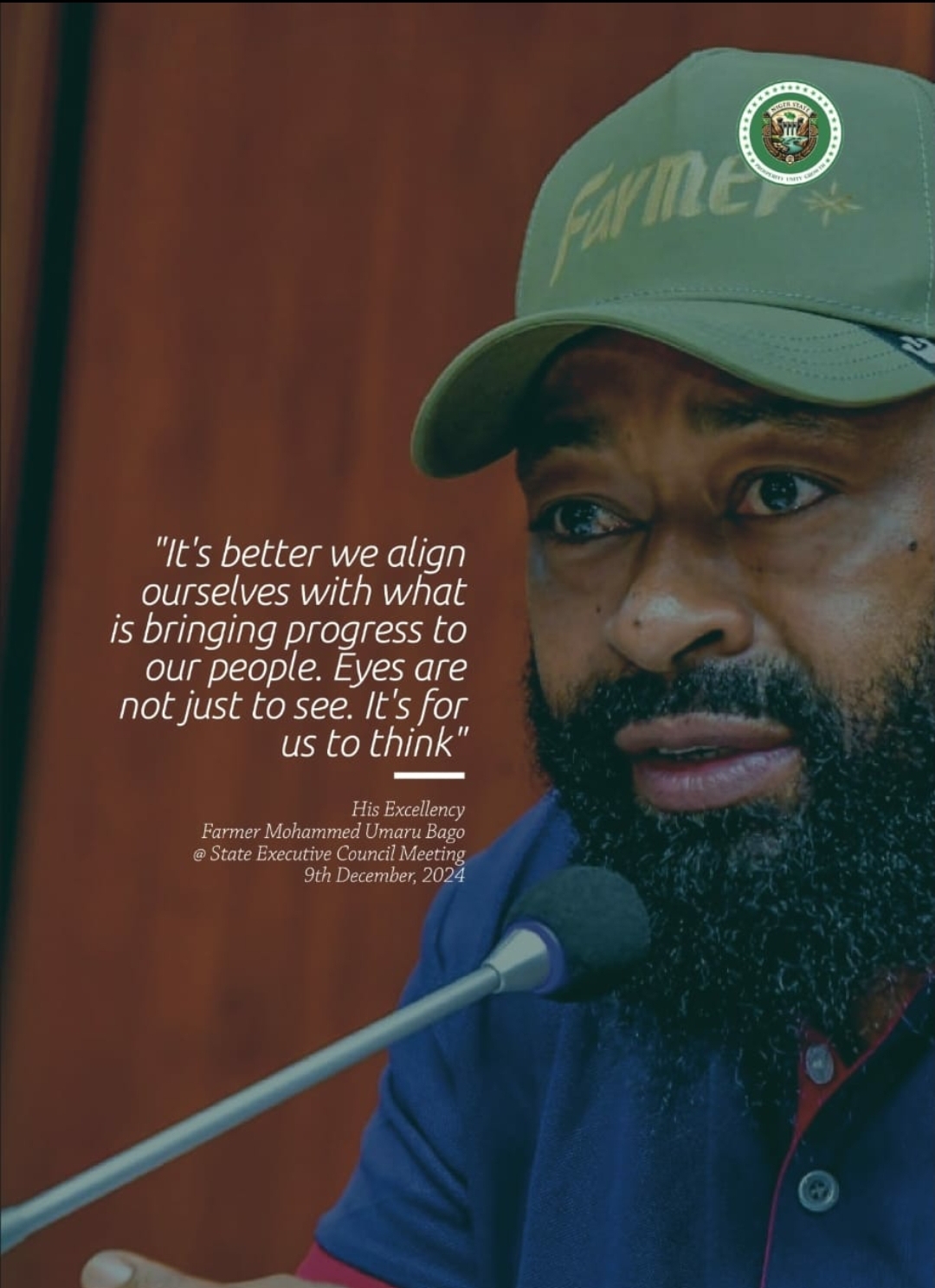
Farmer Governor Mohammed Umaru Bago has steadily rewritten the playbook of leadership in Niger State, anchoring governance not in distance or elitism, but in proximity and inclusion.
His administration has revived the dignity and pride of traditional institutions by consistently engaging emirates, royal fathers, and integrating them into real decision-making processes. This is not symbolic governance; it is participatory leadership rooted in cultural legitimacy and community trust.
At the heart of his strategy is security through collaboration. Regular high-level security meetings—bringing together agencies, traditional rulers, and key stakeholders—are not mere formalities, but actionable platforms backed by adequate funding to strengthen the state’s security architecture. At a time when insecurity threatens national cohesion, Farmer Governor Bago has demonstrated that unity and coordination are the most potent tools for peace.
Despite operating in one of Nigeria’s most politically and socially complex environments, Governor Umaru Bago has remained one of the most detribalized leaders in the country. He has boldly declared that religion will never be weaponized as a cover for failure or division. Instead, he embodies a rare bridge-building leadership style, actively engaging both Muslim and Christian communities with equal respect, presence, and support. In a nation often strained by sectarian tensions, this is leadership with moral clarity.
His commitment to grassroots governance and the welfare of the people is remarkable. In less than three years, he has toured all 25 Local Government Areas of Niger State—twice—taking governance directly to the people. He listens, inspects projects, and solves immediate problems; most importantly, he stays. Whether crossing rivers by ferry to reach Agwara or spending nights in remote communities to attend to people’s welfare, Governor Bago has erased the distance between leadership and the led.
Politically, he has chosen unity over division. From national figures to ward-level actors, he engages across all levels without prejudice. His recognition of women’s inclusion in governance led to the election of all-women vice chairpersons across the 25 LGAs. His outreach to past and present leaders reflects humility and respect for continuity, while his inclusive appointments—often extending beyond loyalist circles—send a clear message: Niger State comes before personal political comfort. In both word and action, the All Progressives Congress (APC) is not a factional platform, but a collective identity.
Beyond policy and politics lies his human touch. Governor Umaru Bago has built a reputation for compassion beyond borders—standing with families in moments of grief and comfort, quietly supporting medical and educational needs, and extending welfare and personal generosity without fanfare. These often undocumented acts have deepened his bond with the people far beyond official duty.
Today, on both national and international stages, Governor Mohammed Umaru Bago, “Mr Relatable” stands as a symbol of purposeful leadership, recognized for his humility, performance, and commitment to peacebuilding. From the Presidency to the Federal Executive Council and within the APC’s highest ranks, his name resonates as that of a leader who listens, acts, and unites.
In a nation searching for authentic leadership, Governor Mohammed Umaru Bago offers a compelling answer: power must not isolate—it must connect. His governance is a reminder that true leadership is not measured by authority alone, but by the courage to engage, the discipline to serve, and the vision to unite people toward a common future.
Oluwatosin Ogunkuade (Jasper)
Coordinator, Documentation Unit
Office of the Governor, Niger State
Minna | 17th April, 2026