

Politics
“Why We Lost Osun” — ADC Explains How Vote-Buying, Accord Alliance Caused Poor Showing
said the election should be assessed beyond the final figures

The African Democratic Congress, ADC, in Osun State, has attributed its poor showing in the August 15 governorship election to widespread vote-buying and the confusion allegedly created among its supporters by the party’s national-level political understanding with the Accord Party.
The party, in a statement signed by its Publicity Secretary, Abosede Busayo Oluwaseun, said the election should be assessed beyond the final figures, arguing that the result alone did not capture the “political strength, choices, sacrifices and circumstances” that shaped the contest.
The ADC, whose candidate, Dr Najeem Salaam, finished third in the election, said money played an “extraordinary role” in the poll, alleging that reports of vote-buying before the election became more pronounced on election day.
“Pre-election, there were widespread reports of vote buying across several parts of the state. It was worse on Election Day, with voters and observers reporting cash inducements running into thousands of naira per voter,” the statement said.
The party also referred to concerns reportedly raised by election observers over the influence of vote-buying on voters’ choices.
According to the ADC, the financial environment surrounding the election placed it at a disadvantage because it did not have the resources or political power to compete in what it described as a heavily monetised contest.
“It is unfortunate implication on a political party like ADC who neither have State Power nor Federal Might,” it said.
The party maintained that its campaign was built around issues and its political philosophy rather than the distribution of money to voters.
“ADC entered the Osun political environment with a fundamentally different political philosophy, a philosophy that did not build its campaign around the ability to distribute illicit billions of naira to voters,” the statement stated, added “We did not enter politics with a war chest designed to turn poverty into a transactional relationship between the voter and the politician.”
The party argued that the prevailing economic hardship made financial inducements particularly difficult for some voters to ignore, saying its decision to remain committed to its principles had consequences at the polls.
“It’s about decision and consequence,” ADC said, adding that its refusal to participate in vote-buying was one of the factors behind the 17,000 votes it secured.
The party, however, said it was not bitter about losing the election because it refused to buy votes, insisting that the outcome would not force it to abandon its political principles.
“ADC is not pained of losing the election for not buying the people’s votes ” the statement declared., insisting “We may have lost the numerical battle on election day, but we do not believe that the answer is for us to become another political organisation competing over who can spend the most money.”
The party also identified its national political understanding with Accord as another factor that affected its performance.
It said the arrangements were made at the national level without the involvement of its governorship candidate or the state chapter, resulting in confusion among its supporters.
“The ADC at the National level went into strategic alliance with the ACCORD Party. These arrangements were made outside the scope of our Governorship Candidate or the party at the State level,” it said, further disclosing “These political understandings in its absolute entirety sway our voters to make choices, it confuses the system to the marrow, our strongest members and supporters were left questioning the whole scenario.”
The party said many of its supporters eventually voted for Accord, believing they were acting in the broader interest of the opposition.
It added that the national leadership had publicly explained that its decision to work with Accord was intended to prevent a split in opposition votes that could have benefited the All Progressives Congress, APC.
“That is an important part of the history of this election,” the Osun chapter said.
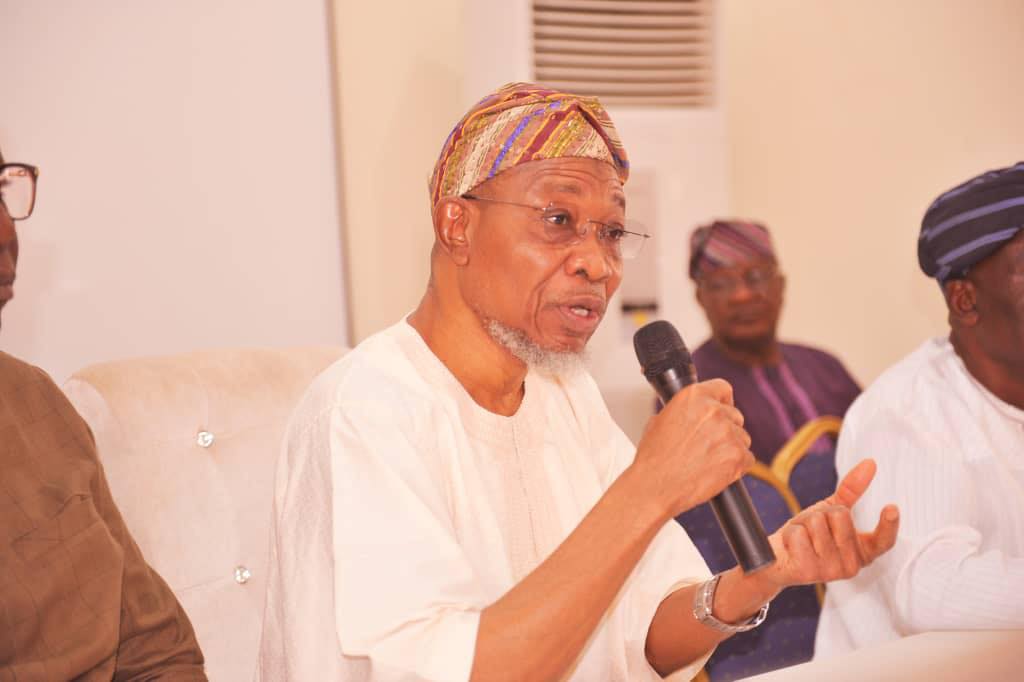
The development is particularly significant given the role of former Osun governor, Ogbeni Rauf Aregbesola, in the party. Aregbesola is the National Secretary of the ADC, while the Osun chapter is led by State Chairman Issa Adesiji, who emerged at the party’s April 2026 state congress.
Aregbesola, who governed Osun from 2010 to 2018, was also a prominent figure in the party’s campaign for Salaam ahead of the election.
The Osun chapter nevertheless insisted that the election result would not bring the political project to an end.
“The result does not define the Osun ADC and the Iwaloye Movement,” it said, explaining “The election has ended, the political project has not.”
According to the party, the post-election period would be used to identify its weaknesses, understand the strengths of its opponents and consolidate the potential of its supporters.
“We have learnt, we have grown, we have identified our weaknesses and the strength of our opponents, as well as the enormous potential of our own movement,” it said, urging “It’s now time to turn disappointment into opportunity, opportunity to rebuild.”
The party concluded: “The future of the good people of Osun will not be decided by one election. The political journey begins now.”