


Entertainment
What Climate Change Means For Future Of Whisky
Now, as global temperatures rise, researchers warn

The bottle of Scotch served at a dinner in Lagos or bought from a premium retailer in Abuja may have travelled thousands of kilometres to reach Nigeria, but its character begins with something far less visible: Scotland’s cool, temperate maritime climate. For generations, these conditions have shaped how Scotch whisky is produced and matured.
Now, as global temperatures rise, researchers warn that the flavour profile of Scotch whisky could change by 2080, raising uncomfortable questions about the future of one of the world’s most established spirits and the consumers who enjoy it.
Whisky production is acutely sensitive to its environment. Temperature governs how the spirit interacts with the oak cask during maturation, while water availability, barley cultivation and rainfall patterns influence every upstream stage of production. Warmer temperatures could accelerate maturation and evaporation, potentially compromising the consistency and character of whisky over time. For Nigerian consumers, who depend entirely on imported Scotch, disruptions at the source could eventually ripple through supply, availability and price.
The threat is not abstract. Scotland’s whisky industry has already weathered periods of unusually hot and dry weather that disrupted production at several distilleries. The long-term concern is that rising temperatures and shifting rainfall patterns will place sustained pressure on the water, barley and stable maturation conditions on which Scotch whisky has relied for over two centuries. This matters disproportionately in an industry built around patience, where a spirit distilled today may sit in a cask for 12, 18 or 25 years before it reaches a glass.
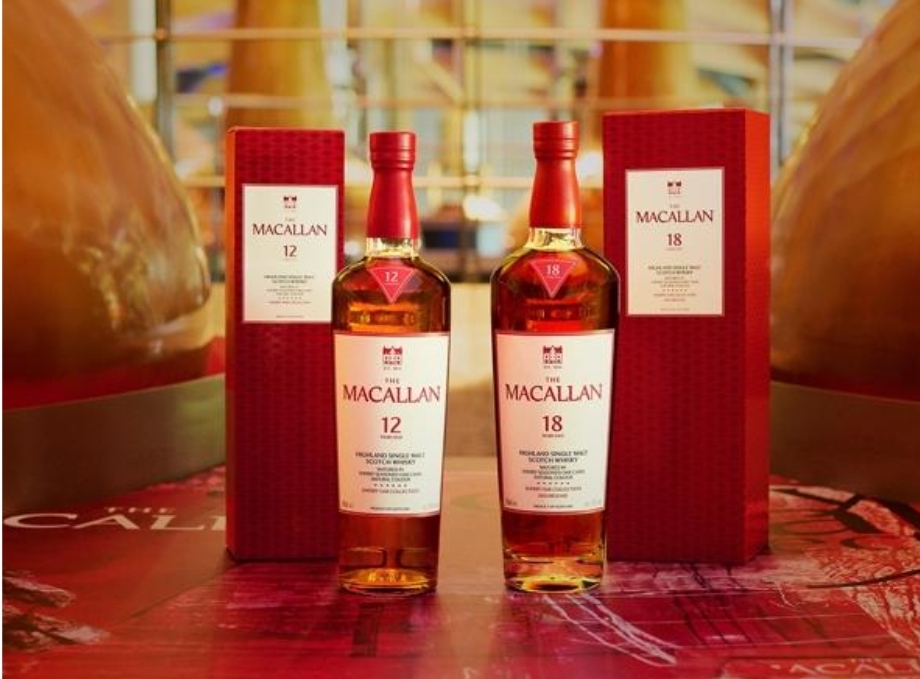
For The Macallan, whose estate sits in Speyside, responding to these pressures has become central to its long-term strategy. The Macallan Estate has operated on a carbon-neutral basis across its direct emissions since 2021, with 99 per cent of its energy drawn from verified renewable sources. The distillery has also set a target of achieving full carbon neutrality across the entire estate by 2030.
On paper, these are serious numbers. Carbon-neutral direct emissions is no small feat for a distillery of The Macallan’s scale. But the harder question any serious business journalist should ask is what “full carbon neutrality across the entire estate” actually encompasses. Does it include Scope 3 emissions: the barley farms, the cooperages that supply oak casks, the global logistics networks that move finished bottles to markets like Nigeria? Or does it stop at the estate gates? Direct emissions are the relatively straightforward part. Supply-chain decarbonisation is where most sustainability commitments quietly stall, and where the climate impact of a global luxury brand is arguably greatest.
If The Macallan’s 2030 target genuinely includes Scope 3, it is a leadership move. If it does not, it is a strong start dressed in ambitious language.
These questions matter because whisky makers must think in decades, not quarters. A cask laid down today will still be maturing in the 2040s. Warehouses built now will house spirit into the 2060s. Climate-adaptive decisions made in this decade will determine which brands can maintain product consistency in a warmer Scotland. For a brand whose identity is inseparable from craftsmanship and consistency, sustainability is not a corporate responsibility sidebar. It is a question of protecting the product itself.
Nigeria’s premium spirits market makes this conversation increasingly relevant closer to home. Nigerian demand for Scotch has grown steadily over the past decade, driven by an expanding middle and upper class and a deep-rooted social culture around whisky. The country is one of the most significant African markets for imported Scotch, and brands like The Macallan, which occupies the ultra-premium end of that market, depend on a supply chain that begins in Scottish barley fields and ends on shelves in Lagos, Abuja and Port Harcourt.
As Nigerian consumers become more discerning, asking not just what they drink but how it was made and what stands behind the label, the environmental conditions shaping whisky production thousands of kilometres away become part of a broader story about what eventually reaches the Nigerian table. A consumer paying a premium for a single malt is, knowingly or not, paying for the climate that produced it. If that climate changes, so does the value proposition.
Climate change may be unfolding on Scottish soil, but its consequences will not remain there. In an interconnected global spirits market, changes affecting production at the distillery eventually travel through supply chains to consumers worldwide. For Nigerian whisky drinkers, the future of a familiar bottle may depend partly on environmental decisions being made in Speyside today.
The Macallan’s early move to carbon-neutral operations and its 2030 full-estate target reflect the reality of an industry that must plan for the long game. But the credibility of that commitment will depend on transparency: whether “full estate” means what it implies, and whether the brand is willing to be held to it. Acting now is necessary. But acting now and being accountable for what “now” actually covers is what separates genuine leadership from sophisticated brand storytelling.
The whisky poured decades from now will be shaped by choices being made today. Protecting the environment in which Scotch whisky is made may prove just as important as preserving the traditions that have defined it for generations