

Society
Nigerian Air Force Boosts Air Space Security With New Anti-UAV Operators
another major milestone in its quest for technological advancement

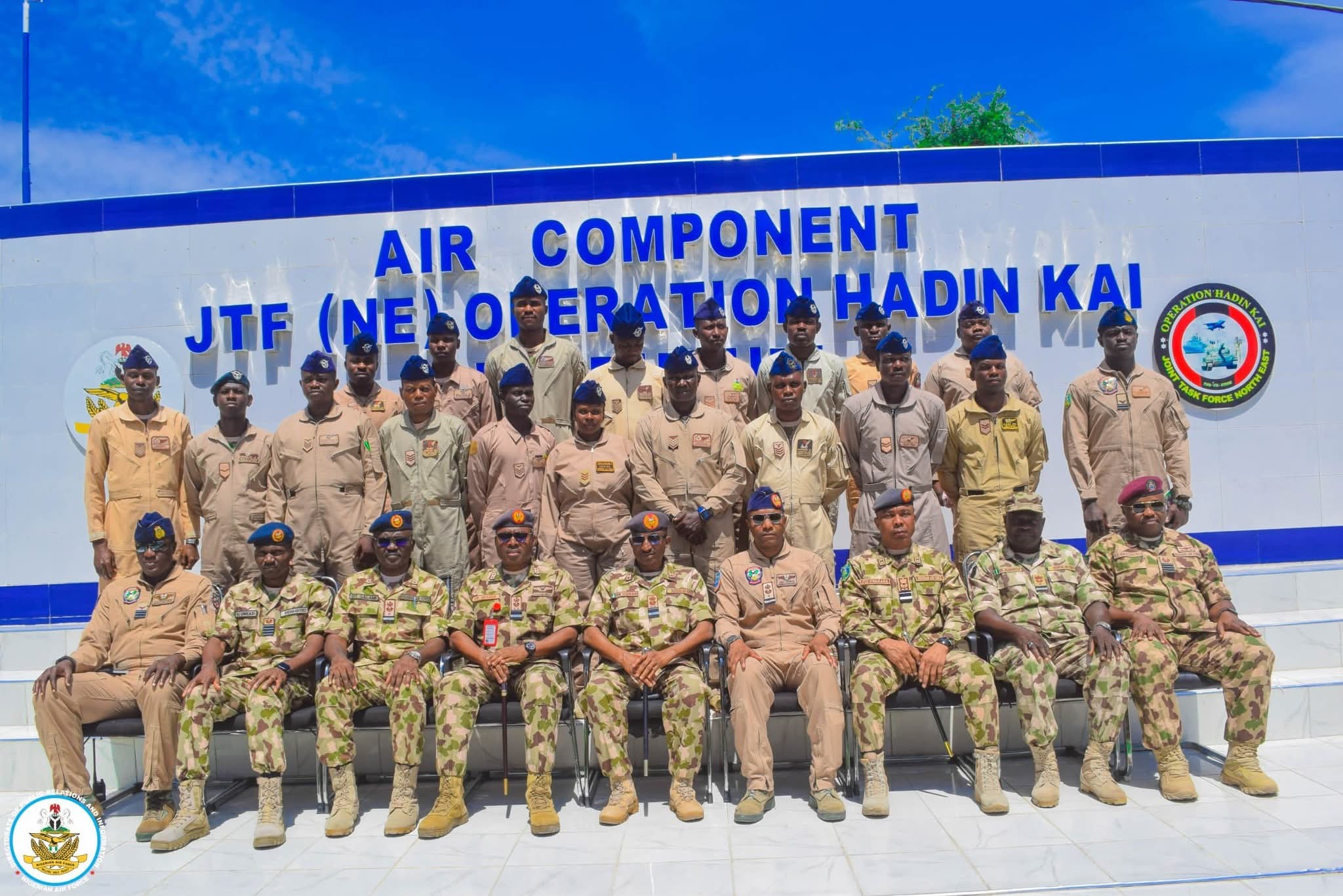
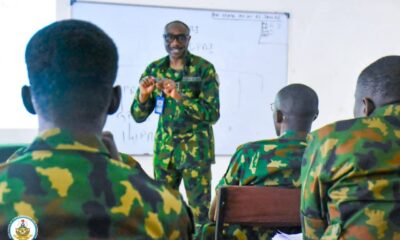
The Nigerian Air Force (NAF) has achieved another major milestone in its quest for technological advancement and enhanced airspace security with the graduation of personnel trained on the Anti-Unmanned Aerial Vehicle (UAV) Radar System.
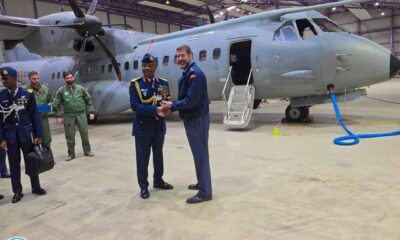
The graduation ceremony, held on 17 October 2025 at Headquarters Air Component, Operation HADIN KAI (OPHK), Maiduguri, Borno State, reaffirmed the Service’s unwavering commitment to strengthening Nigeria’s air defence architecture against emerging aerial threats.
Representing the Chief of the Air Staff (CAS), Air Marshal Hasan Bala Abubakar, the Chief of Communication and Information Systems (CCIS), Air Vice Marshal Suleiman Kabir Usman, described the graduation as a strategic step in fortifying the nation’s air defence network, adding that it comes at a time when drone technology continues to redefine global and national security dynamics.
Air Vice Marshal Usman emphasised that asymmetric warfare has evolved beyond traditional methods, with adversaries now employing advanced technologies such as drones for reconnaissance and offensive operations.
He, however, noted that the NAF’s capacity, resolve, and preparedness remain superior through sustained training, innovation, and investment in cutting-edge defence systems.
He further highlighted key initiatives driving the Service’s modernisation agenda, including the Military Total Radar Coverage of Nigeria (MTRACON) Project, establishment of the Directorate of Cybersecurity, and ongoing specialised programmes in surveillance and spectrum monitoring — all aimed at ensuring the NAF remains adaptive and technologically dominant in contemporary warfare.
In his remarks, the Air Component Commander, OPHK, Air Commodore UU Idris, commended the graduands for their professionalism and dedication, urging them to deploy their expertise with vigilance and integrity in defending national assets.
He described the Anti-UAV Radar as an advanced system capable of detecting low, slow, and small aerial targets that conventional radars might miss.
LThe CAS, through his representative, commended both the graduands and instructors for their commitment, while expressing appreciation to President Bola Ahmed Tinubu, GCFR, for his continued support to the Nigerian Air Force.
He reaffirmed the Service’s commitment to continuous innovation, human capacity development, and technological progress in line with his command philosophy: “to transform the Nigerian Air Force into an agile and resilient force capable of effectively meeting the airpower demands of national security in all operational environments.”