

Business
7 Major Things BUA Chairman, Abdul Samad Rabiu’s Emergence As Africa CEO Of The Year Mean For Nigeria
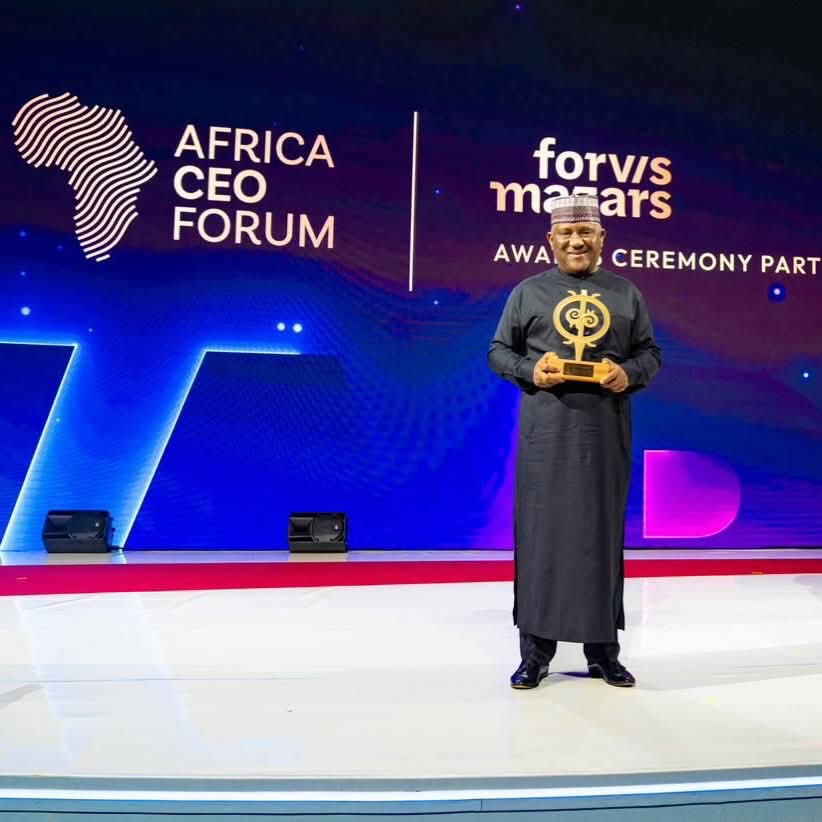
at the prestigious 2026 Africa CEO Forum Awards in Kigali, Rwanda.

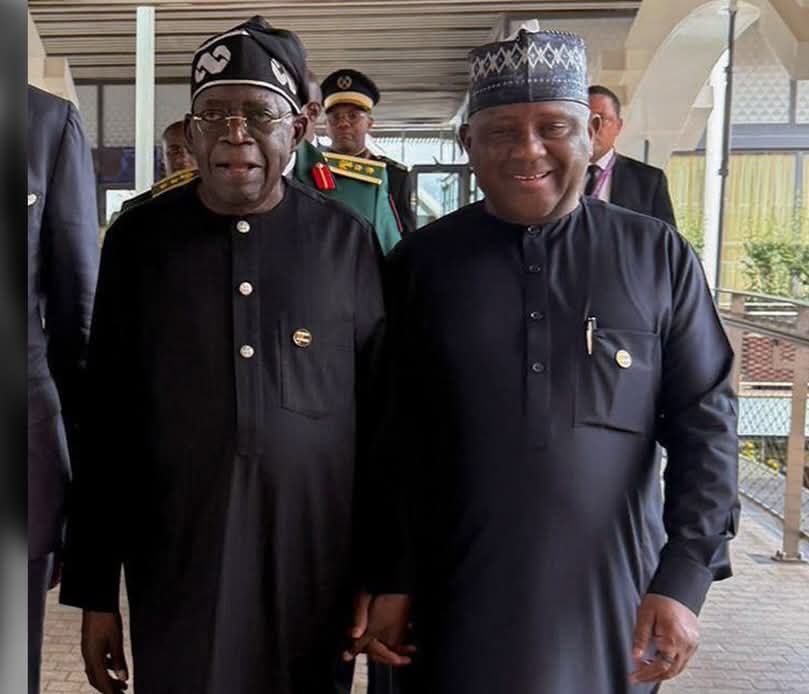
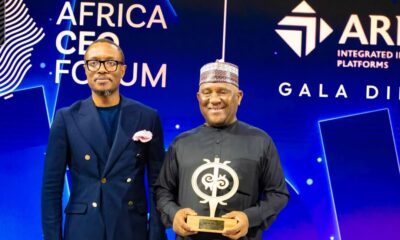
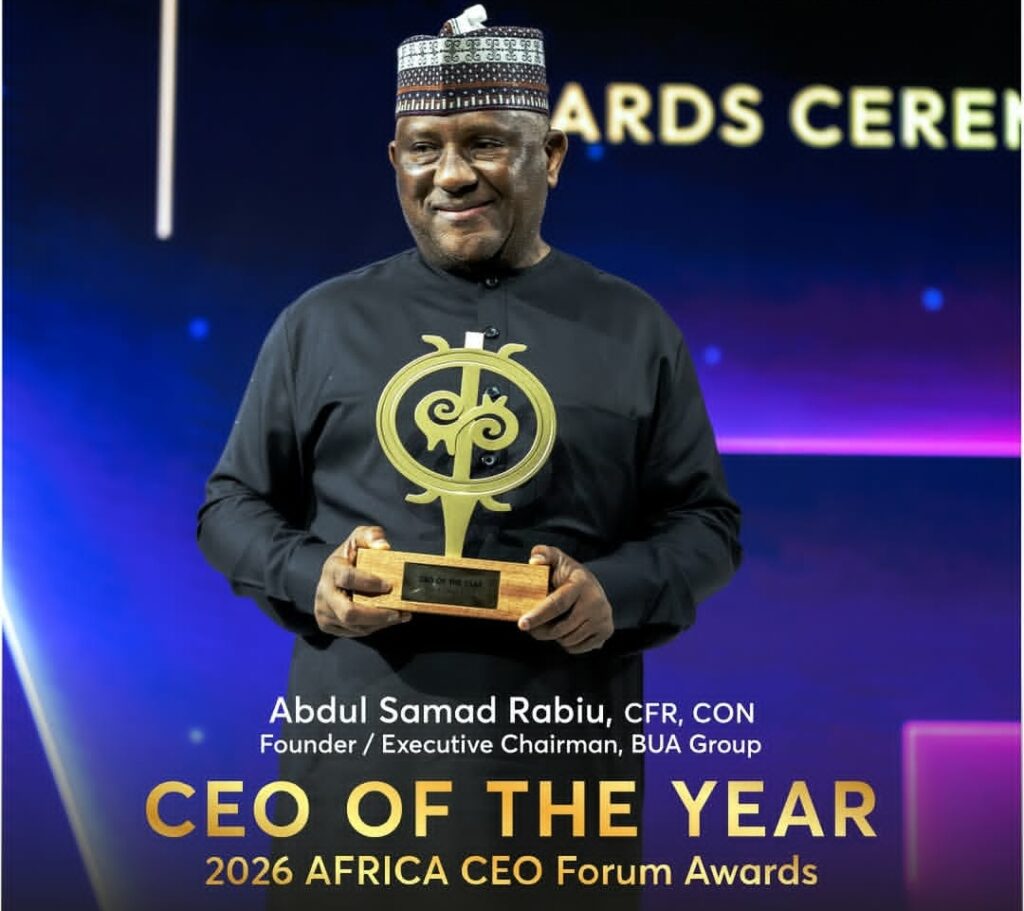
In a major continental endorsement that has reverberated across Africa’s financial capitals, Abdul Samad Rabiu, the Chairman and Founder of BUA Group, was named CEO of the Year at the prestigious 2026 Africa CEO Forum Awards in Kigali, Rwanda.
The award, presented on May 14, 2026, recognizes the BUA Chairman’s visionary leadership and exceptional business achievements across multiple industrial sectors.
It arrives at a defining moment when the billionaire industrialist is consolidating his position as one of Africa’s most influential corporate titans, having recently emerged as Africa’s second-richest man according to Forbes’ real-time billionaire rankings, which placed his net worth at $15.8 billion as of April 30, 2026.
Reacting to the continental honor, the business leader characteristically deflected the praise to his workforce, stating: “Truly honoured to receive the Africa CEO of the Year Award. A recognition like this is never about one person. It reflects the hard work, dedication, and shared commitment of an exceptional team that continues to strive for excellence every day. Grateful for this honour and even more motivated to continue pushing boundaries, creating impact, and building for the future.”
For Nigeria, an economy currently undergoing structural transformations, the BUA Chairman’s continental triumph carries profound symbolic and economic weight, translating into seven major gains for the country.
Observer’s confirm this landmark recognition significantly boosts global investor confidence in the Nigerian economy. At a time when global markets are closely monitoring West Africa, the leading investor’s recognition as the continent’s top CEO flashes a powerful green light to international financiers.
It demonstrates that despite global macroeconomic headwinds, Nigeria remains a fertile ground for mega-scale corporate growth and robust returns on investment, signaling to foreign direct investors that Nigerian institutions are resilient, scalable, and capable of world-class execution.
Closely tied to this market optimism, the award serves as a powerful validation of the ongoing economic reforms of President Bola Tinubu.
The administration’s policies aimed at fiscal normalization, foreign exchange liberalization, and fostering private sector-led growth are designed to birth exactly this kind of continental success story.
Abdul Samad Rabiu’s triumph proves to the global community that these macro-critical reforms are successfully fostering an environment where indigenous conglomerates can scale seamlessly and dominate the wider African corporate landscape.
Furthermore, the King of commerce’s ascent highlights a critical shift toward manufacturing-led wealth and industrial independence for Nigeria.
Unlike many African billionaires whose fortunes are tied primarily to mining, luxury assets, or raw commodity extraction, the BUA founder’s wealth has been driven largely by local production, large-scale industrialization, and strategic infrastructure.
His recognition elevates him as a symbol of manufacturing-led enterprise, proving that Nigeria is successfully transitioning from a consumption-and-import-dependent economy to a production-driven powerhouse.
This achievement also reinforces Nigeria’s economic hegemony within the continent.
With philanthropist’s recent Forbes ranking placing him as Africa’s second-richest man—ahead of South Africa’s Johann Rupert and behind only fellow countryman Aliko Dangote—Nigeria effectively commands the top two spots of wealth creation in Africa.
The CEO of the Year award solidifies this corporate dominance, demonstrating that Nigerian indigenous capital is the primary engine shaping Africa’s modern wealth structure and driving the objectives of the African Continental Free Trade Area.
On the home front, the continental honor deepens market confidence in sectors critical to food security and infrastructure.
The rapid rise of the BUA founder has been built on the back of massive, real-sector holdings in BUA Cement and BUA Foods, which are central to the domestic economy.
By honoring Abdul Samad Rabiu, the continental business community validates the strategic importance of these operations, stabilizing consumer and investor perceptions of the very supply chains that guarantee domestic food security and provide the materials required to bridge the nation’s infrastructure gaps.
Beyond the balance sheets, the recognition spotlights the institutionalization of high-impact corporate philanthropy driven from Nigeria.
Through the Abdul Samad Rabiu Africa Initiative (ASR Africa), launched in 2021 with a $100 million annual commitment to health, education, and social development, the BUA Chairman has systematically funded hospitals, universities, and vital social infrastructure across the continent.
This award acknowledges that sustainable African capitalism must go hand-in-hand with development, setting a high benchmark for how private wealth can effectively leverage public good.
Multiple sources affirm that Rabiu’s historic win serves as a powerful inspiration for the next generation of indigenous enterprises.
From its humble origins as a trading business founded in 1988, BUA Group’s steady evolution into a multi-billion-dollar diversified conglomerate offers a clear blueprint for local entrepreneurs.
This continental validation proves that Nigerian businesses can scale from local trading roots to international prominence through grit, long-term capital commitment, and institutional excellence, charting a course for future architects of the continent’s emerging economic future.