


Society
EFCC Got 7,000 Convictions, Recovered N500bn In Two Years Of Tinubu’s Govt – Shettima
reflects the administration’s commitment to public accountability

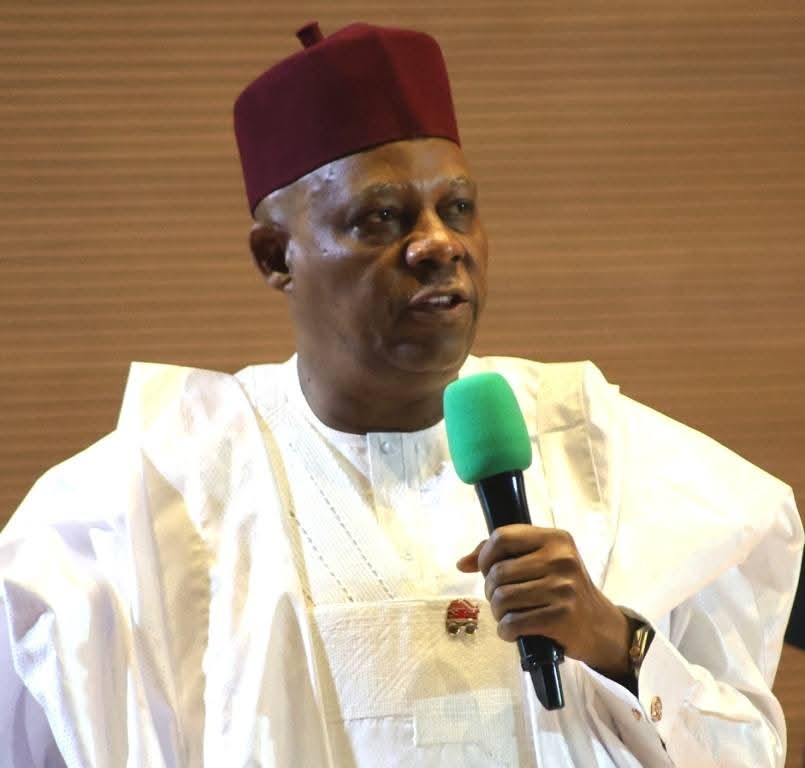
Vice President Kashim Shettima has revealed that the Economic and Financial Crimes Commission (EFCC) secured over 7,000 convictions and recovered assets worth more than N500 billion within the first two years of President Bola Ahmed Tinubu’s administration.
Shettima, who represented the President at the opening of the 7th EFCC–NJI Capacity Building Workshop for Justices and Judges in Abuja on Monday, said the achievement reflects the administration’s commitment to public accountability and institutional independence in the fight against corruption.
“As an administration, we have prioritized public accountability by strengthening the anti-corruption agencies and accorded them the needed independence to execute their statutory mandates,” he said. “The EFCC, for example, has recorded over 7,000 convictions in the first two years of the present administration and recovered assets in excess of Five Hundred Billion Naira. Recovered proceeds of crime have been ploughed back into the economy to fund critical social investment programmes, including the Students Loan and Consumer Credit schemes.”
The Vice President urged judges and justices to remain unwavering in their roles as defenders of justice, stressing that the judiciary is central to the success of the anti-corruption war. “A Nigeria free of corruption is possible if we all commit to doing what is right and ensuring that those who deviate are not allowed to go scot-free. A robust judicial system is central to our collective success,” he stated.
Shettima also reminded the judiciary of its shared stake in the nation’s progress, noting that corruption’s impact spares no one. “There are no special roads, hospitals or communities for judges. We all shop in the same markets and face the same insecurity arising from years of waste and theft of public resources. It is in our collective interest to fight and win this war,” he said.
EFCC Chairman, Ola Olukoyede, in his remarks, said the Commission’s progress in asset recovery and convictions has been significant but lamented the slow pace of high-profile corruption trials. He described the pattern of prolonged courtroom proceedings as a major obstacle to justice. “There are cases filed 15 or 20 years ago that remain unresolved. Prioritization of procedural technicalities at the expense of justice undermines public confidence in the fight against corruption,” he said.
Olukoyede also raised concerns over conflicting court orders and the misuse of ex-parte applications that hinder the Commission’s investigative powers. He called for restraint and consistency among judicial officers to sustain public trust in the rule of law.
Chief Justice of Nigeria, Justice Kudirat Kekere-Ekun, who chairs the National Judicial Institute’s Board of Governors, said the workshop reflects a shared resolve to strengthen institutional capacity and uphold public confidence in the judiciary. “The fight against economic and financial crimes cannot succeed if the judiciary falters,” she said. “Each ruling and judgment either strengthens or weakens the people’s faith in the law.”
Attorney General of the Federation and Minister of Justice, Lateef Fagbemi, SAN, added that justice in anti-corruption cases must be swift and certain to be effective. “When corruption thrives, justice withers. When justice sleeps, corruption leads,” he declared, calling for stronger synergy between investigators, prosecutors, and judges.
Former Attorney General of the Federation, Kanu Agabi, SAN, delivered the keynote address, while goodwill messages came from the Senate President, Godswill Akpabio, represented by Senator Munguno; Senator Udende Emmanuel, Chair of the Senate Committee on Financial Crimes; and Hon. Ginger Onwusibe, Chair of the House Committee on Financial Crimes.
The 7th EFCC–NJI workshop runs through Wednesday, October 22, 2025.