


Business
TIME Names Power Couple Tony And Awele Elumelu Africa’s Philanthropy Titans
validates an African-led prosperity model

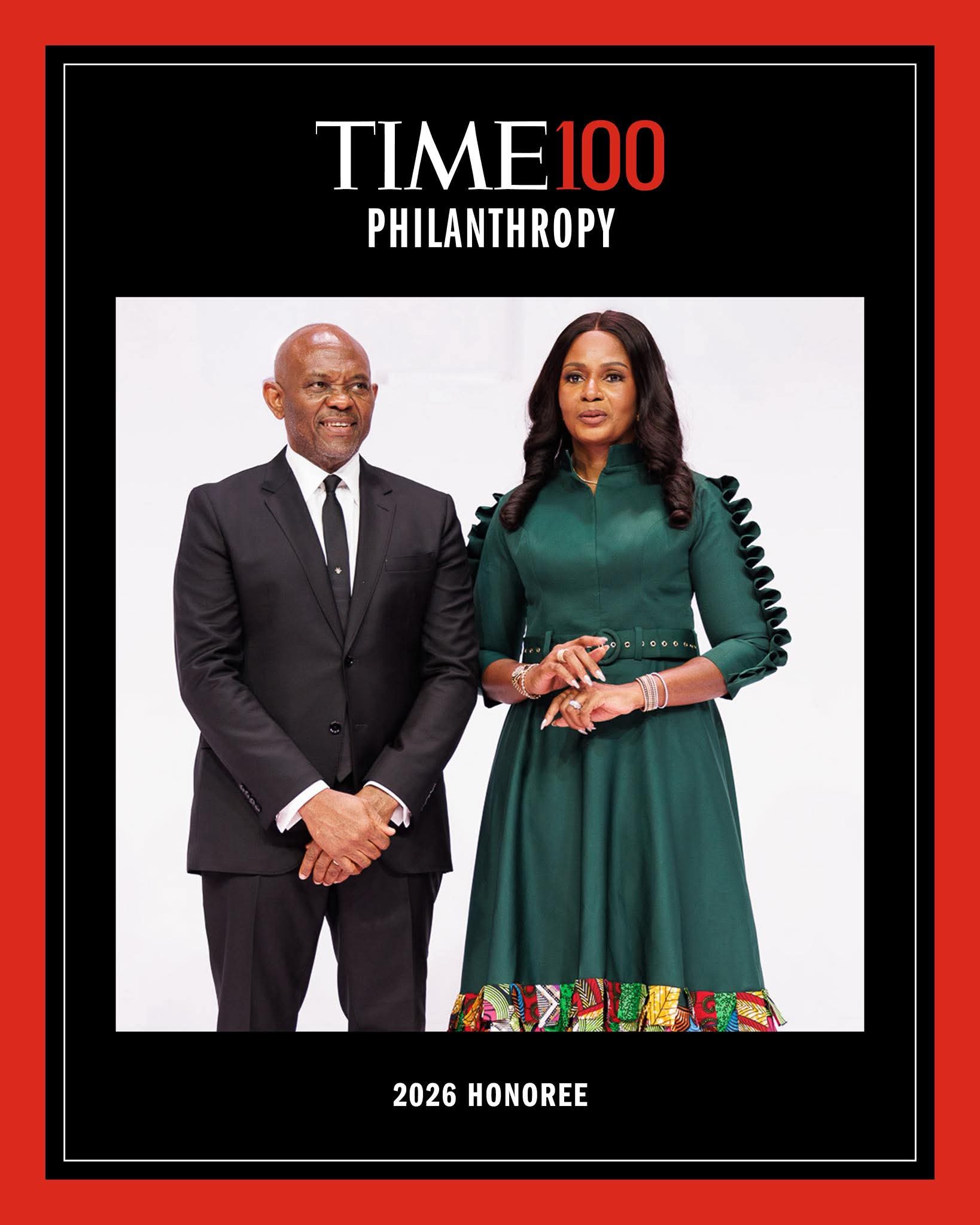
Tony Elumelu and his better-half, Dr. Awele Vivien Elumelu have secured one of the world’s most prestigious recognitions for philanthropy, earning a place among the 2026 TIME100 Philanthropy Honourees as “Titans,” in what marks a defining global endorsement of a decade-long African entrepreneurship revolution powered by the Tony Elumelu Foundation (TEF).
For Nigeria’s corporate and development ecosystem, the recognition goes beyond prestige. It validates an African-led prosperity model that has increasingly challenged the old aid-dependent framework by positioning entrepreneurship as the continent’s most scalable tool for economic liberation.
TIME’s recognition spotlights a philanthropic journey that began in 2015 with what seemed an audacious commitment: a pledge of $100 million to identify, train, mentor, and fund 1,000 African entrepreneurs annually for 10 years. But what started as a bold experiment has evolved into one of Africa’s largest privately funded entrepreneurship platforms.
“Pledging $100 million to African entrepreneurs that would benefit a cohort of 1,000 recipients each year for a decade, struck Tony Elumelu and Awele Vivien Elumelu as a bold commitment in 2015,” TIME noted.
That commitment has since expanded far beyond its original ambition. According to the foundation, more than 27,000 entrepreneurs across all 54 African countries have received direct support through training, mentorship, and non-refundable seed capital of $5,000 each.
TIME reports that TEF’s 12th cohort is now more than triple the size of its initial class, with women making up more than half of beneficiaries—a significant leap from the roughly one-fifth female participation in the programme’s early years.

The scale of demand itself became one of the clearest indicators of Africa’s untapped entrepreneurial hunger.
“By the third year, hundreds of thousands of people were applying,” TIME reported, underscoring how quickly TEF transformed from a philanthropic initiative into a continental aspiration engine.
For Tony Elumelu, that overwhelming response sharpened the urgency of expanding access.
“We set out to democratize luck,” he told TIME.
The phrase has since become one of the most defining expressions of TEF’s mission: breaking down the structural barriers that often determine who gets opportunity in Africa.
Yet the sheer volume of applicants also exposed painful constraints.
“The overwhelming demand,” Elumelu added, meant they were now in the business of “dashing hopes.”
Rather than retreat, TEF responded by scaling beyond grants into digital education. Its training resources were transformed into free online programmes, reaching over 2.5 million Africans, according to TIME, widening access even for those unable to secure direct funding.
This broader ecosystem has yielded measurable economic outcomes. TEF-backed entrepreneurs, spanning sectors from agriculture to technology and creative industries, have cumulatively generated $4.2 billion in revenue, according to the foundation’s count.
More importantly, the initiative’s ripple effects have reportedly impacted over 4 million households and lifted more than 2.1 million Africans above the poverty line.
The significance of this recognition also lies in TEF’s ability to attract strategic global partnerships without surrendering its African-first philosophy.
TIME highlighted collaborations with the U.N. Development Programme, European Commission, French and German development agencies, Google.org, and Ikea Foundation—partnerships that have amplified TEF’s reach while preserving its ideological core.
That philosophy is rooted in Elumelu’s long-standing critique of dependency economics.
“We should not intervene in Africa in a manner that makes us perpetually dependent on it,” he told TIME, but instead “in a manner that prepares us to take care and look after ourselves with dignity.”
For many observers moment reflects a larger shift in African capitalism: the rise of indigenous private-sector philanthropy not merely as charity, but as economic architecture.
The Elumelus’ inclusion in TIME100’s “Titans” category places them in a rarefied class of global changemakers and reinforces Nigeria’s growing relevance in shaping development models that are exportable beyond its borders.
At a time when Africa continues to grapple with unemployment, youth migration pressures, and fragile social systems, TEF’s model offers a compelling counterpoint—that strategic capital, entrepreneurial education, and dignity-driven empowerment may prove more transformative than traditional interventionism.
From boardroom success at Heirs Holdings and UBA to a philanthropic framework redefining opportunity for tens of thousands, power couple Tony and Awele Elumelu’s latest global honour is not merely a personal milestone – It is widely seen a statement that Africa’s future may well be built not by waiting for aid, but by investing in Africans themselves.