

Society
EFCC Operatives Locked In, Stoned At Teaching Hospital Over Fraud Suspect’s Medical Report
after visiting the facility to verify a medical report presented by a fraud suspect

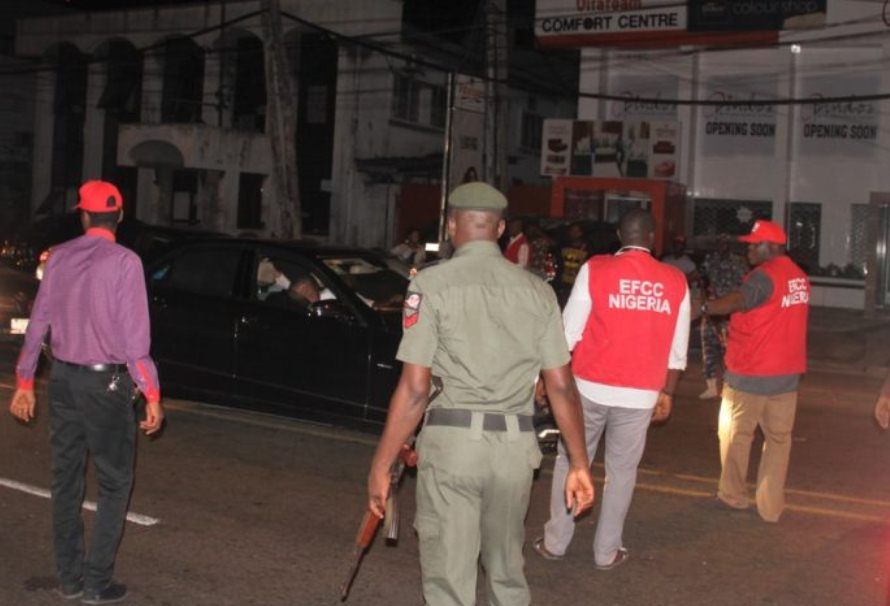
Operatives of the Uyo Zonal Directorate of the Economic and Financial Crimes Commission, EFCC, on Tuesday came under attack at the University of Uyo Teaching Hospital, UUTH, after visiting the facility to verify a medical report presented by a fraud suspect currently facing trial for allegedly defrauding several microfinance banks, including the University of Uyo Microfinance Bank.
The Commission said the suspect, who is under remand by Justice M.A. Onyetunu of the Federal High Court, Uyo, had submitted a medical report from UUTH, necessitating official authentication from the hospital’s management as part of ongoing investigations.
According to EFCC, it had earlier written two separate letters to the hospital management, dated March 11, 2026, and April 20, 2026, requesting confirmation of the report, but received no response.
Explaining the circumstances behind the visit, the Commission said: “The Tuesday, May 12, 2026, visit of operatives of the Uyo Zonal Directorate of the Economic and Financial Crimes Commission, EFCC, to the University of Uyo Teaching Hospital, UUTH, in Uyo, Akwa Ibom State was informed by the need to authenticate a medical report presented by a suspect under remand by Justice M.A Onyetunu of the Federal High Court, Uyo, for allegedly defrauding multiple micro finance banks, including University of Uyo Micro Finance Bank.”
EFCC stated that after repeated attempts through official correspondence failed, the Investigating Officer handling the case personally visited the hospital to enquire about the status of the request, but still got no response.
The anti-graft agency said matters escalated when its operatives made what it described as a final effort by visiting the Chief Medical Director, CMD, of the hospital on Tuesday.
“As a last resort, operatives of the Commission visited the Chief Medical Director of the hospital on Tuesday to make further enquiries, only to be locked in with a false alarm and subjected to unprovoked attack by misguided staff of the facility who pelted them with stones and other dangerous objects,” the Commission said.
EFCC further alleged that while its officers were within the hospital premises, the CMD ordered the gates shut, making it impossible for lawful enquiries to continue and temporarily restricting the operatives’ movement.
“While within the hospital, the CMD reportedly directed that gates of the facility be shut, making it impossible for any lawful enquiry to be made,” the statement added.
The Commission also disclosed that police authorities in Akwa Ibom State intervened and urged the hospital management to open the gates to allow the operatives leave peacefully, but the appeal was allegedly ignored.
“Police authorities in Akwa Ibom State advised the CMD to open the hospital gates to enable the operatives exit the premises peacefully but the entreaties were turned down,” EFCC stated.
Despite the hostility, EFCC said its officers maintained professionalism and resisted provocation, ensuring there was no disruption of hospital activities or breakdown of law and order.
“In spite of the hostility and provocation, there was no breakdown of law and order as the operatives exercised restraint and professionally made their ways out of the hospital premises without disrupting its activities,” the Commission said.
Reaffirming its legal mandate, EFCC warned that institutions and members of the public are duty-bound to cooperate with lawful investigations.
“Enquiries bordering on operational engagements of the Commission are lawful. It is therefore necessary to remind the public and corporate bodies that they are obligated to cooperate with the agency in such circumstances. Contrary action could be deemed as obstruction, which is criminal with attendant legal consequences,” it added.
The dramatic incident has since drawn attention to tensions surrounding institutional cooperation in anti-corruption investigations, particularly where criminal suspects under prosecution are involved.
N.B: Picture is not from the scene.