

Opinion
Not A Fodder For Politics: Orire Abduction & Security Challenges – By Tunde Rahman
heartless kidnappers abducted 38 schoolchildren, killing one teacher in a heinous assault

The recent abduction of schoolchildren in Ahoro-Esiele Community, Orire Local Government Area of Oyo State, remains deeply distressing. On May 15, 2026, heartless kidnappers abducted 38 schoolchildren, killing one teacher in a heinous assault on our nation’s security and educational system.
The Nigerian Union of Teachers and students across the country have taken to the streets in protest. The action is understandable. However, this and similar tragic incidents should never be used as political fodder, especially in the midst of our country’s challenging security situation.
Anyone who has fallen victim to kidnapping or is a close relation of a victim will appreciate the enormity of the pain and trauma involved. I know how it feels because I went through such trauma in April when my cook, who had a phobia of air travel, was kidnapped in broad daylight in Kabba, Kogi State, while travelling from Lagos to Abuja. He was one of the 18 passengers in a Chisco Transport Company bus abducted at gunpoint alongside their driver by daredevil bandits on April 15. He spent 13 days in captivity before we were able to secure his release through a combined effort coordinated by the Commissioner of Police in Kogi State. The ordeal he described—at the hands of kidnappers, mostly Fulani, with only one able to speak even basic English—was harrowing. What the families of the 18 abducted endured to secure their release is better left unsaid.
With more cases of kidnapping making the headlines, there is a tendency for some to think the government is helpless and not doing enough to combat this scourge. This perception is simply inaccurate.
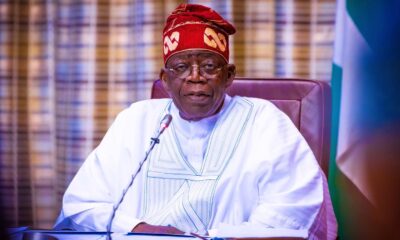
President Bola Tinubu views the security situation as an existential threat. He is doing everything possible, leaving no stone unturned to put the security monster in a chokehold and ensure that the security and safety of Nigerians – the raison d’étre of government – is guaranteed.
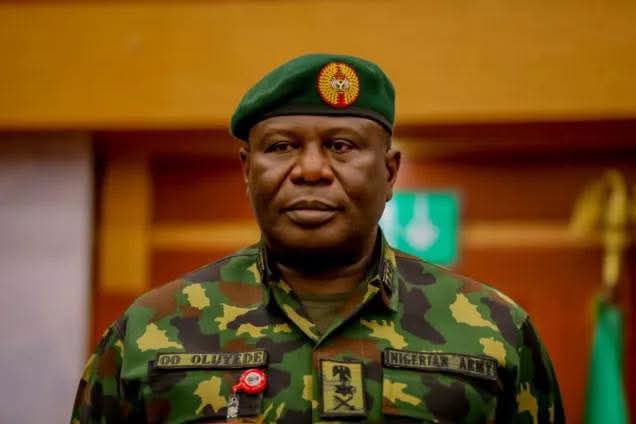
After the Orire abduction, the President sent a high-powered delegation led by his Chief of Staff, Hon. Femi Gbajabiamila, including the National Security Adviser, Nuhu Ribadu and Minister of Defence, General Christopher Musa, among others, to empathise with the families and relations of the victims and comfort the leaders and people of Ogbomoso and Orire communities. The visit was in addition to the ongoing efforts by security agents to trace and apprehend the kidnappers, secure the release of the abducted students and teachers, bring them back to their families and also bring the criminals to justice.
There are indications that the government is close to securing the safe release of the abducted children and teachers. The government has not abdicated its responsibility and continues to work tirelessly to strengthen security across the country. To those sponsoring or exploiting kidnapping and banditry for political gain ahead of 2027, your days are numbered—the government will find you and bring you to justice.
This new security challenge presents a significant opportunity to restate what the Tinubu administration has been doing to confront insecurity in the land, protect Nigerian citizens, and end the security problem for good. These efforts have already yielded some positive results. The desired full outcome will soon emerge.
President Tinubu’s security strategy against kidnapping, banditry and terrorism, for the avoidance of doubt, rests on two legs: kinetic and non-kinetic. On the kinetic side, where intelligence gathering and the use of force are involved, the administration has moved from capacity building to precision targeting. The country’s national security architecture has recently been reset, with a new counterterrorism doctrine anchored in unified command, intelligence gathering, community stability, and counterinsurgency. Nigeria has collaborated with the United States over this security challenge. And since May 2023, Nigeria-US security cooperation has shifted from training and provision of equipment to real-time intelligence fusion, precision strikes, and targeting high-value terrorist commanders. The Nigeria-AFRICOM (United States Africa Command) model emphasises fewer bombs, greater accuracy, and other measures.
In 2024, Nigerian Air Force strike precision rose to 67% as opposed to 41% in 2022, according to official sources. The recent Joint Nigeria-US strike in Arege, Borno State, which degraded ISWAP’s Command Centre, reducing attacks on military outposts and civilian communities, is a case in point. According to reports, 21 suspected ISWAP terrorists were killed in that joint operation. Credible sources had disclosed that three of the 21 terrorists eliminated were middle-level commanders responsible for coordinating raids into Monguno and Damasak.
On 16 May 2026, both President Tinubu and President Trump confirmed that Abu-Bilal al-Minuki, alleged to be the second-in-command of ISIL (ISIS) globally, was killed in a joint counterterrorism operation conducted by Nigeria and US armed forces targeting terrorists in the Lake Chad area. Last year, the Defence Headquarters announced that between 2024 and 2025, armed forces in various theatres neutralised over 13,000 terrorists, arrested 4,375 suspected terrorists, convicted 124 terrorists and insurgents, and over 124,000 fighters and their dependents surrendered to the authorities.
In November last year, President Tinubu declared a nationwide security emergency and designated bandits as terrorists to enable harsher responses, with the firm words: “The terrorists lurking in our forests will have no more hiding places”. He directed that the police recruit 20,000 additional officers, raising the total recruits to 50,000, as well as new recruitment in the military/DSS. Only last week, the President also approved the recruitment of 1000 forest guards for Oyo State in the wake of the Orire abduction.
President Tinubu restated that the police remain the frontline agency in internal security. But they must work with the military, the Directorate of State Services, the National Security and Civil Defence, and other security agencies, explaining that cooperation among security agencies is “vital to eliminating banditry, kidnapping, and armed robbery.”
President Tinubu is also known to have committed substantial funds to the security operations. There has been an increased budgetary allocation to the military. For instance, the 2026 budget earmarked N5.41trillion for Defence and Security – the largest single allocation – to procure modern equipment and boost operational capacity.
Yet, force alone is not enough. Non-kinetic strategies—stakeholder engagement, crime prevention, and de-radicalisation—remain active, with over 124,000 insurgents and dependents exiting through Operation Safe Corridor since 2023.
President Tinubu frames insecurity as ‘foreign to our culture’ and an economic drag, a conviction underscored in tying security to the Renewed Hope Agenda, which prioritises economic diversification, productivity, and human capital to undercut drivers of violence.
This recent security problem also provides an opportunity to address the controversy trailing President Tinubu’s appointment of General Adeyinka Famadewa (rtd) as Special Adviser on Homeland Security. Some have insinuated that the appointment was an attempt to whittle down the influence of the National Security Adviser, Mallam Nuhu Ribadu.
Famadewa’s appointment was informed by the need to put more hands on deck in a bid to tame insecurity and bring terrorists and bandits to justice. It is neither an attempt to curb the powers of NSA Ribadu nor an attempt to curb the influence of top Northerners in government, as some writers have insinuated. The President has often said that he would do whatever is required to end insecurity in the land, including putting more men on the job and more boots on the ground. The NSA has always been a key ally of President Tinubu. He remains so to date. He remains one of the closest to the President, and nothing has undermined that in my view. Mallam Ribadu, as NSA, remains in charge of the country’s national security architecture. Indeed, all good hands must be on deck to bring this menace to an end.
Rahman is Senior Special Assistant to President Tinubu on Media & Special Duties.