


Business
MTN Nigeria Sets Benchmark For Sustainability Reporting In Africa
one of the few African-listed companies to voluntarily adopt the framework

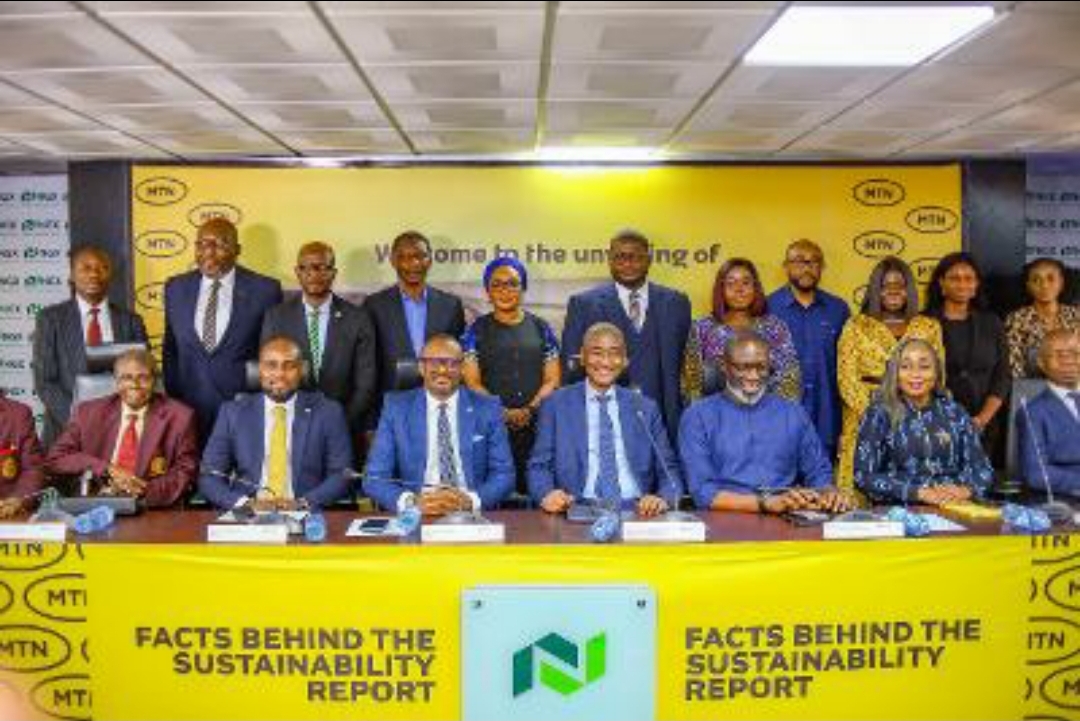
Global pressure on corporations to provide transparent climate and sustainability disclosures is reshaping reporting standards across capital markets. Anticipating that shift, MTN released its first sustainability report in 2018. And it has just published its 2025 Sustainability Report in compliance with International Financial Reporting Standards (IFRS) S1 and S2. It is one of the few African-listed companies to voluntarily adopt the framework ahead of its mandatory implementation timeline.
The report marks MTN Nigeria’s seventh consecutive annual sustainability publication and third straight year as an early adopter of the IFRS sustainability disclosure standards. Independently assured by Ernst & Young (EY), the report aligns with multiple global and local reporting frameworks, including the Global Reporting Initiative Standards, the Sustainability Accounting Standards Board telecommunications standard, the UN Global Compact Principles, the Nigerian Exchange sustainability guidelines, and the Securities and Exchange Commission’s Sustainable Finance Principles.
MTN Nigeria’s CEO, Dr. Karl Toriola, said: “Strong governance and ethical conduct are foundational to our sustainability strategy. We reinforced compliance through our Conduct Passport Framework and robust internal controls.”
In May 2025, we became the first telecommunications company in Nigeria to publicly present a sustainability report on the Nigerian Exchange Group platform, an important milestone in our commitment to IFRS S1 and S2- aligned disclosure and accountability.”
The company also secured Carbon Disclosure Project ratings of ‘B-’ for climate change and ‘C’ for water security. Under the IFRS S2 framework, the telecoms operator disclosed climate-related risks linked to flooding, heat stress, regulatory changes and possible future taxes or charges on carbon emissions, following a climate scenario analysis completed in 2024.
The report also showed that MTN Nigeria now uses a digital reporting format – XBRL. This makes its sustainability and governance data easier for investors and ESG rating agencies to access and analyse through automated systems.
They also carried out assessments to understand how sustainability issues affect both its business operations and society at large, while measuring its overall economic, environmental and social impact from 2021 to 2024. In addition, over one-third of MTN Nigeria’s biggest suppliers (based on spending) have committed to supporting the company’s net-zero emissions goals, although these commitments have not yet gone through an independent audit or verification process.