

Business
How Nigerian Businesswoman Turned Sewing Machine Into Multi-Million Naira Empire
an enterprise that manages a massive workforce and has international recognition

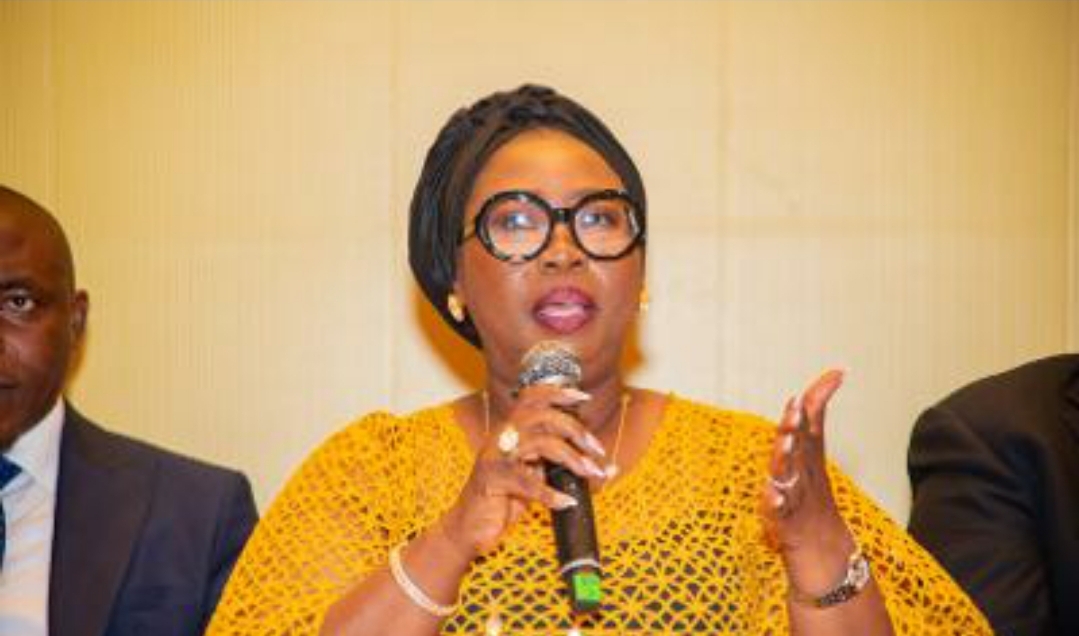
When Yemi Chukwurah, CEO of Seams and Stitches, began her entrepreneurial journey, her entire manufacturing process was confined to a single sewing machine in her dining room in Lagos. Today, her company is an enterprise that manages a massive workforce and has international recognition.
Speaking at the Nigeria-South Africa Chamber of Commerce breakfast forum on August 27, 2026, held to commemorate MTN Nigeria’s 25th anniversary, Chukwurah revealed that her rise was no mere stroke of luck. It was the direct result of plugging into a telecom giant’s aggressive and demanding local supplier programme.
The sheer scale of MTN’s operations provided a unique opportunity for indigenous businesses willing to rise to the occasion. By enforcing strict, world-class operational standards on its local vendors, the telecom operator inadvertently transformed small operations into formidable industrial players. Chukwurah’s enterprise now permanently employs over 150 tailors and can seamlessly scale up to integrate as many as 2,000 contractors during peak production periods. This exponential growth underscores a vital, often overlooked byproduct of foreign direct investment: the aggressive and deliberate incubation of local manufacturing capacity.
The true measure of this corporate empowerment, however, extends far beyond local survival to actual global competitiveness. Chukwurah recounted how American delegates recently visited her Nigerian factory to inspect her production lines and samples. Their verdict was a resounding validation of her honed standards, noting that ‘the quality is the same thing as theirs.’ This high-level endorsement ultimately birthed a lucrative partnership to export garments directly from Nigeria to the United States, proving that indigenous manufacturers can successfully compete on the global stage.
This unprecedented level of local capacity development has naturally caught the attention of global institutions and academia alike. Local United Nations offices, which traditionally might have looked abroad for branded apparel, now source their t-shirts directly from her Nigerian factory. Furthermore, the prestigious Lagos Business School (LBS) has immortalised her operational trajectory by authoring a case study on her business model, ensuring her MTN-backed success story is now taught to the next generation of Nigerian corporate executives.
Chukwurah’s narrative stands as a powerful testament to what happens when multinational wealth is genuinely integrated into the grassroots economy. ‘When you talk about local content and growing suppliers, I don’t know any other company that has done that like MTN Nigeria,’ she declared with palpable gratitude. Ultimately, while MTN has spent the last quarter of a century connecting millions of voices, its most enduring legacy might simply be stitching together a resilient, globally competitive fabric for Nigeria’s SME sector.
She spoke alongside fellow panelists Udeme Ufot, Group Managing Director, SO&U , Ayeni Adekunle, CEO, BHM Holdings, and Afolabi Sobande, Group COO, Computer Warehouse Group who stressed that intentional local execution and capacity building remain key drivers for survival in Africa’s rapidly expanding content economy