

Society
From Buhari To Tinubu: How Nigeria Built Fertiliser Buffer Against Global Supply Crisis
securing critical fertiliser inputs before global markets tightened

When United States President Donald Trump declared a fertiliser emergency on June 29, 2026, suspending certain trade duties on phosphate fertiliser imports from Morocco to secure supplies for American farmers, much of the world was already grappling with a market rattled by war, export restrictions and supply chain disruptions.
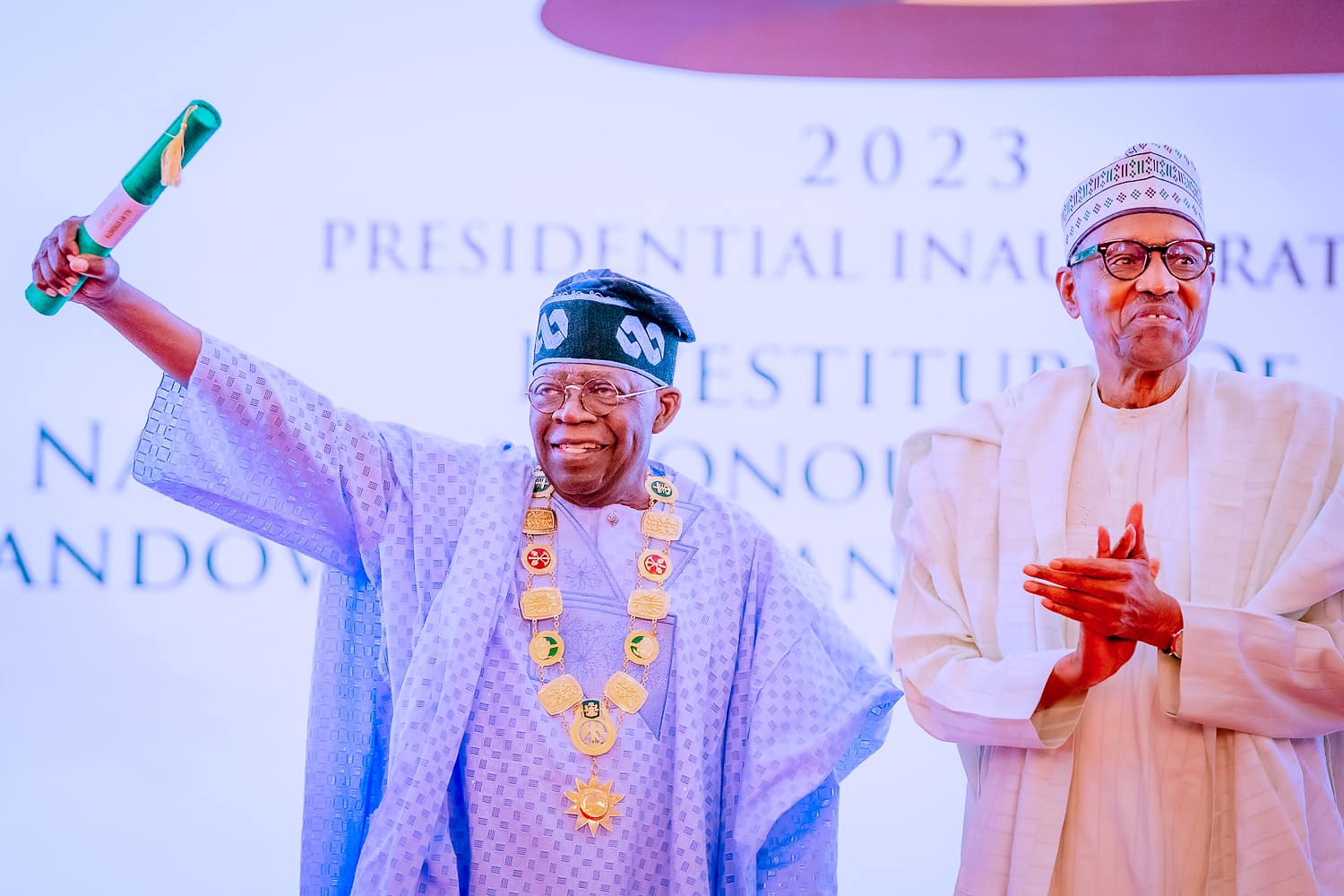
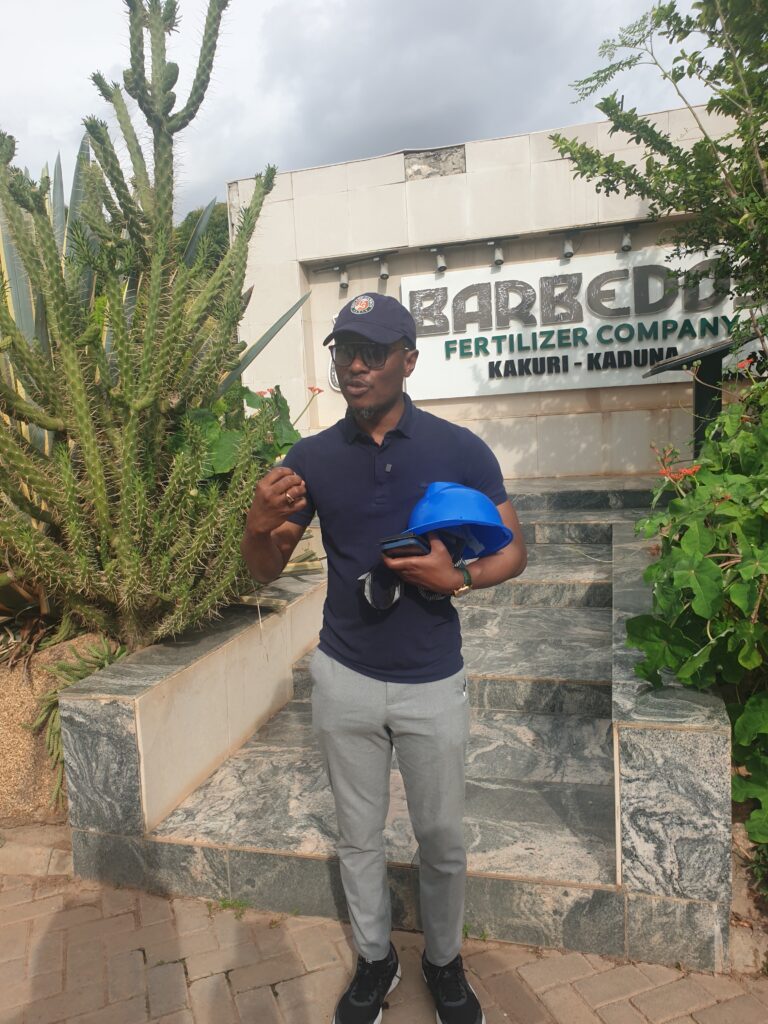
But, according to Senior Special Assistant to President Bola Tinubu on Digital Communications, Engagement and New Media Strategy, O’tega Ogra, Nigeria had quietly taken a different path months earlier, securing critical fertiliser inputs before global markets tightened and demonstrating how policy continuity from the Muhammadu Buhari administration into the Tinubu government helped shield the country from the worst of the crisis.
In a wide-ranging analysis of the global fertiliser market, Ogra argued that while the world’s attention was fixed on the Strait of Hormuz, China, Russia and Brazil, Nigeria was implementing a strategy whose foundations had been laid a decade earlier.
“There is a particular kind of Nigerian scarcity that does not announce itself as scarcity at first,” Ogra wrote,.adding “It starts with a farmer saying he will wait one more week. Then another week. The rains come properly, and the fertiliser has still not arrived.”
According to the Senior Presidential aide, by the time the consequences become obvious, “the problem has changed name. It is no longer fertiliser. It is food price, inflation, hunger, politics.”
He explained that the global supply shock did not begin with Trump’s proclamation but with the conflict that disrupted shipping through the Strait of Hormuz, a critical route for the international fertiliser trade.
“Before the war, roughly a third of global seaborne fertiliser trade was exposed to that corridor,” he noted, adding that Gulf producers accounted for about 35 per cent of global urea trade while almost half of the world’s seaborne sulphur exports also passed through the region.
Ogra explained that sulphur, though largely overlooked outside industrial circles, is indispensable to phosphate fertiliser production.
“So, a ship that fails to carry sulphur out of the Gulf can eventually affect what a farmer pays to feed soil on another continent,” he wrote, deepening insights with “that sentence sounds absurd until you remember that this is how the world actually works.”
As supplies tightened, China restricted fertiliser exports to prioritise domestic food security, Russia maintained controls over parts of its fertiliser trade, Turkey moved to protect sulphur supplies, while buyers around the world rushed to secure inventories.
“Nobody needed to coordinate. Fear did the coordination. And the market tightened,” Ogra observed.
Even Brazil, one of the world’s agricultural superpowers, struggled to secure sufficient fertiliser despite its vast farming capacity.
“The lesson was becoming difficult to miss: having land is not enough, having farmers is not enough, and even having money is not enough if everybody arrives in the same market at the same time looking for the same tonnes,” the member of the executive body of the World Advertisers body pointed out.
Against that backdrop, he said, Nigeria’s early procurement strategy proved decisive.
“It was into this confusion that President Trump issued his proclamation,” Ogra wrote.
While other countries were still scrambling to secure supplies, he said Nigeria had already moved.
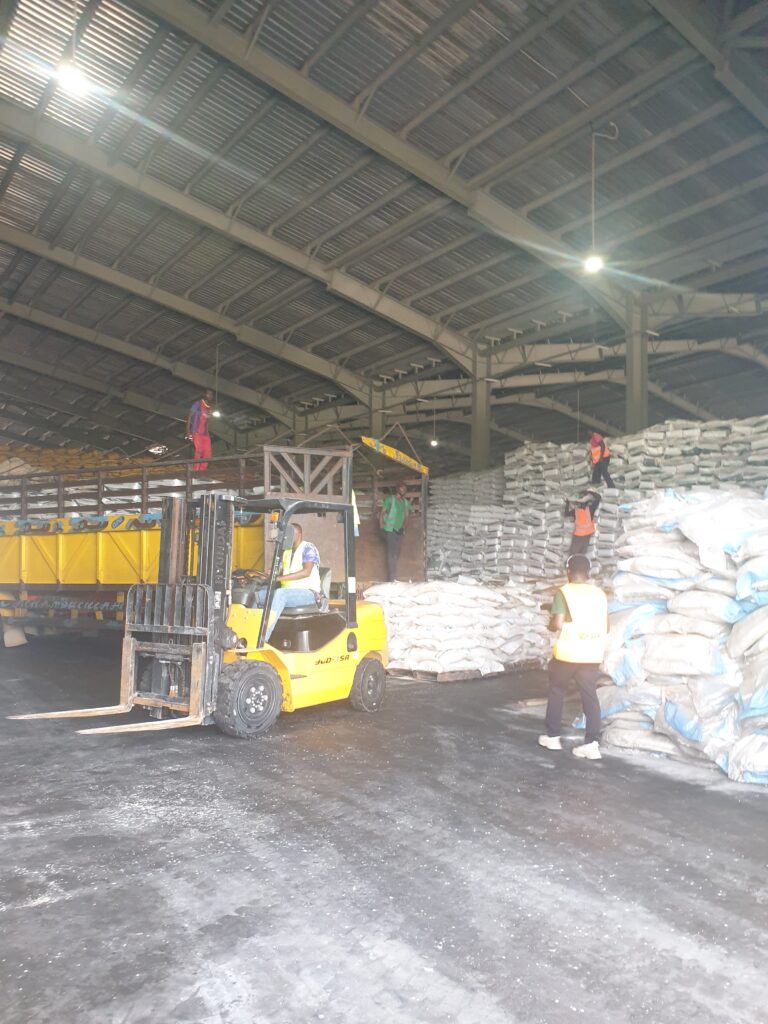
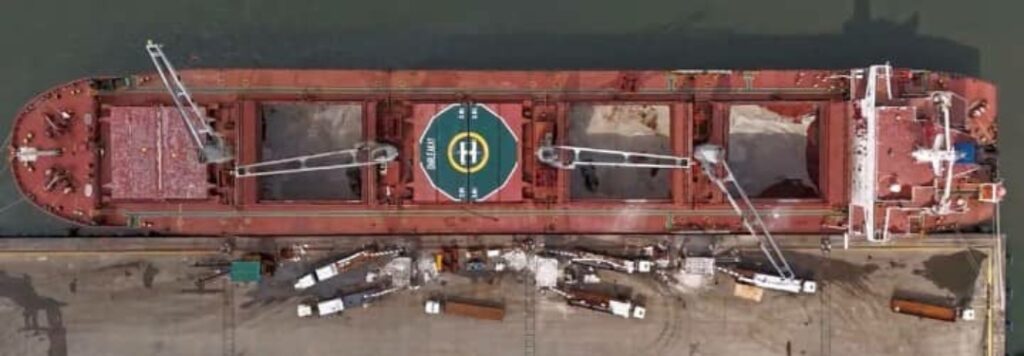
“In the whole of 2025, the programme imported 540,173 metric tonnes of critical fertiliser inputs through 12 discharged vessels. By May 31, 2026, Nigeria had already secured 449,304 metric tonnes. Ten vessels had discharged or were in transit,” the recently elected President of Advertising Association of Nigeria (ADVAN) said.
He noted that the programme was targeting 1.1 million metric tonnes of fertiliser inputs in 2026.
Adding, “May. Before President Trump declared an emergency. Before the late-June debate over whether Hormuz was truly reopening. Before Brazil entered July still trying to secure much of what it needed for its next crop. Nigeria had already moved.”
According to Ogra, strategic forward contracting enabled Nigeria to secure major savings despite rising international prices.
“In 2025, the programme’s procurement strategy recorded ₦61.58 billion in savings against prevailing global market rates. In 2026, early contracting secured DAP at roughly $50 per metric tonne below peak market prices,” disclosed.
He added: “Government often congratulates itself for spending less. Sometimes the real saving comes from spending earlier.”
Ogra noted that the achievements did not begin under the Tinubu administration.
Explaining that, “the Presidential Fertiliser Initiative did not begin under President Bola Ahmed Tinubu. It began under President Muhammadu Buhari in 2016. That needs to be said plainly because our politics has developed a tiresome habit of pretending every administration began the country again.”
He said the Buhari administration fundamentally restructured Nigeria’s fertiliser sector by replacing large-scale imports of finished fertiliser with local blending using imported phosphate and potash alongside locally produced urea and limestone.
“The PFI changed the arrangement. Bring in critical inputs Nigeria could not produce enough of, particularly phosphate and potash. Combine them with locally available urea and limestone. Blend here. That was the idea, and it worked,” the presidential noted.
Today, he said, Nigeria has 92 operational fertiliser blending plants supporting more than 100,000 direct and indirect jobs, while over 128 million bags of fertiliser have been delivered under the initiative.
“The initiative helped eliminate an estimated ₦60 billion annual subsidy burden and conserved more than $200 million in foreign exchange. President Buhari deserves credit for that. Full credit. I do not understand why this should be controversial,” he shared.
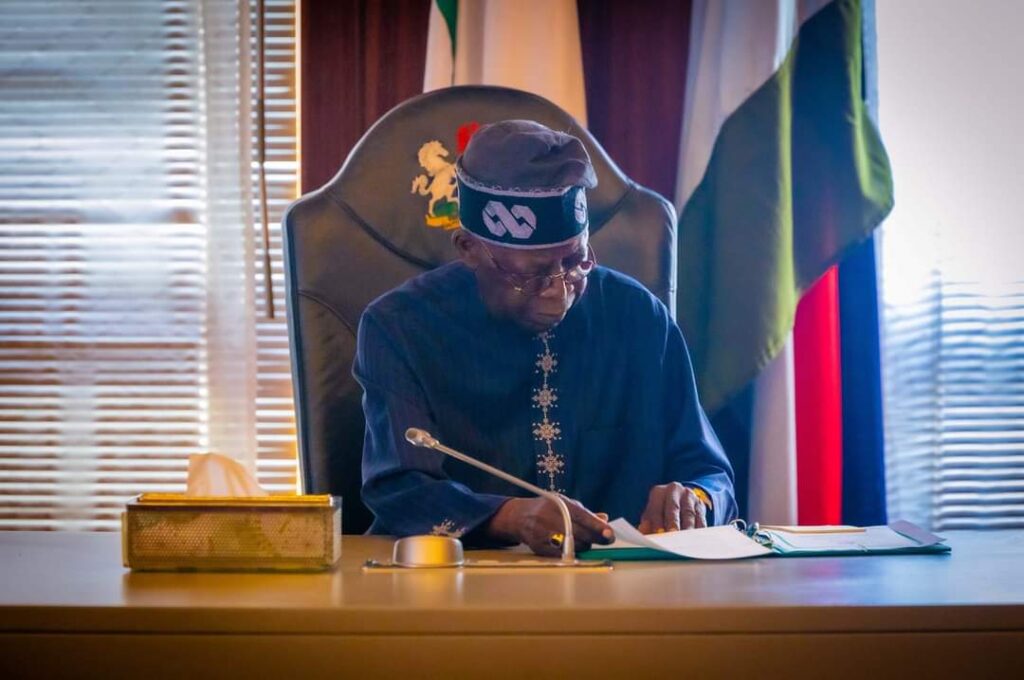
According to the presidential spokesman, President Tinubu inherited an intervention that had already evolved beyond its original design and chose to strengthen rather than discard it.
“President Tinubu did not invent the PFI. However, what he inherited was no longer the same programme President Buhari had launched in 2016,” wrote for the record.
He explained that following the transfer of the programme to the Ministry of Finance Incorporated in August 2025, reforms have focused on improving financing, diversifying suppliers, reducing exposure to geopolitical risks and gradually liberalising procurement under private-sector competition.
“The President’s intervention has been to push the PFI into its next phase rather than throw it away.”
“You are trying to preserve the buffer while reducing dependence on the buffer. Keep supply stable while opening the market further,” the ADVAN top-man wrote.
Looking beyond procurement, Ogra stressed that dependable fertiliser supply could transform Nigeria’s agricultural calendar.
“A country of more than 200 million people cannot continue organising its food system around one hurried conversation with the clouds,” he insisted.
He said consistent fertiliser availability, alongside irrigation, improved seeds, mechanisation and financing, would make year-round farming increasingly feasible, noting that “For years, we have spoken about dry-season farming as an intervention. It should become normal.”
Ogra also highlighted plans for a National Fertiliser Adoption and Productivity Enhancement Initiative designed to reach five million smallholder farmers nationwide, saying the next challenge was not merely ensuring fertiliser availability but increasing adoption and productivity.
“Availability is not adoption,” he wrote, clarifying “A country can have fertiliser and still use too little of it, use the wrong blend, apply it badly or fail to get it to the farmer who could produce more with it.”
The presidential aide, however, warned that efficient procurement would count for little if fertiliser failed to reach genuine farmers.
“Nigeria can procure intelligently and distribute inefficiently,” he cautioned.
Referring to fertiliser distribution under the Renewed Hope Farm Input Support Programme, he argued that implementation must be monitored closely.
“Four bags per farmer. Fine. Now follow the bags. Did the farmer receive them? Did four arrive as four? Did they arrive before planting? Did someone with no farm suddenly discover agriculture when the beneficiary list appeared?” he threw vital posers.
And, stressed that “a clean international procurement can still be ruined by a dirty last mile.
“The farmer is the point. Not the vessel. Not the press release. Not even the savings. The farmer.”
For Ogra, the broader lesson extends beyond fertiliser policy.
“One administration rebuilt domestic blending capacity. Another inherited a functioning intervention and is trying to move it into a more liberalised, better-financed and less geopolitically exposed phase.”
“That is how government should work. Not every predecessor is an enemy. Not every inherited policy is a relic. Sometimes the best thing a President can do with a good idea is leave the name alone and make the thing work better.” the stated.
He concluded by arguing that if Nigeria continues strengthening irrigation, security, input distribution and agricultural financing, the country’s farmers may soon think beyond a single annual harvest.
“Perhaps they will begin asking a different question,” he wrote, highlighting it with “What do I plant next?”