

Business
FG Not Involved! – Key Things To Know About Gold Refinery In Lagos
is a purely private-sector initiative

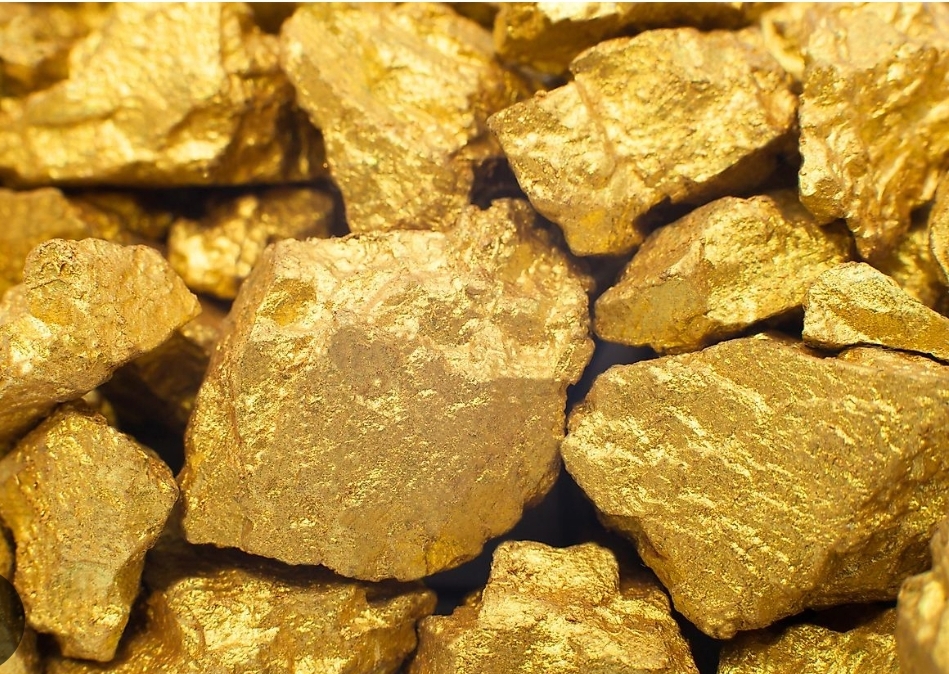
The Federal Government has firmly distanced itself from claims that it owns or sited a gold refinery in Lagos, describing such assertions as false, misleading and a clear misreading of facts surrounding the project.
The clarification follows public criticism triggered by the announcement of the proposed commissioning of a gold refinery in Lagos, which some commentators wrongly attributed to the Federal Government and framed as a breach of the federal character principle.
According to the Ministry of Solid Minerals Development, the Lagos gold refinery is a purely private-sector initiative promoted by Kian Smith, a 100 per cent privately owned Nigerian mining company.
At no point, the ministry stressed, did the Federal Government announce the establishment or ownership of a gold refinery in Lagos or in any other part of the country.
Rather, what was communicated was the emergence of a private investment aligned with government policy to deepen value addition in the solid minerals sector.
The Minister of Solid Minerals Development, Dr. Dele Alake, had been unequivocal in his remarks that the Lagos refinery is one of several privately owned refineries expected to come on stream across the country.
Other investors, he noted, are already at various stages of developing similar facilities in different regions, driven by commercial logic and market strategy, not by government directives on location.
The ministry also underlined that it is neither the role nor the practice of the Federal Government to compel private companies to site their operations in specific locations.
Investors determine where to locate based on access to infrastructure, markets, logistics and profitability considerations. Government’s role, it said, is to create an enabling environment through clear policy, regulation and incentives that allow private capital to thrive.
The Lagos gold refinery is being presented as a direct outcome of the value-addition policy introduced by the Ministry of Solid Minerals Development, which discourages the export of raw minerals and prioritises local processing and manufacturing.
Since the policy was rolled out, Nigeria has recorded a wave of large-scale investments into mineral processing, signalling a shift away from the long-standing dependence on unprocessed mineral exports.
Among the headline projects linked to this policy push are a $600 million lithium processing plant in Nasarawa State, a $400 million rare earth elements plant also in Nasarawa, and a $200 million ASBA lithium plant in Abuja.
Collectively, these projects are expected to attract significant foreign capital inflows, create thousands of direct and indirect jobs, and strengthen Nigeria’s industrial base in critical minerals.
In the case of the Lagos refinery, the Federal Government has publicly congratulated the founder and managing director of Kian Smith, Nere Emiko, for what it described as years of perseverance, enterprise and leadership in delivering the project.
The ministry sees the refinery as proof that sustained policy clarity can unlock private investment in sectors previously dominated by informality and exports of raw materials.
Beyond correcting the ownership narrative, the ministry expressed concern over what it described as a failure of basic due diligence by critics who assumed government involvement without verifying facts.
It warned that such misrepresentation risks stoking unnecessary regional tension and undermining informed national discourse on economic development.
As Nigeria pushes to diversify its economy and reduce overreliance on oil revenues, officials insist that private-sector-led industrialisation in mining and minerals processing will remain central to the strategy.
The ministry reaffirmed its commitment to encouraging more investors to establish processing and manufacturing plants across the federation, arguing that the spread of such projects will ultimately be driven by investment flows rather than political sentiment.
The Alake-led Ministry of Solid Minerals Development reiterated that the Lagos gold refinery should be understood for what it is: a privately financed business venture operating within a government-backed policy framework aimed at building a stronger, more self-reliant Nigerian economy.