

Business
Details As Nigeria’s Downstream, Midstream Sectors Record Stronger Performance Across Key Metrics
Gas supply remained a major driver of energy security

Nigeria’s downstream and midstream sectors continued to show measurable improvement, with fresh data pointing to stronger product supply, better national stock levels, and expanding domestic refining capacity.
The developments signal a more stable operating environment and a gradual shift toward greater self-sufficiency in the nation’s energy market.
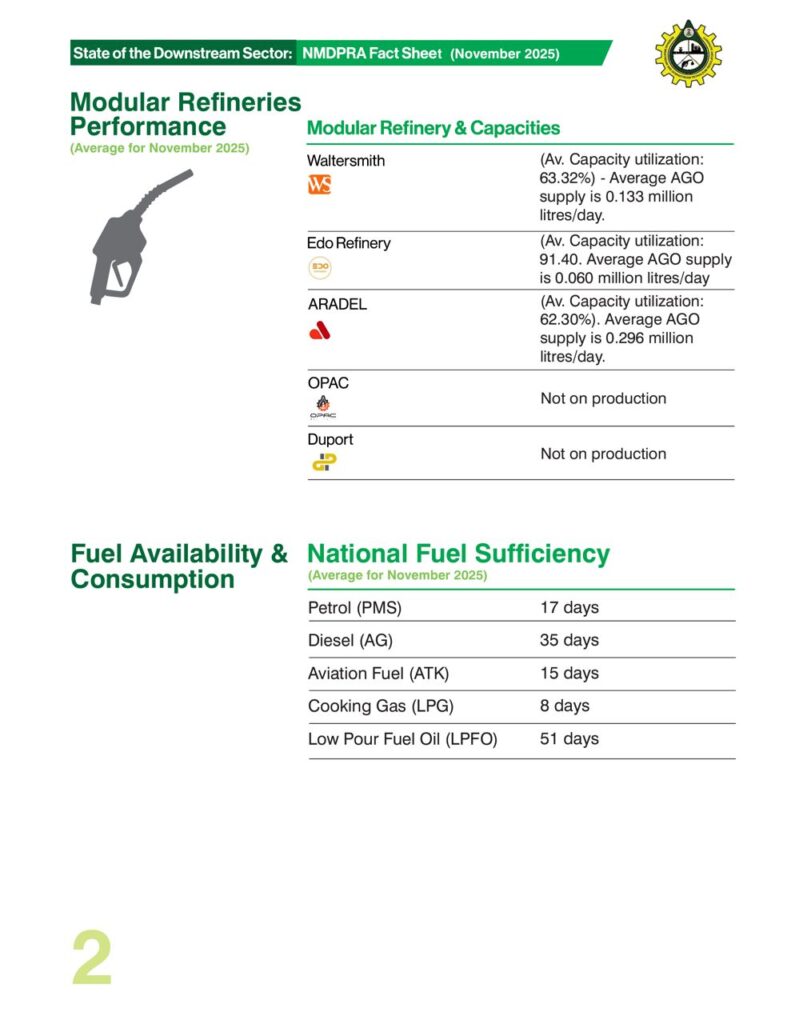
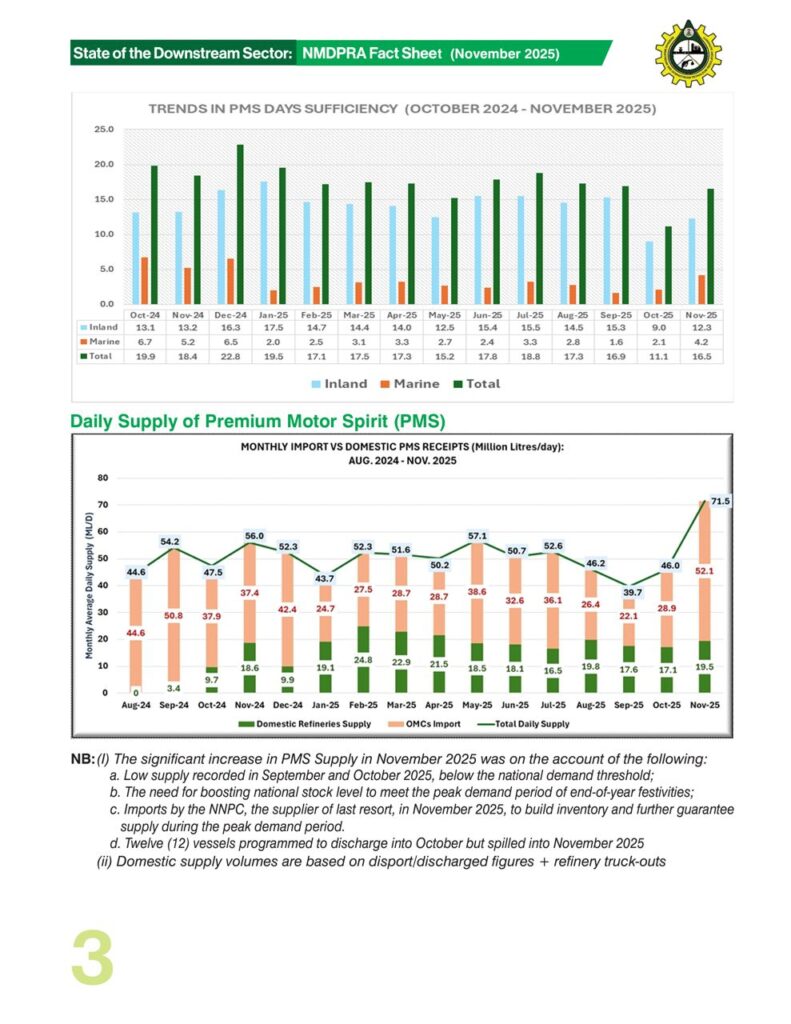
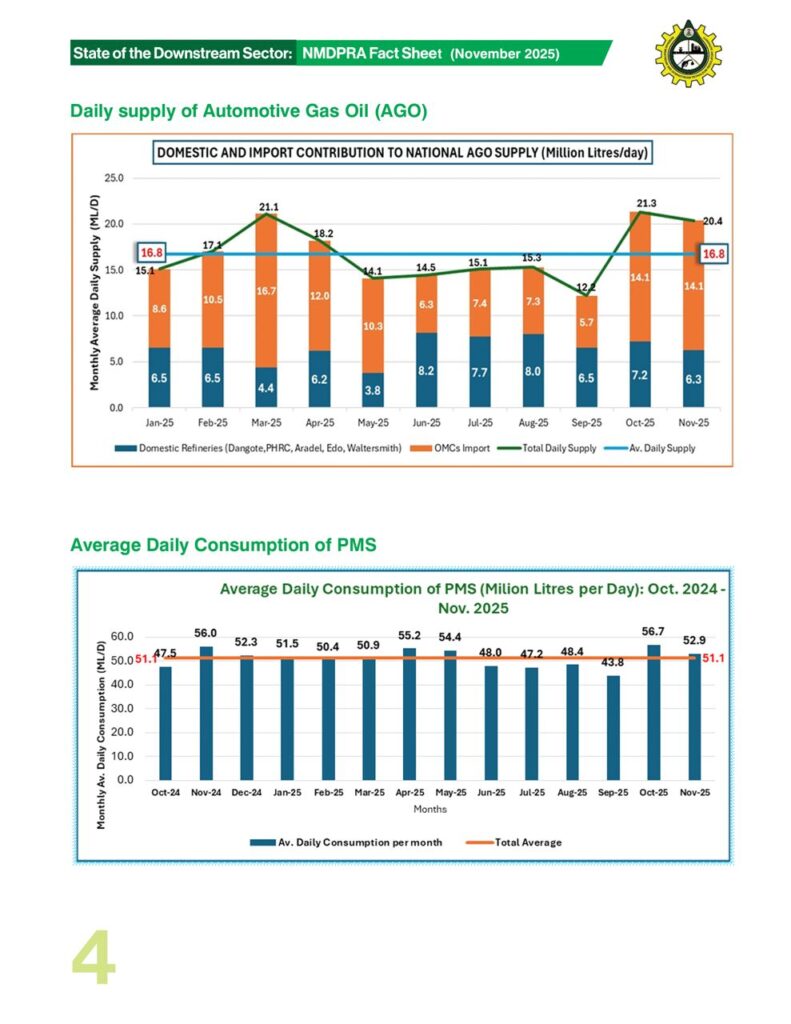
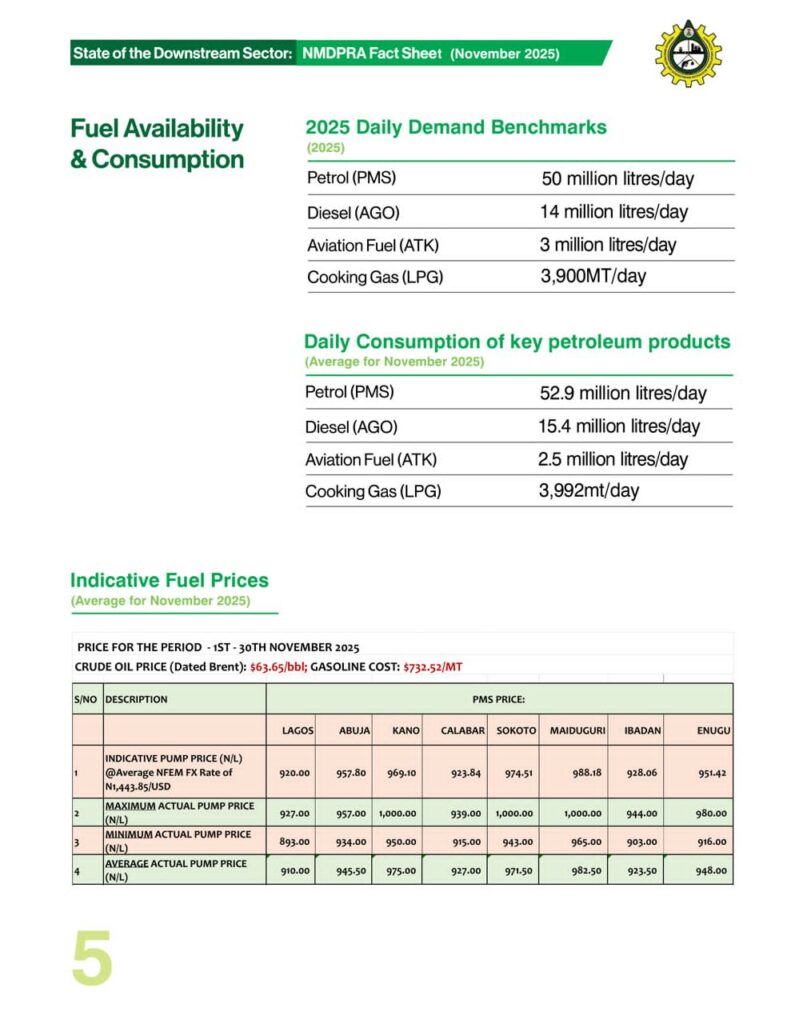
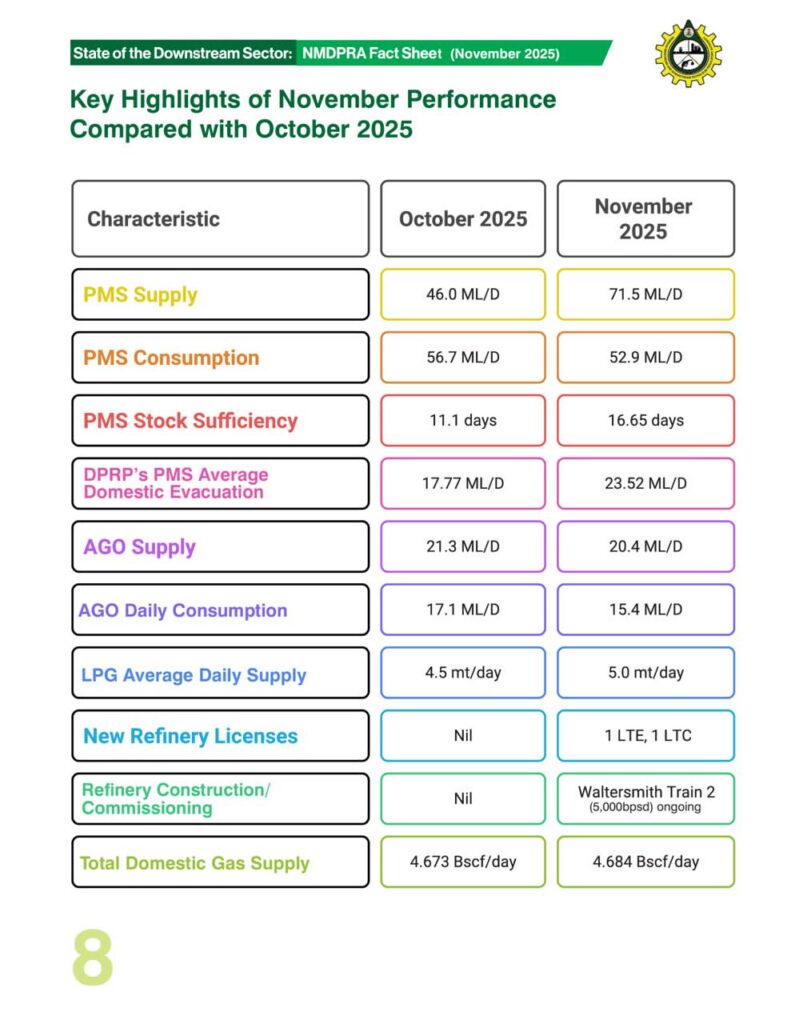
Daily PMS supply averaged 71.5 million litres, supporting a national sufficiency level of 16.65 days, while consumption held at 52.9 million litres per day.
The gap between supply and consumption reflects easing pressure on distribution networks and improved stock management across depots nationwide. Diesel supply averaged 20.4 million litres per day, ahead of the 15.4 million litres daily consumption figure, further supporting industrial and transport operations.
These revelations are strongly backed by the November 2025 State of the Midstream and Downstream Fact Sheet released by the
NMDPRA means Nigerian Midstream and Downstream Petroleum Regulatory Authority (NMDPRA).
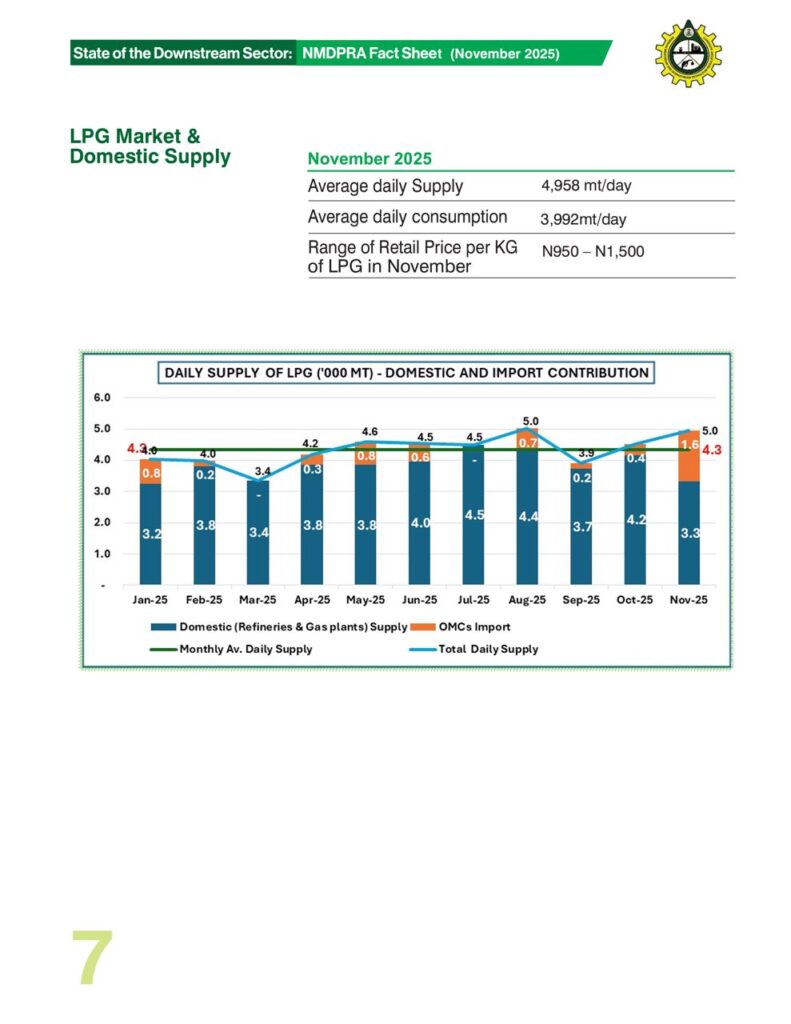
The LPG market also strengthened, with daily supply hitting 4,958 metric tonnes, a level above national demand. This indicates rising market confidence, improved logistics, and continued adoption of gas for household and commercial use.
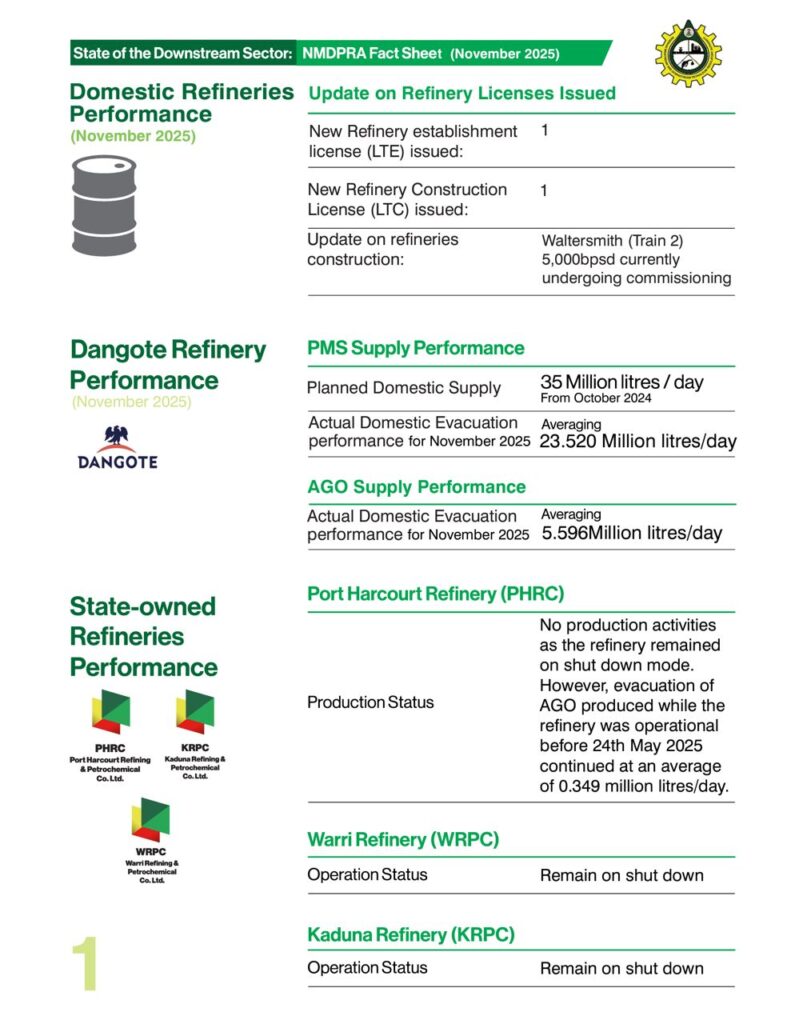
On the refining side, the sector recorded new activity with the issuance of one establishment licence and one construction licence, underscoring sustained investor interest in local refining.
Waltersmith’s 5,000bpsd Train 2 also advanced its commissioning process, contributing to the gradual expansion of domestic processing capacity.
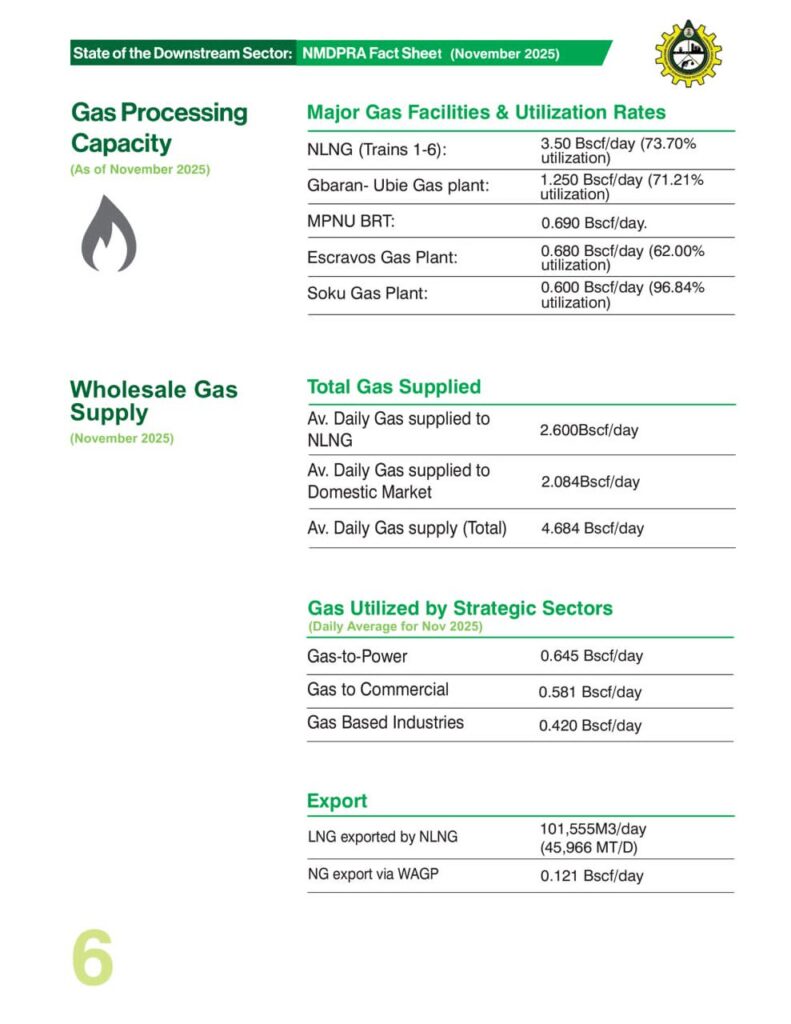
Gas supply remained a major driver of energy security, with 4.684 billion standard cubic feet per day delivered to homes, industries, and export obligations. This steady output continues to support power generation, manufacturing, and Nigeria’s broader energy transition plans.
Across all indicators, the data shows progressing stability and an industry slowly strengthening its fundamentals. As supply balances improve and domestic production expands, the sector is positioning Nigeria for a more secure and predictable energy future.