

Politics
Leadership Means Staying To Fix The Fire — Top Presidential Aide Ogra To Obi On “Run Away” Remark
insited that the episode exposed deeper concerns about judgment

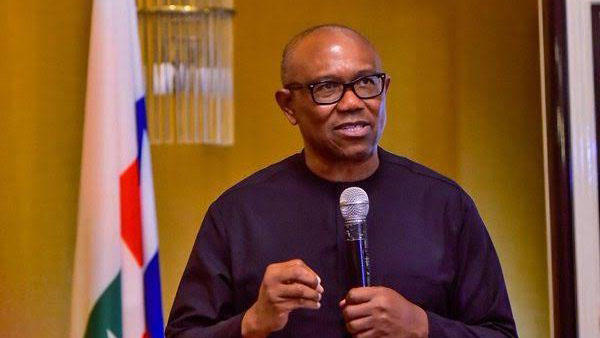
Presidential spokesman Otega Ogra has criticized former Labour Party presidential candidate Peter Obi over comments he recently made comparing leadership to a person fleeing a burning house, arguing that true leadership is defined by confronting challenges rather than walking away from them.
Ogra, in a key reaction, said Obi’s remarks raised fundamental questions about responsibility, accountability and the qualities required of leaders entrusted with the welfare of millions of people.
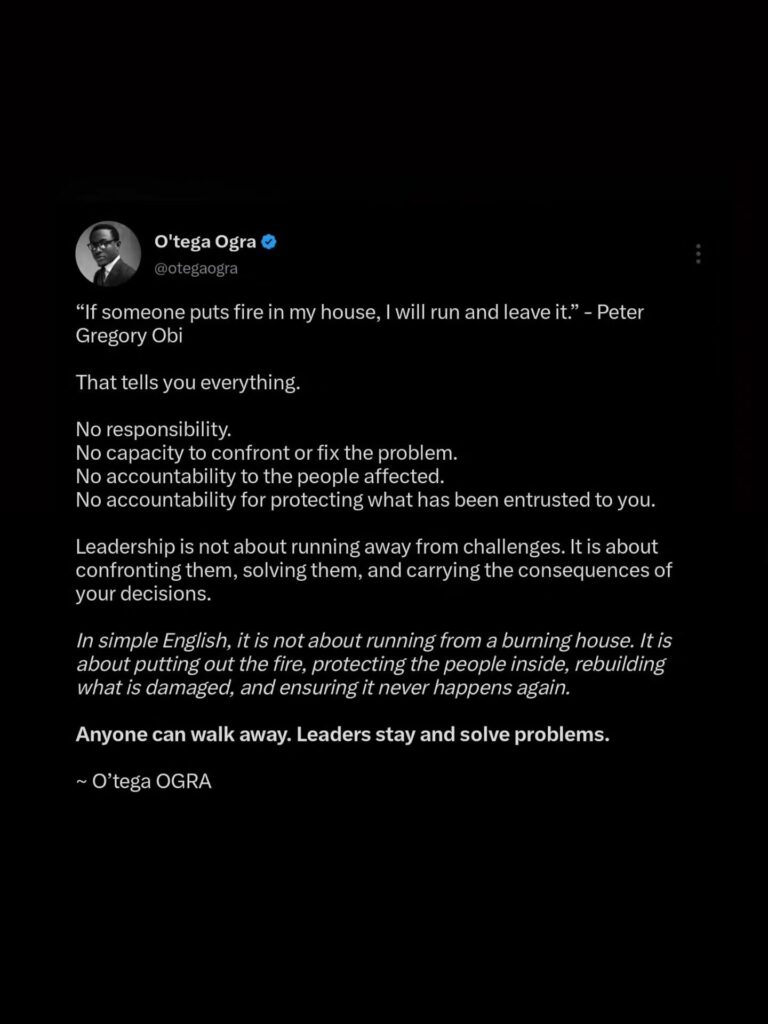
Quoting Obi’s statement that, “If someone puts fire in my house, I will run and leave it,” Ogra argued that such a position reflects an unwillingness to confront problems when they arise.
“That tells you everything,” Ogra said.
According to him, “No responsibility. No capacity to confront or fix the problem. No accountability to the people affected. No accountability for protecting what has been entrusted to you.”
The presidential aide maintained that leadership should not be measured by a person’s ability to escape difficult situations but by their willingness to face challenges and provide solutions.
“Leadership is not about running away from challenges. It is about confronting them, solving them, and carrying the consequences of your decisions,” he stated.
Drawing a contrast between what he described as leadership and retreat, Ogra argued that the duty of those in positions of authority is to protect lives, manage crises and rebuild when setbacks occur.
“In simple English, it is not about running from a burning house. It is about putting out the fire, protecting the people inside, rebuilding what is damaged, and ensuring it never happens again,” the senior special assistant to the president on digital communications, engagement and new media strategy analysed.
He added: “Anyone can walk away. Leaders stay and solve problems.”
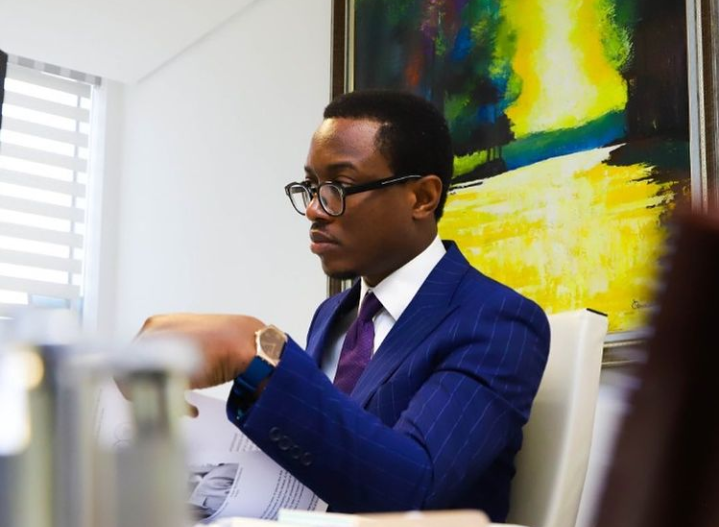
Ogra also appeared to broaden his criticism beyond Obi’s controversial remarks, taking aim at what he described as the silence of some opposition figures following a recent interview that has generated widespread political debate.
The presidential spokesman questioned why individuals who frequently issue public statements on national affairs had not publicly addressed the controversy.
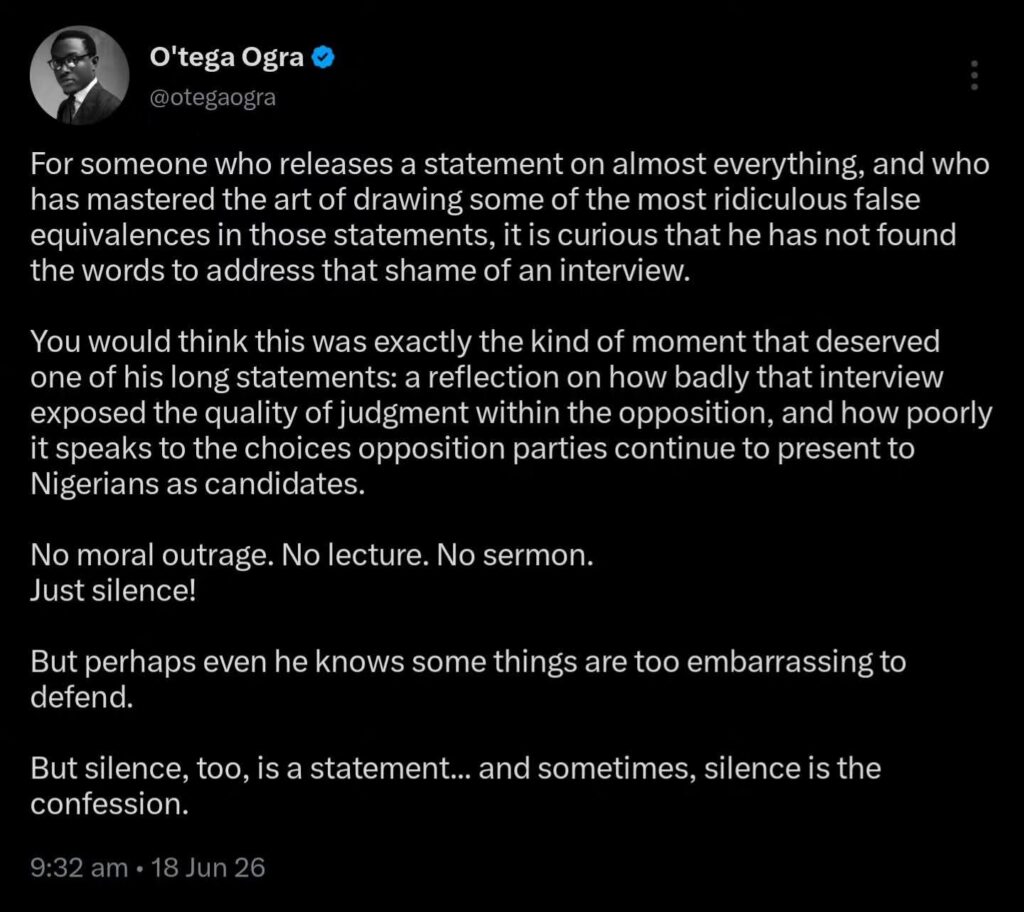
“For someone who releases a statement on almost everything, and who has mastered the art of drawing some of the most ridiculous false equivalences in those statements, it is curious that he has not found the words to address that shame of an interview,” Ogra pointed out.
He insited that the episode exposed deeper concerns about judgment within opposition circles and raised questions about the quality of leadership alternatives being presented to Nigerians.
“You would think this was exactly the kind of moment that deserved one of his long statements: a reflection on how badly that interview exposed the quality of judgment within the opposition, and how poorly it speaks to the choices opposition parties continue to present to Nigerians as candidates,” he stated.
Ogra further accused the opposition of failing to demonstrate the moral conviction it often demands from others.
“No moral outrage. No lecture. No sermon. Just silence!” he declared.
Suggesting that silence itself could be interpreted as a political statement, Ogra concluded that some issues may simply be too difficult for political actors to defend publicly.
“But perhaps even he knows some things are too embarrassing to defend. But silence, too, is a statement… and sometimes, silence is the confession,” he highlighted.
The comments add to the growing engagements between supporters of the administration and opposition figures as political conversations increasingly shift toward questions of leadership, accountability and the direction of the country ahead of the next electoral cycle.