

Society
How Nigeria’s Fertilizer Revolution Is Protecting Local Farmers, Powering Food Security
away from the loud debates on monetary policy

At the heart of Nigeria’s current economic struggle, a quiet revolution is unfolding in the agricultural belts of the country, away from the loud debates on monetary policy.
It is a defense strategy built not on armaments, but on the chemical composition of soil nutrients and the empowerment of the smallholder farmer.
As global supply chains continue to shudder under the impact of Middle Eastern conflicts and eastern European logistics logjams, the Nigerian state has moved to shield its most vulnerable economic actor—the smallholder farmer—from the devastating spikes of imported inflation.
This shield, anchored by the federal government’s restructured Presidential Fertiliser Initiative (PFI) under the Ministry of Finance Incorporated (MOFI), has saved the nation an estimated ₦61.58 billion in 2026 alone, providing a critical safety net for domestic food security.
For decades, the smallholder farmer has been the unsung casualty of international market volatility. When global chemical prices spiked, the cost of NPK fertilizer skyrocketed on the local market. Desperate farmers either under-applied fertilizer—ruining their crop yields—or fell victim to predatory, unregulated “filler” blenders who sold adulterated bags of low-nutrient sand.
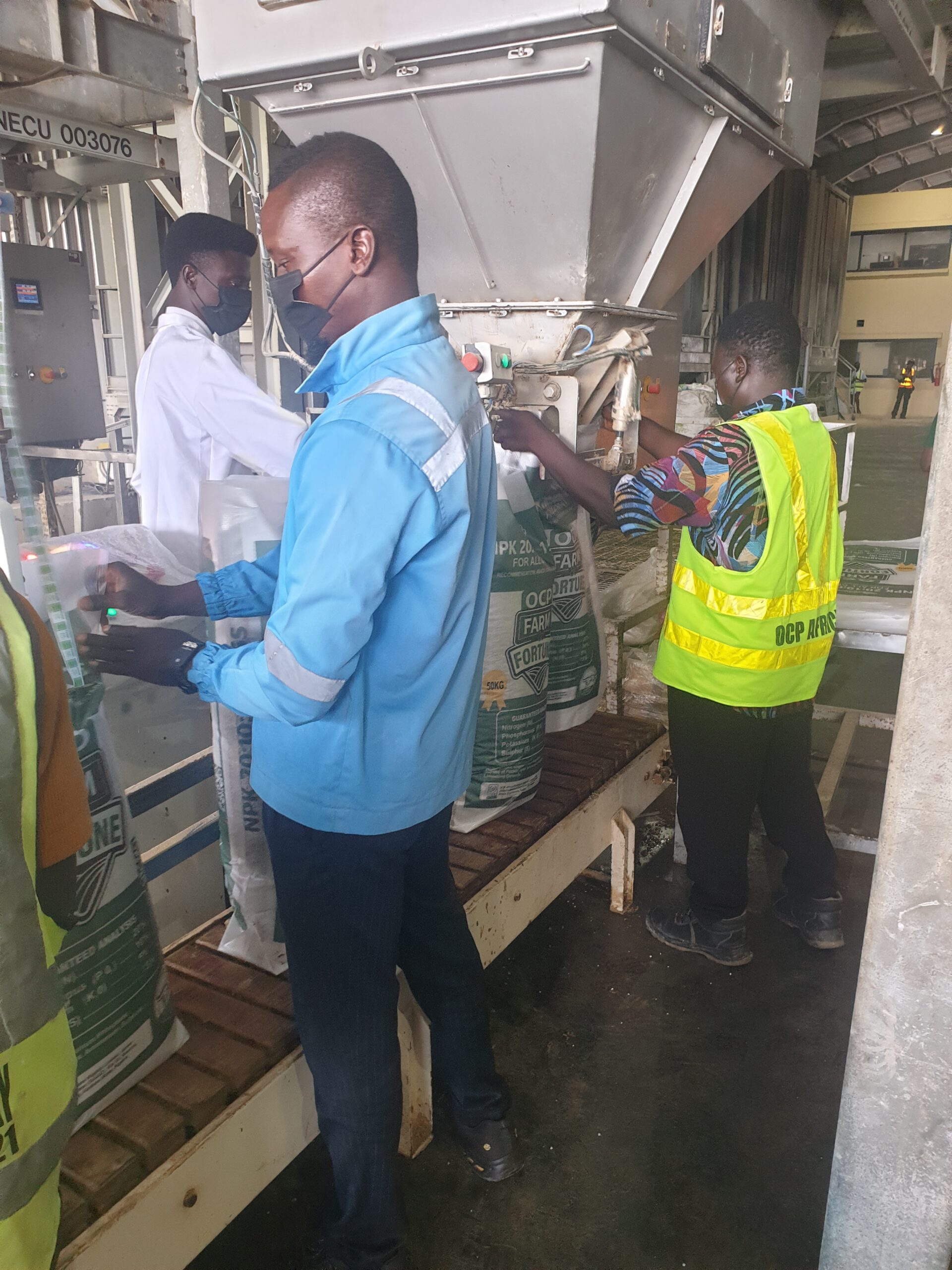
Mr. Peter Amahwe, General Manager of OCP Africa’s Kaduna Blending Plant, explained the existential weight of this problem during a recent physical verification audit led Senior Presidential aide, Otega Ogra.

“At the end of the day, what is key is that when the farmer is paying for these nutrients, he knows that the nutrients he is paying for is exactly what he is getting. Because he uses those nutrients to plan his activities. If you go and sell a nutrient that is different from what you have written on the bag, in the end, you have affected his plan. The labor he has done, the investment of buying seeds—everything is tied to the fact that everything must be good so that the output will be good,” he gave deep insights.
To counter this quality deficit, OCP Africa has pioneered custom, crop-specific and soil-specific blends rather than generic, one-size-fits-all formulas.
Through specialized laboratory testing, OCP now designs highly tailored nutrients for maize, rice, cocoa, and ginger and other crops.
This scientific precision protects the farmer’s financial investment, ensuring that every naira spent on seeds, herbicides, and labor translates directly into predictable, bountiful harvests.
The physical translation of federal policy into soil protection relies heavily on indigenous private agribusinesses.
At Barbedos Fertilizers & Blending Company Limited in Kaduna, the presidential fact-finding delegation led by Ogra, who is the senior special assistant to the president on digital communications, engagement and new media strategy to President Bola Tinubu, inspected a facility operating at a massive blending capacity of 90 metric tons per hour.
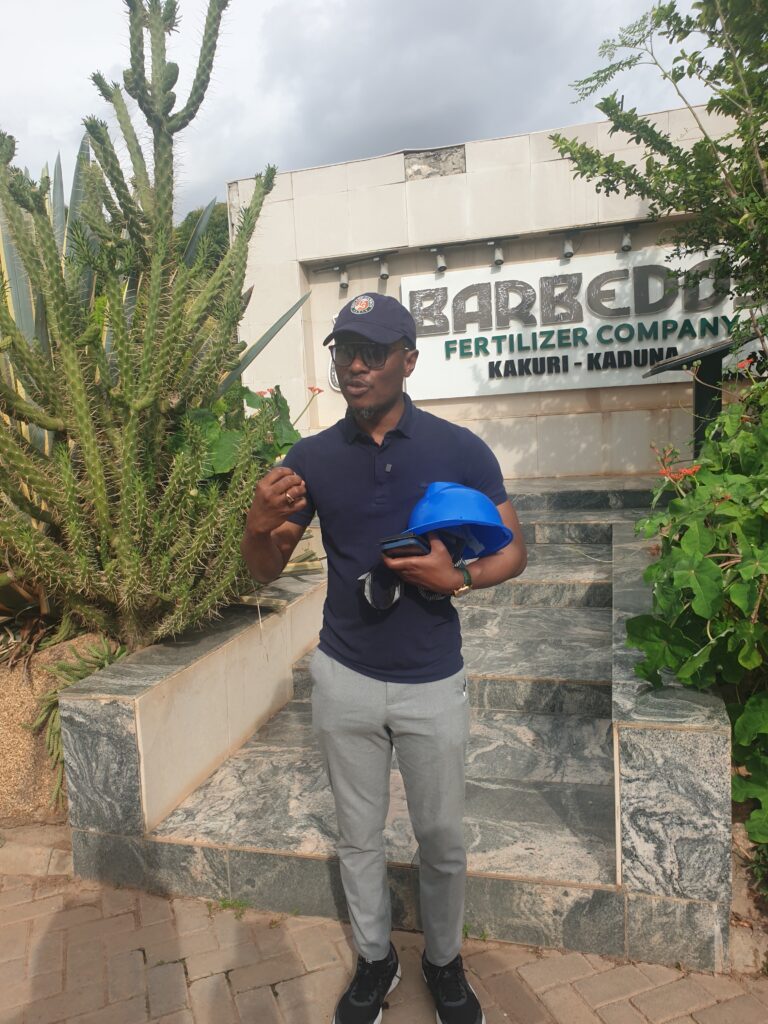
Mr. Nasser Ismail, hosting the delegation, emphasized that local production is the only viable pathway to shielding the domestic food market from global shocks.
“Our primary objective is to produce high-quality fertilizer blends that are specifically tailored to meet the distinct soil and crop requirements of Nigerian farmers. By blending locally, we are reducing costs, creating hundreds of direct and indirect jobs for the youth here in Kaduna, and directly supporting the President’s Renewed Hope Agenda,” the Production Manager stated.
To ensure that the blended product survives the journey to the remotest farms of the Sahel, Barbedos uses high-grade, moisture-resistant BOPP-coated bags. This simple technological intervention protects the fertilizer from early degradation, guaranteeing that the chemical composition remains fully active when applied to the crop according to disclosures.
From a developmental perspective, the domestic blending of fertilizer is a critical national security imperative.
Speaking during the Kaduna audit, Ogra outlined the structural progress made by utilizing local raw materials.
“When we have 80% of raw materials in Nigeria and can produce fertilizers, why import it? If we have local fertilizers that have proper quality control, then the standard of farming will improve output… It helps to ensure, it gives us food security guarantees—higher yields of our crop products, less pest resistance, and all those things. And it can also ensure food security and food sovereignty of our country,” he explained.
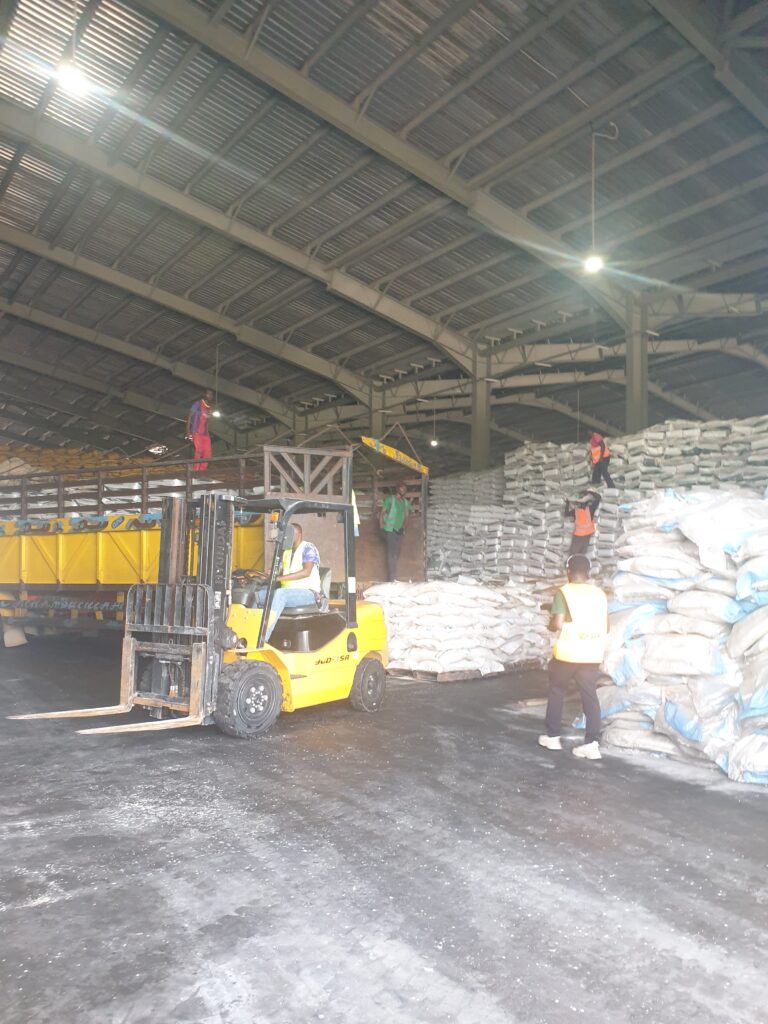
This structural insulation is already yielding measurable results. Under the federal government’s “Renewed Hope Farm Input Support Programme (RH-FISP)”, managed through the National Agricultural Development Fund (NADF), 515,720 bags of locally produced fertilizer are being distributed directly to 128,930 smallholder farmers in 25 states and the FCT.
By bypassing expensive international brokers and importing only critical raw elements like Moroccan phosphates, the PFI has kept input costs manageable during a period of unprecedented global upheaval.
As the rain progresses across the country’s agricultural heartlands, Nigeria’s smallholder farmers are no longer passive victims of international supply chain wars.
Secured by scientific crop nutrition, robust indigenous blending capacity, and a targeted government subsidy framework, they are standing at the vanguard of a self-reliant, food-secure nation.