

Business
Why Nigeria’s New Tax Reforms May Actually Lower Airline Costs, Not Raise Fares
ease structural pressures on airlines rather than compound them

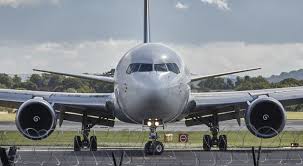
As concerns mount within Nigeria’s aviation industry over taxes and ticket prices, the Federal Government has pushed back, insisting that the new tax laws are designed to ease structural pressures on airlines rather than compound them.
Officials argue that many of the loudest criticisms overlook key provisions that directly reduce costs, improve liquidity and simplify compliance.
“The reform is part of the solution, not the source of the problem,” a senior official involved in the process said, noting that the government has held extensive engagements with airline operators and that consultations are ongoing.
According to the official, the new laws deliberately target long-standing tax distortions that have driven up operating costs across the sector.
A major relief comes from changes to the withholding tax on aircraft leases, long regarded by operators as the most punitive tax burden they face.
Under the old regime, airlines paid a non-recoverable 10 percent withholding tax on leases. “On a $50 million aircraft lease, an airline was losing $5 million upfront. That money goes straight out of cash flow,” an industry source said.
The new law removes the fixed rate and replaces it with a regulation-backed framework, creating room for either a full exemption or a significantly reduced rate. Government officials describe this as “a major structural fix that directly improves airline balance sheets.”
Value added tax has also been overhauled. While airlines enjoyed a VAT suspension after COVID-19, the relief masked deeper problems, as VAT paid on assets, consumables and overheads could not be recovered and became embedded in costs. Under the new framework, airlines are now fully VAT-neutral.
“Any VAT paid becomes claimable, and where credits build up, the law mandates a refund within 30 days,” an official explained.
The refunds are backed by a fully funded account, with provisions allowing VAT credits to be offset against other tax liabilities.
Analysts say this could significantly ease liquidity pressures in a low-margin industry.
Fears of new import duties have also been dismissed by government sources, who stress that existing exemptions on aircraft, engines and spare parts remain untouched. “There is no reversal here. Critical aviation inputs are still exempt,” one official said.
Ticket prices have been at the centre of public anxiety, but policymakers insist the projected impact has been overstated.
Within a VAT-neutral system, officials argue, the net effect of a 7.5 percent VAT on tickets is far lower than the headline figure. “Even in a worst-case scenario where VAT isn’t recovered, the increase is capped at 7.5 percent, not the dramatic hikes being suggested,” a government source said.
By official estimates, a N125,000 ticket would rise to no more than N134,375, while a N350,000 fare would increase to about N376,250.
On corporate taxes, the reforms introduce a framework to cut corporate income tax from 30 percent to 25 percent, a move expected to benefit capital-intensive businesses like airlines.
In addition, multiple profit-based levies, including education and technology-related charges, have been harmonised into a single Development Levy. “This reduces duplication, uncertainty and compliance costs,” an official said.
While airlines continue to complain about multiple levies imposed by different agencies, the government maintains that these charges are not products of the new tax laws.
Officials say discussions with operators and regulators are ongoing and point to the harmonisation provisions as evidence that “the situation can only improve, not worsen, from 2026.”
Overall, policymakers insist the reforms lay a stronger legal and policy foundation for resolving long-standing tax challenges in aviation. “If engagement continues in good faith, the remaining non-tax issues will be addressed,” an official said, adding that “but it is important to be clear: the new tax laws are not the problem. They are a critical part of the solution.”