


Business
Why BUA Foods Stock Is Highly Rated
shifting weight of investor preference in a volatile frontier market.

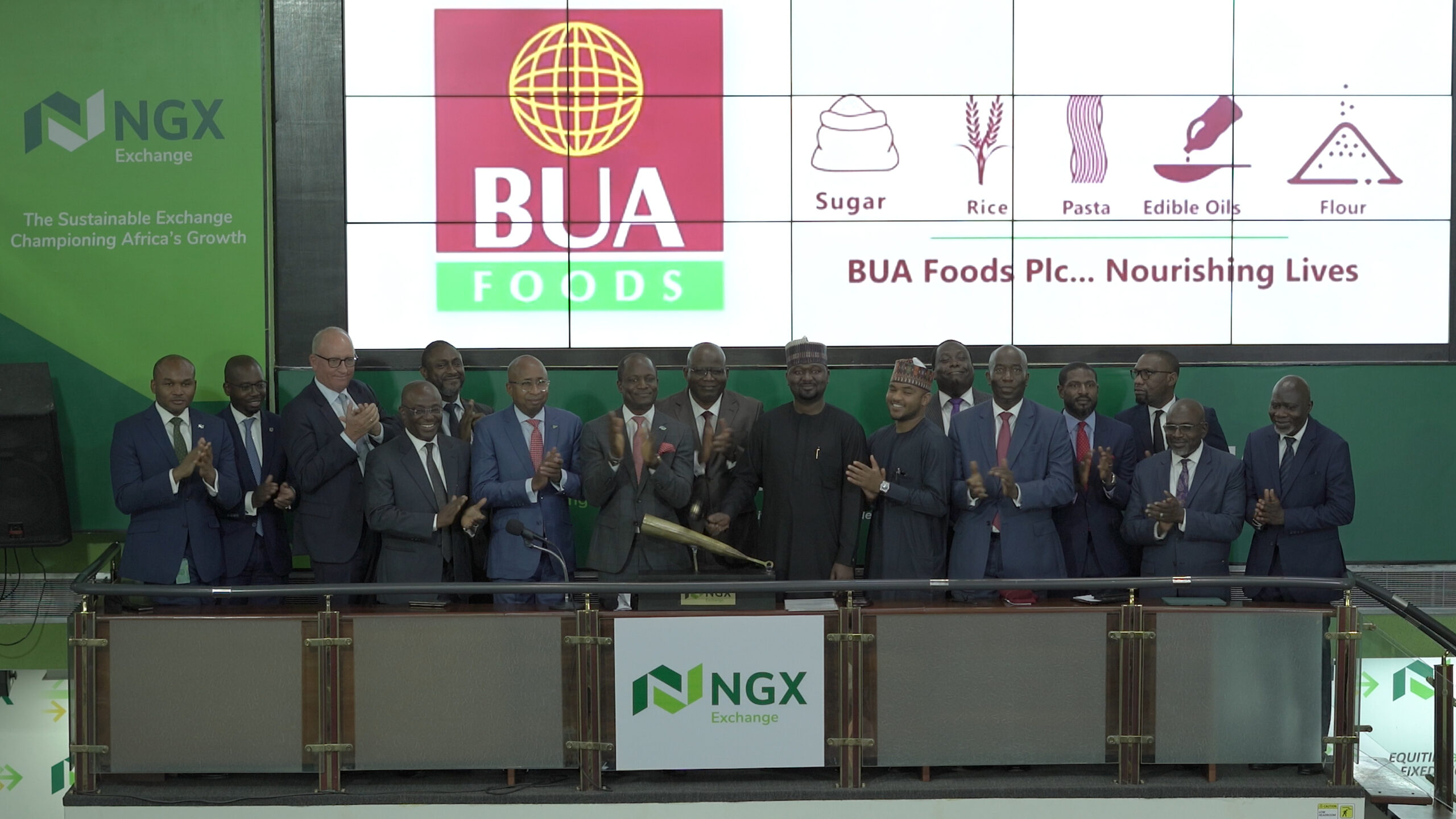
BUA Foods has vaulted to the top of the Nigerian Exchange in less than three years, a remarkable ascent that highlights both the resilience of consumer staples in Africa’s largest economy and the shifting weight of investor preference in a volatile frontier market.
With a market capitalisation of N11.3 trillion ($8.3bn) as of September 19, 2025, the company now accounts for more than 12 per cent of the NGX’s total equity value. Its shares have risen more than fourteenfold since listing in 2022, closing at N629.70, outpacing not only Nigeria’s broader market but also eclipsing the valuation of its own industrial sibling, BUA Cement.
The parent conglomerate, BUA Group, founded by billionaire industrialist AbdulSamad Rabiu, has long been associated with heavy industry and infrastructure. Yet it is the food arm — spanning sugar, flour, pasta, rice and edible oils — that has emerged as its most valuable component, underscoring the scale of consumer demand for staples in a country of more than 200 million people.
The company’s performance stands in contrast to Nigeria’s macroeconomic environment, where households have endured double-digit inflation, sluggish growth and currency instability. Despite these headwinds, BUA Foods posted a 36 per cent rise in half-year revenues to N913 billion, the strongest six-month profit in six years.

A stabilisation of the naira allowed the group to swing from a N54.7 billion forex loss last year to a modest gain of N407 million in the first half of 2025.
Even so, pressures remain: finance costs surged 53 per cent to N10.2 billion on the back of higher interest rates. But investors have largely looked past these, encouraged instead by the company’s deleveraging exercise, stronger liquidity profile and disciplined balance sheet management.
BUA Foods’ relevance extends beyond its financials. Nigeria’s dependence on imported food has left it vulnerable to price shocks and currency weakness.
The company’s capacity in flour, rice and edible oils places it at the heart of efforts to strengthen domestic food supply chains, a position that enhances both its commercial prospects and policy relevance.

“BUA Foods is more than a listed stock — it is effectively systemically important to Nigeria’s food ecosystem,” said one Lagos-based portfolio manager. “That makes it uniquely resilient in investor portfolios at a time when defensiveness is prized.”
Beyond Nigeria, the company is expanding into West Africa, with export sales expected to grow in the coming years. Analysts say this diversification provides an additional hedge against local volatility while positioning the firm as a regional leader in fast-moving consumer goods. Capacity expansions in rice and flour are expected to deepen its market share and consolidate its dominance.
The contrast with BUA Cement is instructive: while infrastructure investment remains cyclical and often dependent on public spending, consumer staples enjoy consistent demand. The food arm’s valuation — more than double that of the cement business — reflects this market reality.
The steady rise in the company’s valuation has also coincided with renewed foreign investor interest in Nigeria following recent market reforms. The scale of BUA Foods’ operations, its strong governance record under BUA Group, and its consistent delivery on growth targets have made it one of the most visible symbols of Nigeria’s investable potential at a time when the country is striving to restore confidence.
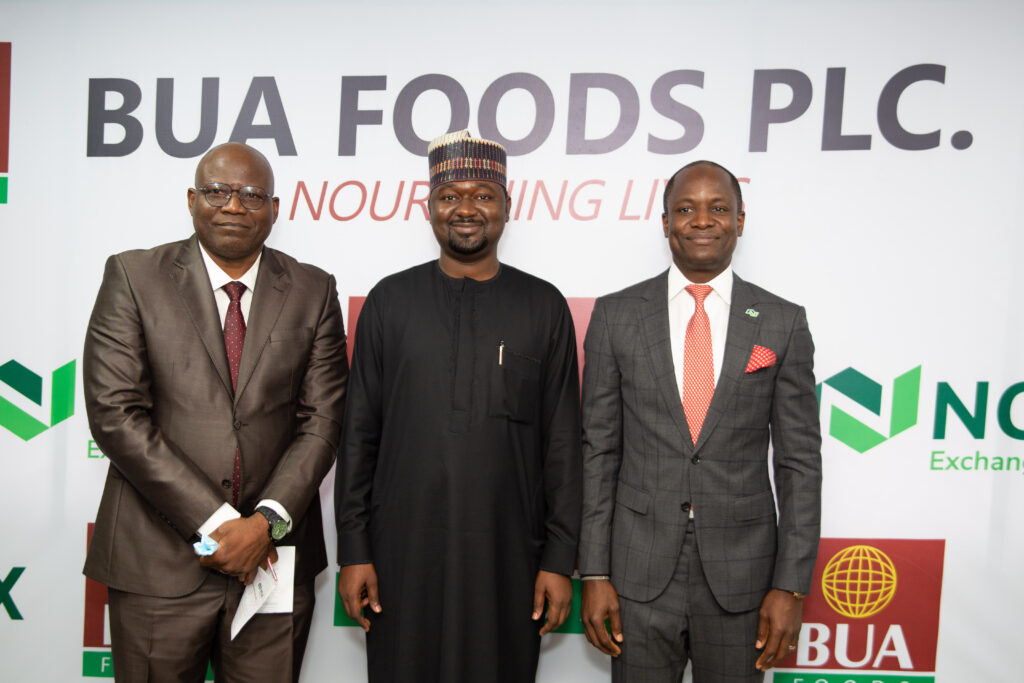
For shareholders, the attraction lies in both growth and defensiveness: exposure to Africa’s largest consumer base through a player with scale, integration and proven resilience. For policymakers, the company’s expansion helps anchor the broader narrative of industrialisation and food security.
BUA Foods’ story is not merely one of stock market success. It represents the convergence of demographics, demand and discipline: a fast-growing consumer base, an unrelenting need for staples, and a company that has managed to scale aggressively while navigating Nigeria’s economic turbulence.
That combination — reinforced by its place within one of Nigeria’s most powerful conglomerates — explains why BUA Foods is so highly rated, not only by local investors but increasingly by global capital watching Africa’s consumer story unfold.