

Society
Real Reasons Awujale Should Have Been Buried According To Traditional Rites
was laid to rest according to Islamic rites

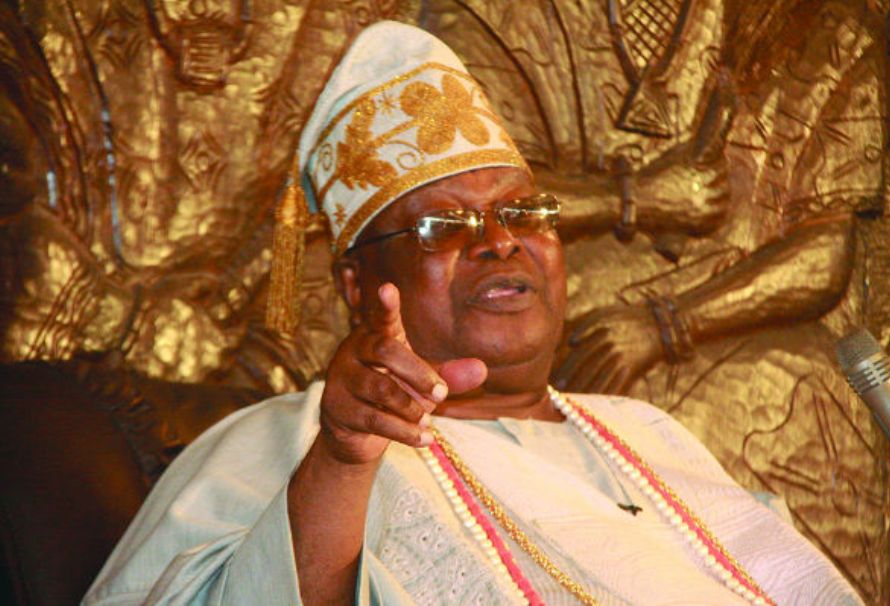
The burial of the Awujale of Ijebu Ode on July 14, 2025, has sparked fresh debate following concerns raised by Moyo Okediji, a historian, artist, and advocate for Yoruba cultural traditions.
The monarch was laid to rest according to Islamic rites, excluding traditional Isese practitioners from participating in the final ceremonies.
Okediji, a professor of African and African Diaspora Art at the University of Texas at Austin, expressed concern over what he described as a missed opportunity to honour the monarch’s role not just as a political leader but also as a spiritual custodian of Ijebu Ode.
In a commentary shared online, he said the absence of traditional rites may have deeper implications for the community, based on Yoruba cosmology.
He warned that the denial of such rites creates a spiritual vacuum, exposing the city to metaphysical forces known in Yoruba belief as Ajogun—a category of harmful spirits including death (Ikú), pestilence (Àrùn), loss (Òfò), bereavement (Ọ̀fọ̀), infertility (Àtọ̀gbìgbè), and poverty (Òṣé). According to Okediji, these forces are typically warded off by the spirit of the reigning Oba and must be ritually expelled at the time of the monarch’s transition to safeguard the community.
Drawing from his background as a founding member of the Ònà art movement and a former student of Yoruba scholar Wande Abimbola, Okediji stressed that the burial of a king is not solely a family affair but a collective cultural responsibility. He proposed that when royal families opt for Abrahamic funeral rites, traditional communities should step in to conduct a parallel burial ritual, focusing not on the body but on the spirit of the deceased monarch.
He suggested invoking the king’s spirit into Ìtì Ọ̀gẹ̀dẹ̀, a symbolic container used in traditional rites, as a means of performing the necessary spiritual transition. “The body is dead anyway,” he wrote. “It is the spirit that never dies.”
While his comments have drawn attention online, they reflect wider conversations about the evolving role of indigenous traditions in modern Yoruba society.
As debates around identity, heritage, and religion continue to intersect, the burial of the Awujale has become a case study in the complexities of honouring both personal faith and communal cultural expectations.