

Politics
Insiders Tell Major Consideration In Tinubu’s Hiring Style
provided from a real-life experience


An insider has revealed a major consideration in the hiring style of President Bola Tinubu.
The disclosure was provided from a real-life experience.
Sam Omatseye, the legendary walker on the corridor of power, gave a telling insight in a recent piece.
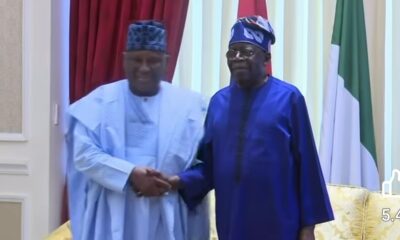
The article, which delves into Omatseye’s observation of the President’s daily activities, provided this revelation during an interaction between Tinubu and Aminu Maida.
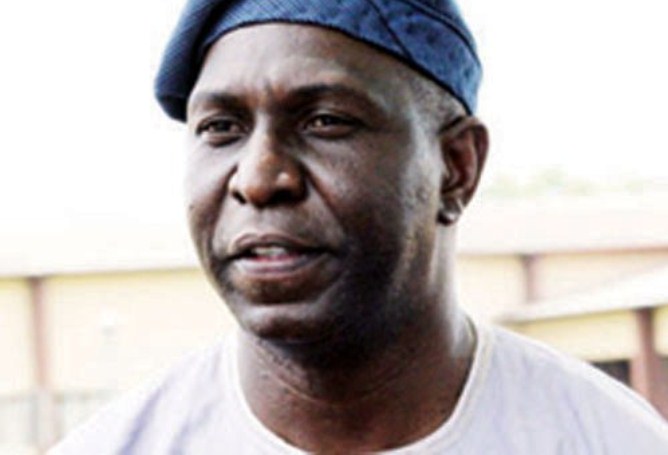
Maida is the Chief Executive Officer of the Nigerian Communications Commission (NCC) and Executive Vice Chairman of the Commission’s Board.
According to Omatseye, “Aminu Maida, who wanted the President’s backing on recent hirings, was under political pressure to replace merit with corruption. ‘I believe in merit. Do what is right,’” Tinubu advised.
For context, Maida is currently facing backlash over recent promotion exercises and vacancy fills at the NCC.
Reports here and there suggest that the development appears to stem from cutting down on perks like foreign training and travel, focusing instead on staff welfare, prioritizing salaries, allowances, and benefits.
Although the new leadership under Maida—appointed to his position in October 2023—attributes this spending refocus to federal government cost-cutting measures, entrenched beneficiaries of the old order seem unwilling to accept the “tight financial situation” excuse.

Checks revealed that Tinubu’s backing of Maida with the statement “I believe in merit. Do what is right” reflects the same principle that has guided his own appointments.
Against established practices—and driven by an unshakeable belief in giving youth a voice in a rapidly evolving governance landscape—President Tinubu appointed people in their early 30s and 40s as ministers, strictly based on confidence and competence.
They include – and their ages at the time – Jamila Bio Ibrahim (37), Minister of Youth; Olubunmi Tunji-Ojo (41), Minister of Interior; Doris Uzoka-Anite (41), Minister of Industry, Trade and Investment; and Shuaibu Audu (43), Minister of Steel Development.

Although there have been controversies that cast shadows on some of the President’s decisions—such as the exit of Betta Edu (36) as Minister of Humanitarian Affairs and Poverty Alleviation under a cloud of controversy—the performances of others like Olubunmi Tunji-Ojo and Hannatu Musawa (43), Minister of Art, Culture, and Creative Economy, have vindicated Tinubu’s decision to appoint young people into his cabinet.
Omatseye, who provided this view into President Tinubu’s key consideration in hiring, did so in his piece “One Day with President Tinubu,” published in The Nation newspaper, where he serves as the Chairman of the Editorial Board.