

Politics
Insiders Reveal How Tinubu & Aregbesola’s Strong – But Now Troubled – Bond Was Forged
the subject of heated debate.

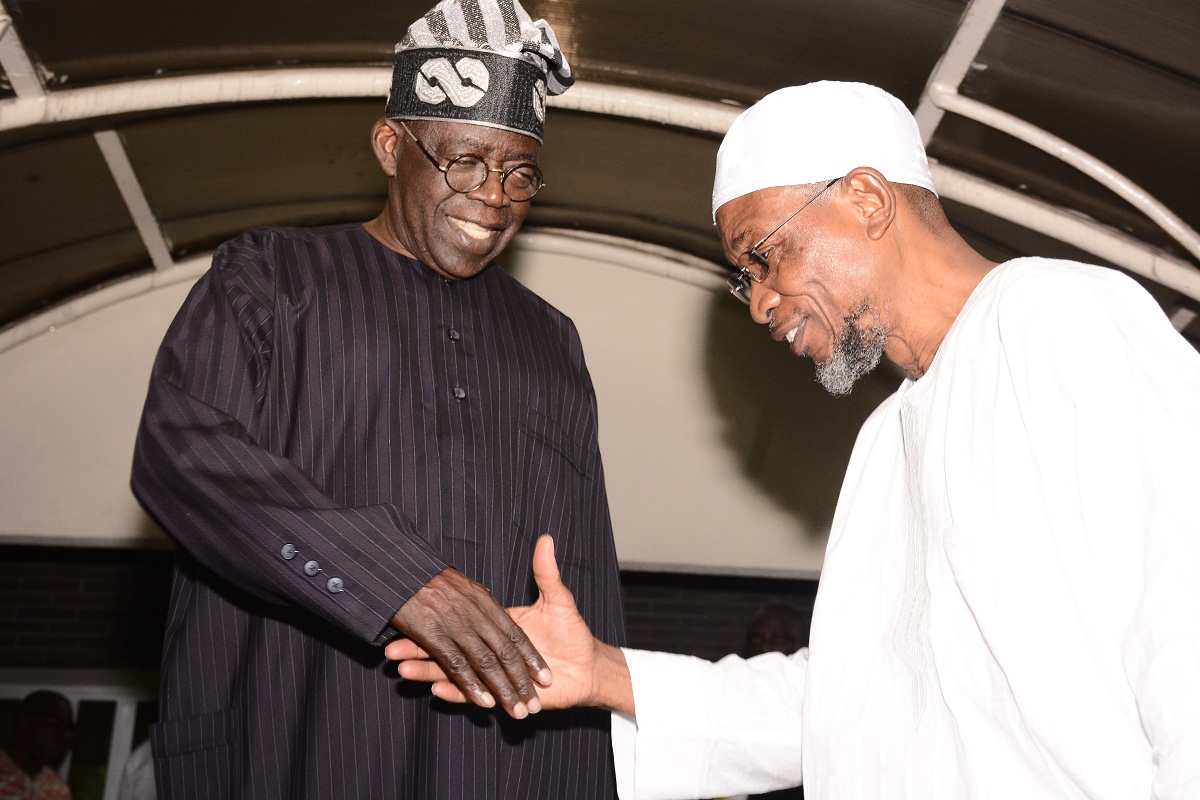
In the often-volatile landscape of Nigerian politics, where alliances shift and loyalties are tested by ambition, the relationship between President Bola Ahmed Tinubu and former Osun State Governor Rauf Aregbesola has stood out—long admired, sometimes misunderstood, and more recently, the subject of heated debate.
Yet, for those who have followed the evolution of their bond, the connection between the two men is far deeper than fleeting political calculations. It is a story of shared convictions, mutual sacrifices, and a relationship that was built—long before power and position—on trust, ideas, and purpose.
A throwback to Tinubu’s speech during Aregbesola’s 60th birthday paints that picture more clearly.
“Sacrifice is the currency of loyalty,” Tinubu had declared in a heartfelt tribute, recalling how the duo consistently found agreement even from divergent ideological leanings—himself a liberal democrat, Aregbesola a dyed-in-the-wool Marxist. “Each time he gives up his comfort and takes risks, he adds value to our organizational cohesion, advancement and maturity.”
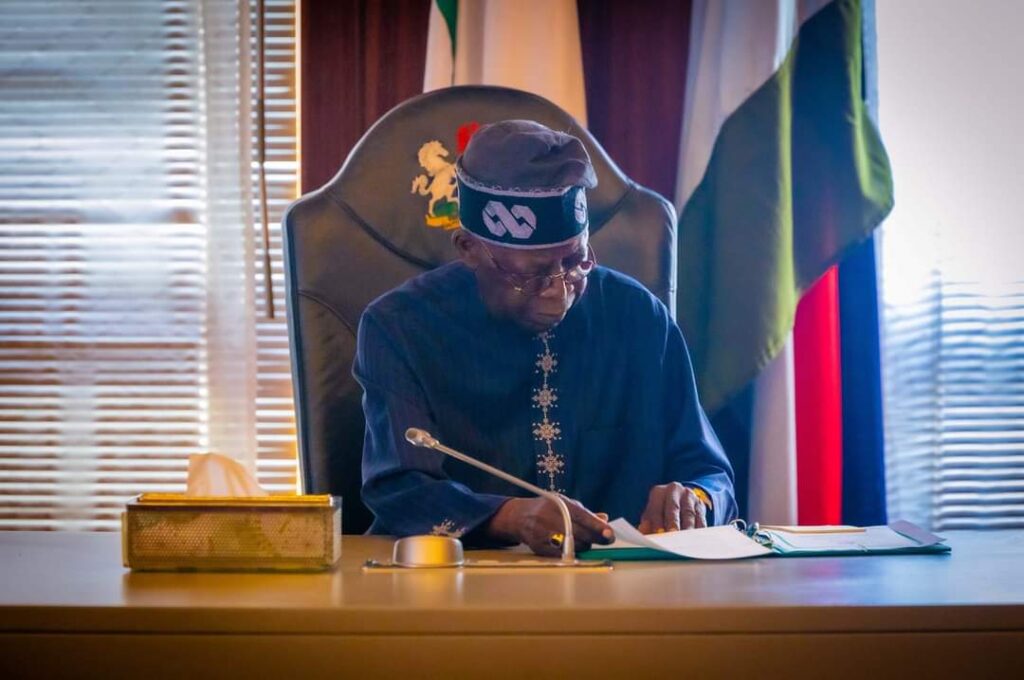
It was a relationship rooted in mutual need and shared struggle. Tinubu, then an aspirant for the Lagos West Senatorial seat under the Social Democratic Party in the early 1990s, needed a grassroots base. Aregbesola, already a political actor and engineer-entrepreneur in Alimosho, had built a following of young reformers in Lagos’ most populous local government area. Their paths crossed not by chance but by convergence of purpose—and the results were seismic.
“Rauf’s team proved their mettle,” Tinubu acknowledged in the same speech. “They ensured Alimosho voted en-masse in the primaries and general elections.”
Despite the strategic foundation of their alliance, it has more recently become a source of divisive commentary—particularly by those quick to trivialize Aregbesola’s emergence as Tinubu’s handiwork alone. Detractors have often attempted to define the former Osun governor through a reductive lens: “a refrigerator repairer made by Tinubu.”
But loyalists and stakeholders familiar with both men dismiss the narrative as not only misleading but intellectually lazy.
“It’s an insult to intelligence,” says John Oyebanji, a public affairs analyst and political figure from Osun State. “To suggest Aregbesola was just plucked from the streets is to ignore decades of activism, technical expertise, and political organisation.”
Before partisan politics, Aregbesola had made a name as an engineer, businessman, and community organiser. A former student leader with radical roots, he had already contested for office under the SDP and was running a successful engineering firm, Aurora Nigeria Ltd, where he trained dozens of apprentices and earned fellowships in multiple professional bodies.
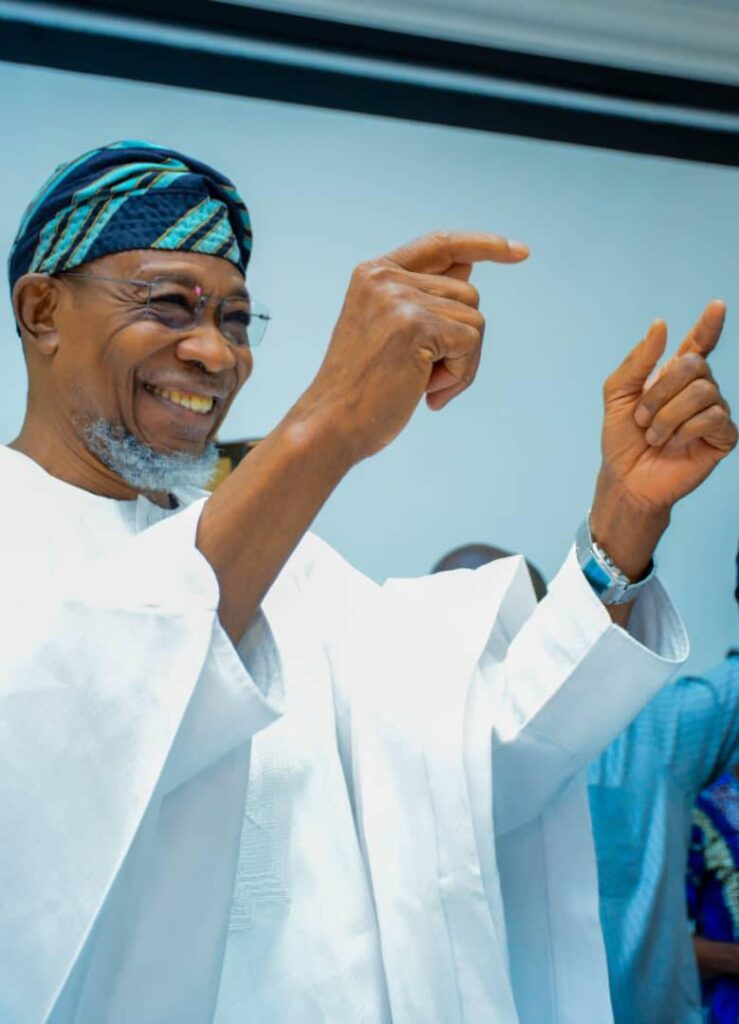
“This wasn’t a man looking for a lifeline,” Oyebanji explains. “He was already building one.”
Their working relationship solidified during Tinubu’s successful 1999 Lagos governorship campaign, where Aregbesola served as the campaign director and later as Commissioner for Works and Infrastructure. For eight years, he left a transformative mark on Lagos’ urban development, drawing praise even from critics.
The bond was so close that by the time Aregbesola launched his Osun governorship bid, his candidacy was widely seen as a continuation of their political project.
However, recent years have witnessed tensions between the two—open spats and perceived political distancing have left room for speculation. Yet observers argue that what exists between them is not so easily erased.
“There’s a spiritual dimension to this,” says Wale Adedayo, former local government chairman and journalist. “Throughout history, Yoruba leadership has suffered most from internal division, often inflamed by external interests.”
Adedayo warns that the current coldness between both men is reminiscent of the destructive rivalry between Chief Obafemi Awolowo and Chief S.L. Akintola—a split that proved costly for the Yoruba political bloc.
“It’s not too late,” he urges. “The Ooni, the Alaafin, our traditional institutions must intervene. This isn’t just a personal rift—it’s a threat to the collective Yoruba interest.”
Others echo the same sentiment.
“There was never a point when one man controlled the other,” says a former Lagos lawmaker familiar with both leaders. “They were partners in vision. Their disagreement, while unfortunate, should not erase what they’ve built together.”
As public opinion increasingly demands reconciliation, calls are growing for an elders’ intervention—a strategic reset, not just for two men but for a political family that has given much to the South-West and Nigeria as a whole.
Their story, loyalists say, is not merely about how one found and ‘made’ the other—it is about how two men, once aligned by ideals and sacrifice, transformed a movement.
The question now is whether the bridge that carried them this far can be rebuilt.
The fresh wave of narratives targeting Aregbesola’s political rise has coincided with his recent appointment as the National Secretary of the African Democratic Congress (ADC)—a party now adopted by a coalition of opposition forces intent on stopping President Tinubu’s second-term bid in 2027.
For many observers, this political realignment is seen as the immediate trigger for efforts to downplay or distort Aregbesola’s legacy, turning what was once celebrated as a brotherly bond into a battleground of competing interests and narratives.