


Society
“How We Can Achieve Equality In Healthcare” – Tony Elumelu
“We have significant imbalances in quality of health outcomes”

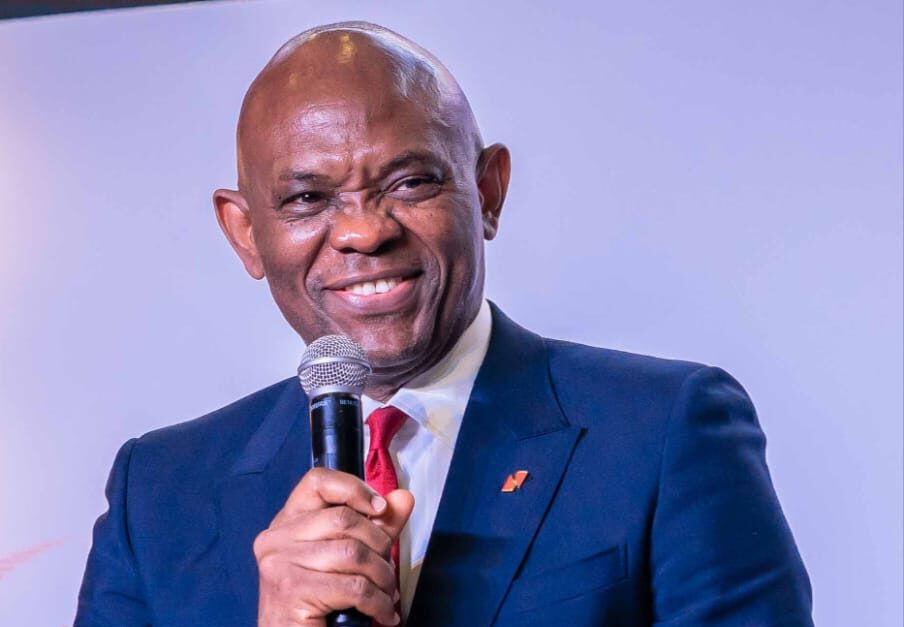
The philanthropist at the forefront of the unrelenting campaign for a better Africa, Tony Elumelu has made a strong case for unlocking improvements and equality in healthcare leveraging the power of entrepreneurship, and innovation, and working across sectors to make a difference on the continent – and globally.
“We have significant imbalances in quality of health outcomes, excessive investments in R&D (Research and Development) in pharma (pharmaceutical companies collectively), medical devices and practices for health conditions in rich countries, while poor countries miss out. But the quality of healthcare in the world’s poorest countries can have an impact on the richest countries — the world is interconnected, and climate change is making transmission happen faster” Elumelu disclosed as a panelist at the Health Leaders Forum in Abu Dhabi on Monday, May 13, 2024.
He highlighted the significance of his position with the Covid-19 pandemic example pointing out that “Covid started in China and quickly spread to all parts of the world. The lesson here is that we should be interested in global health equity and not just national health because poor health outcomes affect all. Speaking frankly, Africa is behind, with limited budgets and poor healthcare infrastructure”.
The COVID-19 outbreak started in Wuhan, the capital of Hubei, China in December 2019 but traveled the world within months resulting in lockdowns across continents and the shutdown of the global economy for months in 2020.
Many nations are yet to recover from the effects.
The Chairman of the pan-African financial services group which operates in 20 countries across Africa, the United Kingdom, France, the UAE, and is the only African bank with a commercial deposit taking presence in the United States -United Bank for Africa (UBA) – in advocating that ” private and public sectors and the development world need to prioritize appropriate capital allocation and investments in innovation (health research and health technology / IT) to drive global improvements in health outcomes — across Africa” insisted on a “multi-sector approach, the private sector, government sector and, the social sector,- and that is where philanthropy comes in”.
The philanthropist who shared panel – at the forum that had global Ministers of Health, policymakers, and Chief Executives of global entities, playing an influential role in transforming the future of healthcare – with H.E. Monica Geingos, UNAIDS Special Advocate on Young Women and Adolescent Girls in Namibia; H.E. Mariam bint Mohammed Almheiri, Director of the Presidential Court Office of International Affairs and CEO, 2PointZero, UAE; and Badr Jafar, CEO, Crescent Enterprises is founder of the Tony Elumelu Foundation (TEF).
Founded in 2010 the leading philanthropy has benefited over 20,000 young entrepreneurs across Africa, creating over 400,000 direct and indirect jobs and significantly contributing to economic growth on the continent
“The Tony Elumelu Foundation supports young Africans who are interested in healthcare services and healthcare delivery. Today we have funded over 700 of them in Africa since we launched the programme” the founder disclosed in Abi Dhabi on Monday.
Among the beneficiaries identified by King of Commerce very passionate about entrepreneurship is Ritalee Monde who is providing affordable medical oxygen in Zimbabwe.
“Through her company Leemed Supplies, she is making medical oxygen accessible at one-third of the market price, even providing it for free to those unable to afford it. With her aspirations to establish a medical oxygen production plant, Monde hopes to meet the needs of all 212 hospitals and 1,684 clinics in Zimbabwe while generating more employment opportunities.” Elumelu disclosed.
The matster entrepreneur also cited a 2018 beneficiary, Giancarlo Beukes who is the founder of Impulse Biomedicals, a multi-award-winning South African medical device start-up aimed at increasing access to life-saving technologies through affordable innovation.
Impulse Biomedicals adopts a “Frugal Bio design” approach – developing commercially sustainable and high-impact medical devices specifically tailored for developing countries. The company’s focus spans two key areas: pediatric asthma and emergency treatment for anaphylaxis, a potentially fatal allergic reaction. One of his pioneering innovations, ZiBiPen, is a user-friendly, reloadable auto-injector for emergency adrenaline delivery to treat anaphylaxis. For pediatric asthma patients, Impulse created the Easy Squeezy sleeve that reduces the inhalation force of standard inhalers by two-thirds, making them significantly easier to use.
The proponent of Africapitalism – which positions the private sector, and most importantly entrepreneurs, as the catalyst for the social and economic development of the continent -, however, highlighted that “it is not just early-stage entrepreneurs and companies that make a difference. Big pharma also has a role to play here.”
Adding that ” to ensure a sustainable health future for all, there is a need to review the current patent system and effect reforms while still incentivizing innovation. There also needs to be incentives for big pharma to partner on R&D for diseases from lower income countries. Incentives for investing in R&D and manufacturing facilities for big pharma in developing countries is also important — so leveraging the global trade system is also an important element of global health equality. Even beyond pharma, the same steps should be taken to open up access to medical devices research and manufacturing, health care business model innovation, and so on.”.
Reiterating that “we need to work innovatively across social sectors to achieve results” in emphasizing collaboration among stakeholders at all levels, the prominent champion of entrepreneurship in Africa provided the insight that ” a high percent of health care facilities in Africa do not have reliable power supply (I think it’s around 40%) — without power, the health outcomes will be low. During the COVID pandemic, this was a major problem as isolation wards had no power, it was also a challenge to store vaccines sent to the continent.The global renewable energy sector, both thermal and hydro energy sectors should step in to address this massive energy deficiency in Africa to realize health outcomes in Africa.”.
In further putting the situation at hand in context – while proffering solution -, the influential figure behind the success stories of different companies adding great value to the Nigerian economy explained ” speaking of the link between renewable energy and healthcare, the two are also linked via climate change. We hear so much about available climate financing for renewable energy projects, as well as climate change adaptation and resilience projects — but what about unlocking climate funding for healthcare delivery as well — particularly on the margins where climate change is leading to new diseases, or diseases appearing in place they were not seen before.
“As healthcare issues are becoming more severe due to climate change, how can climate funds be accessed to address health care as well? With private sector innovation, startup funding from foundations and financial institutions, health care policies from national and global health systems, investments from all as well as cross sector collaboration, we can definitely move humanity forward”.