


Business
How Nigeria Is Converting Fertiliser Efficiency Into Food Security And Export Growth
the single most critical driver of yield,

For corporate agribusinesses and institutional investors looking at the Nigerian agricultural landscape, the traditional bottleneck has always been one of logistics and input unpredictability.
Fertilizer, the single most critical driver of yield, has historically been subject to extreme pricing swings, import delays, and quality degradation.
However, recent structural interventions by the federal government—specifically the restructuring of the Presidential Fertiliser Initiative (PFI) under the Ministry of Finance Incorporated (MOFI)—are rapidly converting these systemic risks into competitive advantages.
By securing over 449,000 metric tonnes of raw inputs (equivalent to nine million bags) through forward contracting as of May 2026, MOFI has shielded the domestic agricultural economy from global cost spikes, yielding a staggering ₦61.58 billion in direct cost savings.
The strategic shift under MOFI prioritizes importing only the chemical precursors that cannot be sourced domestically (such as Moroccan phosphates), while utilizing local urea and nitrogen.
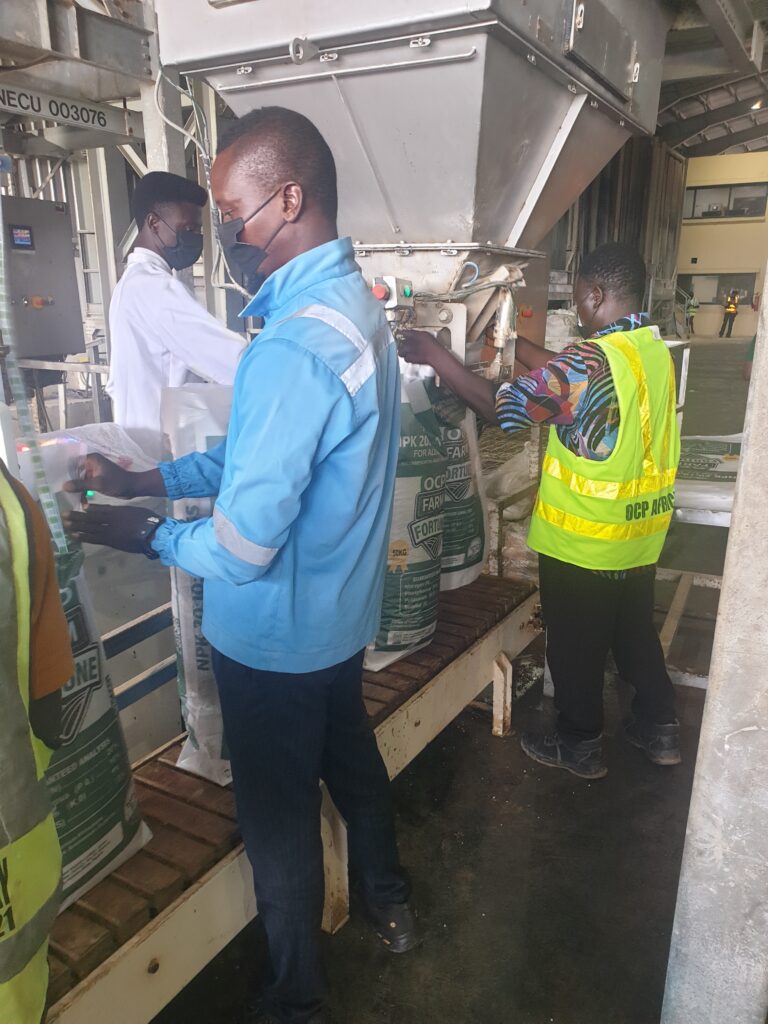
The Presidency recently conducted an on-the-spot assessment to assess the situation.
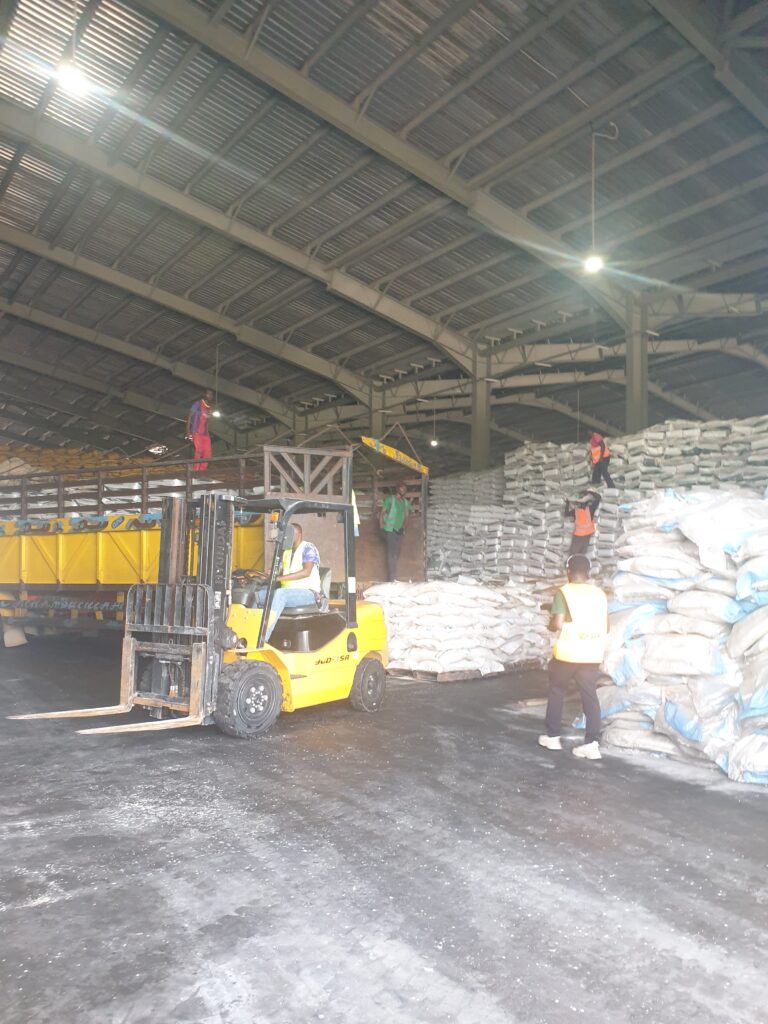
Part of the physical verification was on the docks of ABTL Lagos, a subsidiary of Flour Mills of Nigeria (FMN), where bulk raw materials are offloaded directly from arriving vessels into the country’s overland haulage systems.
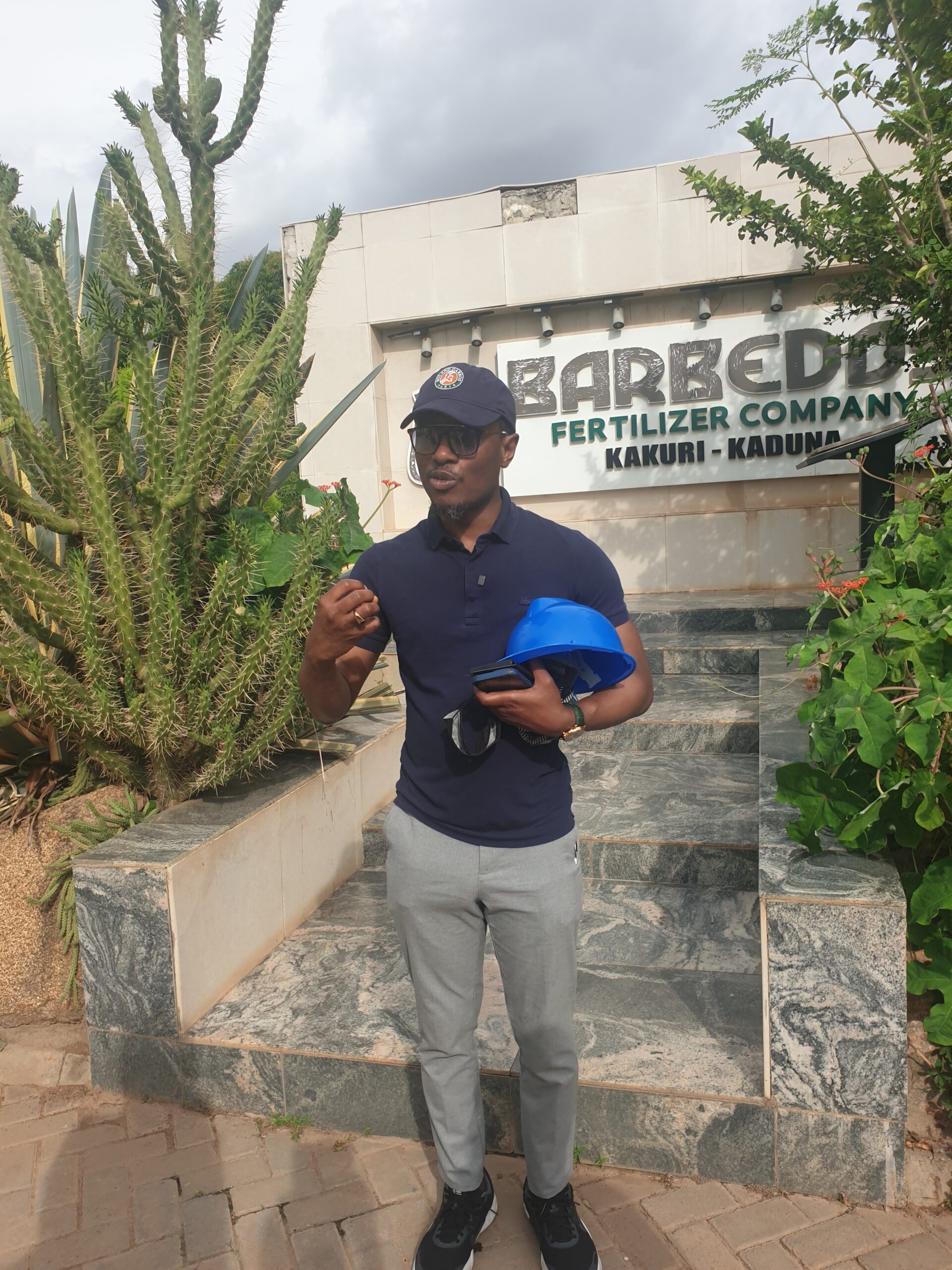
From the ports of Lagos, these precursors are trucked to major inland blending plants like “Barbedos Fertilizers” in Kaduna. Running an automated system that blends 90 metric tons per hour, Barbedos operates as a high-volume processing node.
Mr. Nasser Ismail, representing Barbedos during a recent presidential assessment tour led by Mr. Otega Ogra, Senior Special Assistant to the President on Media and Advisory, highlighted the efficiency of this model.
“Our primary objective is to produce high-quality fertilizer blends that are specifically tailored to meet the distinct soil and crop requirements of Nigerian farmers. By blending locally, we are reducing costs and creating hundreds of direct and indirect jobs,” he disclosed.
By removing finished-product import tariffs and blending locally, the industry has managed to lower retail price points for smallholder farmers, thereby protecting their profit margins against rising inflation and ensuring that agricultural investments remain commercially viable.
Despite these logistical successes, the domestic fertilizer industry faces a classic macroeconomic hurdle: market saturation.
Nigeria currently boasts over 90 operational blending plants—the largest capacity in Sub-Saharan Africa—yet the industry is currently operating at under 50% capacity utilization.
Mr. Peter Amahwe, General Manager of OCP Africa’s Kaduna plant, addressed this structural under-utilization during the audit.
Rather than engaging in margin-depleting price wars to capture existing market share, OCP Africa is actively focused on expanding the total addressable market through developmental agronomy.
“Because we are not fully utilized yet, So we are trying to see: ‘What can we do now to drive adoption and increase usage?’ As we drive the use, we will then get into other capital investments,” Amahwe disclosed.
OCP’s strategy hinges on deploying field agronomists to set up demonstration farms in newly cultivated regions.
By showing smallholders firsthand how custom-blended, soil-specific fertilizers dramatically increase output, OCP is systematically converting subsistence farmers into high-yield commercial actors.
This customer-centric approach ensures long-term demand growth for blending plants while systematically boosting national agricultural security.
For long-term investors, the ultimate growth story lies beyond Nigeria’s borders. The domestic market’s saturation is acting as a catalyst for regional trade expansion, particularly under the African Continental Free Trade Area (AfCFTA) framework.
OCP Africa is positioning itself to lead this export drive. Amahwe revealed that OCP’s new state-of-the-art blending plant in Sokoto is already “76% complete”.
“Sokoto is geographically very close to Niger and neighboring French-speaking countries. That plant will be a strategic source for us to export and feed those regional markets,” he revealed.
The macroeconomic implications are profound. Northern Nigeria is transitioning from a localized farming zone into an international agribusiness hub capable of processing raw inputs, meeting domestic demand, and exporting high-value agricultural inputs to landlocked Sahelian nations.
By restructuring the PFI under MOFI, the federal government has created a highly integrated agribusiness corridor. The combination of bulk port terminals in Lagos, Kaduna’s raw processing power, and Sokoto’s export readiness demonstrates that Nigeria is not just defending its domestic smallholders—it is actively constructing an export-driven agribusiness empire.
