


Business
Nigeria Ready For More Global Investors Thanks To Economic Reforms – Abdul Samad Rabiu
the founder of leading conglomerate BUA Group,

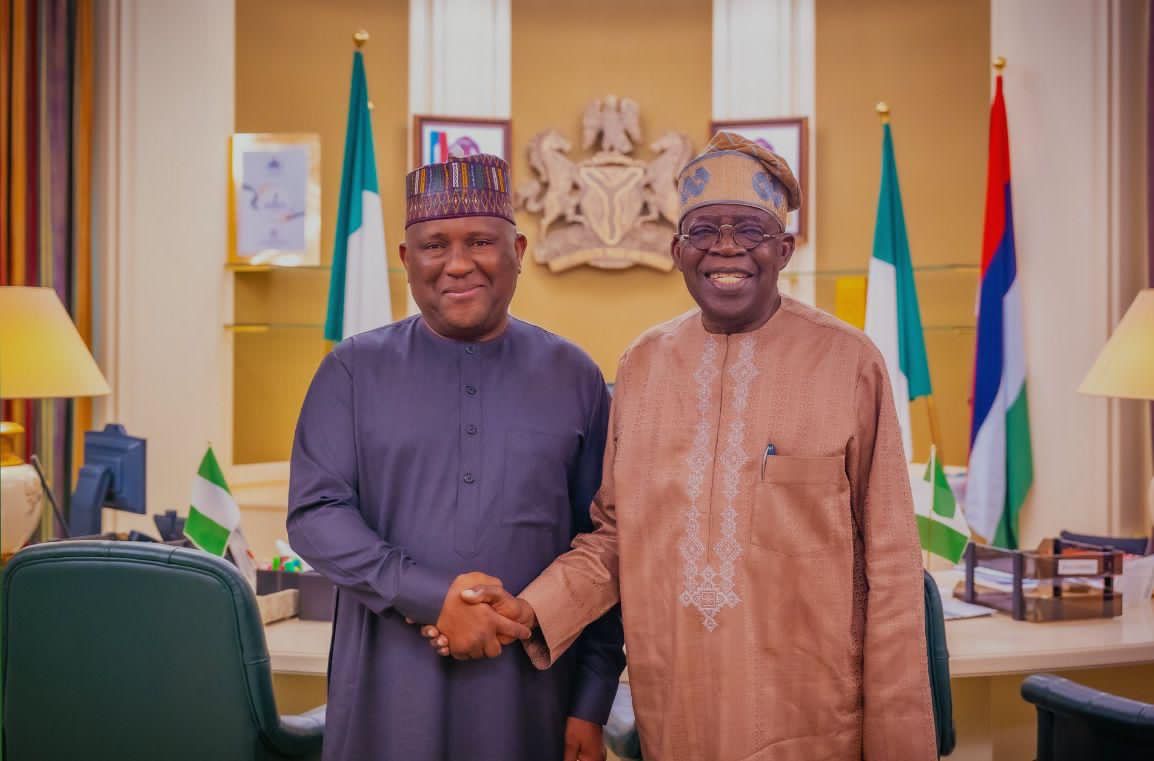
Nigerian billionaire and industrialist Abdul Samad Rabiu says Nigeria’s recent economic reforms have positioned the country as a key investment destination — and called on Britain and its Western allies to deepen their partnerships with Africa’s largest economy.
Writing in the Daily Telegraph (UK), Rabiu who is the founder of leading conglomerate BUA Group, said Nigeria’s decision to embrace market economics under President Bola Tinubu marks a turning point for Africa’s largest economy.
“Fortunately, Nigeria has now decisively turned a corner, embracing market economics under a liberalising government,” he said.
Rabiu, who has built multinational businesses across Africa, highlighted the significance of the Enhanced Trade and Investment Partnership (ETIP) signed between the UK and Nigeria in 2024 — the UK’s first such agreement with an African nation.
“Less reported — but with similar potential — was last year’s signing of the Enhanced Trade and Investment Partnership (ETIP) between the UK and Nigeria, the former’s first such agreement with an African nation,” he said. “Quiet in its arrival, the pact may yet echo louder.”
He praised Britain’s shifting approach to Africa, referencing Foreign Secretary David Lammy’s recent comments in Morocco that the UK’s policy must transition from aid to investment.
“‘Trade-not-aid’ is no new idea — but it is the first time a British government has so clearly echoed the demand the African continent has voiced for years,” the chairman of the business interests massively adding to the Nigeria’s GDP stated.
He said Nigeria’s reforms stand as an example for the continent to follow, contrasting Tinubu’s administration’s resolve with the repeated backtracking of past governments.
“So many Nigerian administrations I have known have been hostage to economic events, doubling down time and again on state intervention rather than having the conviction to reform,” he said. “This administration is proving different.”
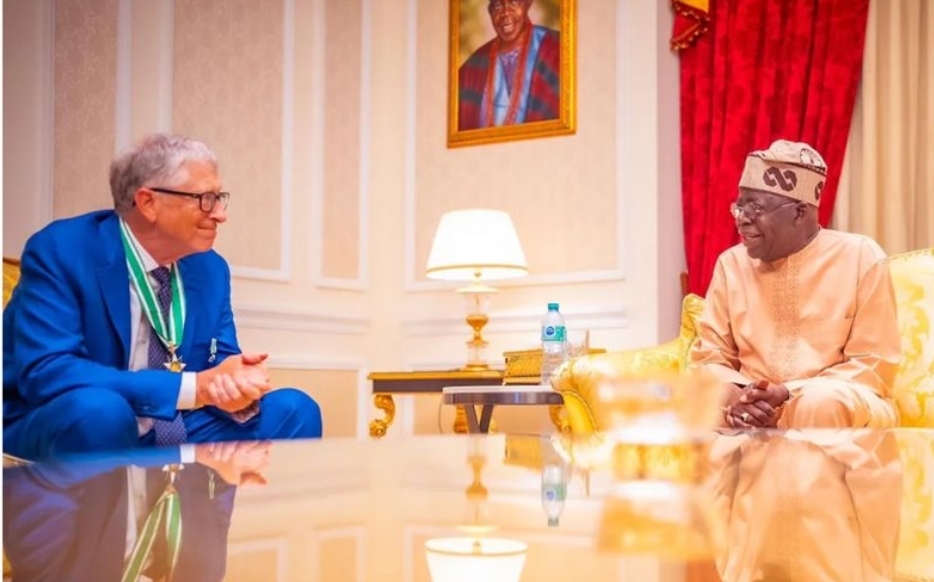
Among the most impactful reforms, Rabiu pointed to the removal of the fuel subsidy on Tinubu’s first day in office — a move that, despite being unpopular, was essential to ending years of waste and corruption.
“At 25 to 30 cents per litre, petrol in Nigeria was among the cheapest in the world,” he explained. “But the subsidy was bankrupting the government: by 2023, it consumed over 15 percent of the federal budget — roughly equivalent to the proportion the UK spends annually on the NHS.”
He said that while official fuel consumption dropped by 40 to 50 percent after subsidy removal, this reflected an end to cross-border smuggling rather than a true drop in domestic demand.
“In reality, the country was subsidising the region, with cross-border fuel smugglers profiting from arbitrage,” he said. “The illegal trade was so blatant that on a visit to neighbouring Niger a few years ago, then-President Mohamed Bazoum even joked about it, thanking Nigeria for the cheap fuel.”
Rabiu also praised the move to a market-determined exchange rate, noting that the previous system privileged those with political connections while driving others into the parallel market.
“Previously, only select groups could access the official rate — especially those with political connections; the rest had to rely on a more expensive parallel informal market,” he said.
He recalled how, in the past, he would drive 12 hours to Abuja every two weeks, camping out at the Central Bank to secure dollar allocations for imports.
“Now, I no longer need to go,” he said. “I’ve met the new Governor only once in two years — because I haven’t had to.”
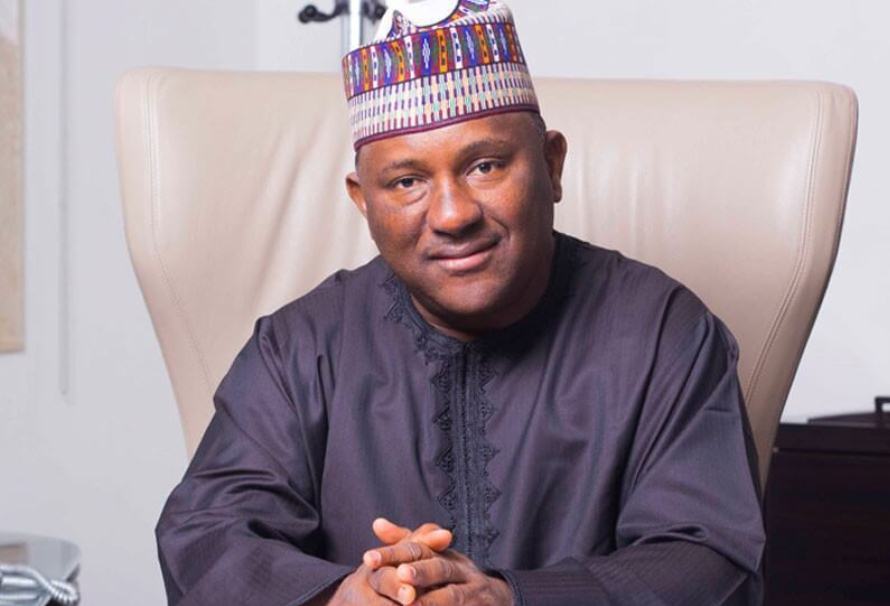
Rabiu recounted personal experiences with political interference in business, describing how his company’s port concession was revoked simply because it outperformed a friend of a Nigerian Ports Authority official.
“It took then-President Buhari’s personal intervention to save the enterprise,” he said. “Had I not been politically connected, the business would have folded — along with the 4,000 jobs it provided — at a time when job creation was, and remains, Nigeria’s most urgent challenge.”
He praised the current administration’s efforts to level the playing field for business.
“Today, such connections are no longer necessary,” he said. “The playing field is being levelled, flattening the political ridges and dips that once skewed the game.”
Rabiu acknowledged that the benefits of reform may take time to reach ordinary Nigerians but urged patience and continued support for market-driven changes.
“Many of the benefits of reform are still to be felt by the wider public,” he said. “But economic fundamentals must be fixed before that becomes possible.”
He urged Britain and its Western allies to stick with Nigeria during this critical period.
“For Britain, the Enhanced Trade and Investment Partnership with Nigeria was a strategic bet on reform, resilience and long-term reward,” he said. “Nigeria is now delivering its part of the bargain.”
He concluded with a call to action: “As my country steadies itself, the UK, its Western allies — and their companies — should deepen this partnership.”



