


Business
Osinbajo Tells Why Putting Women In Leadership Positions Is Vital To Economy
“Let us also consider these three studies”

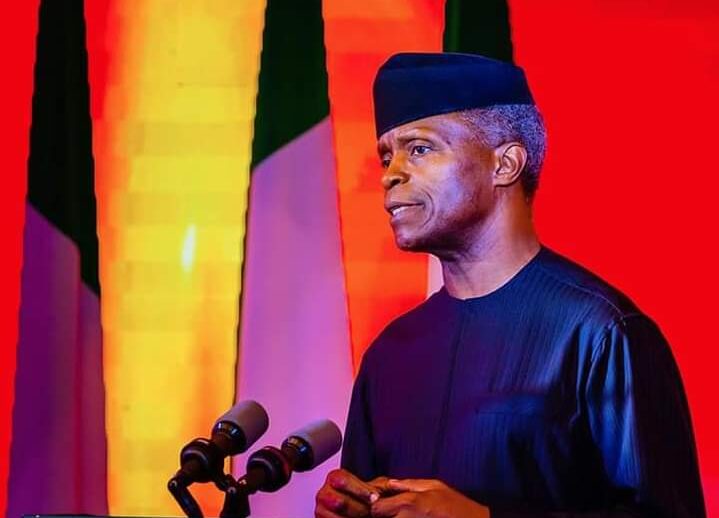
Vice President Yemi Osinbajo has revealed why it is important to put women in positions of power in politics and government.
Osinbajo states his position in a post made today, Friday, September 23, 2022, that reads…
Female representation in leadership positions is an economic imperative. A country that keeps down half of its productive demography is bound to perform sub-optimally.
The issue is not just board representation, it is about representation in politics and government where major decisions affecting lives are made. Perhaps, even more importantly, it is about the education of girls.
The high levels of female illiteracy is dangerous from all possible standpoints. If half your population is uneducated, it means that development and competitiveness in a knowledge-driven world won’t happen or will happen too slowly to be of much use.
Educated women means educated children, and this is the pipeline for women who will become CEOs, legislators, government officials and bureaucrats. Female representation must not be reduced to representation by a few elite women who have the good fortune of education.
There is a much larger fight for the future of a large majority of girls who are not even represented in primary schools. We must talk to State Governors. The States of the Federation control primary and secondary education; they must be engaged in the advocacy and persuasion efforts.
I think a question that always seems to pop-up in conversations on the subject is: Do women do better than men in the same positions, or are men better performers on the job than women? The arguments are often endless but permit to share a story from my time as Attorney General of Lagos State.
Let us also consider these three studies from the Centre for Economic Policy and the World Economic Forum; research from Macquarie Business School by Dr Farida Akhtar, and Deloitte’s 2021 Women in the Boardroom Report.
Nigeria beats the world average by over 3%, which shows clearly positive movement in the male dominated boardrooms. We need to more to increase the number of women’s representation in government positions.