


Business
Insiders Explain Why MTN Needs To Quickly Return Airtime Lending Services
prompted industry insiders to discuss why the market leader’s return is now essential

The formal decision by the Federal Competition and Consumer Protection Commission (FCCPC) to suspend the enforcement of its controversial Digital, Electronic, Online or Non-Traditional Consumer Lending (DEON) Regulations 2025 has been widely welcomed as a victory for the rule of law and regulatory order.
In an official statement that brought immediate calm to Nigeria’s telecommunications sector, the Commission’s Director of Corporate Affairs, Ondaje Ijagwu, declared that as a law-abiding institution, the agency was halting its enforcement “in deference and in obedience to the rule of law”.
This compliance with the interim injunction issued on April 15, 2026, by Justice Ambrose Lewis-Allagoa of the Federal High Court in Lagos opened the door for Airtel Nigeria and Globacom to quickly restore their emergency airtime lending services.
By May 25, 2026, features such as Airtel’s “Extra Credit” and Globacom’s “Borrow Me Credit” were fully active once more via the unified USSD code *303#.
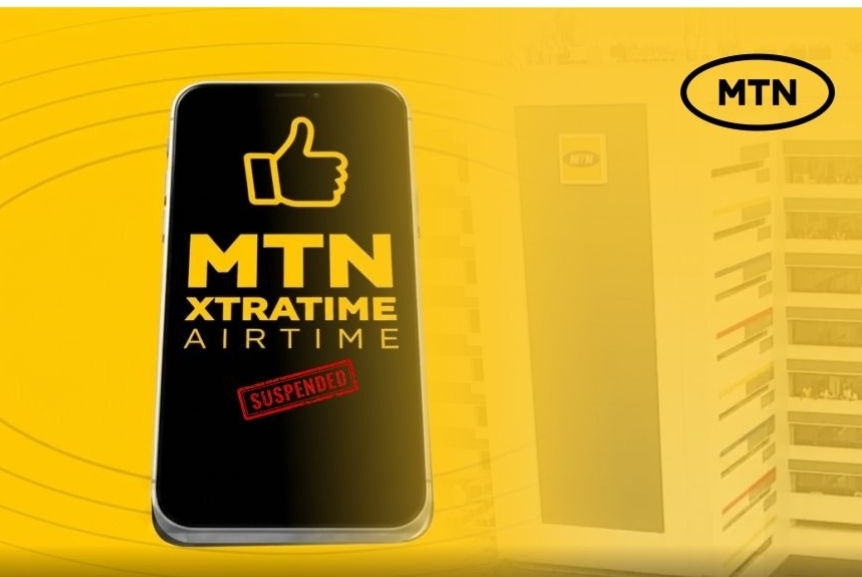
Yet, on Nigeria’s largest telecommunications network, the prompts for MTN’s XtraTime remain offline.
This continued absence has prompted industry insiders to discuss why the market leader’s return is now essential, especially as the current operating environment has become significantly safer and more stable.
As the dominant force in the Nigerian telecommunications landscape, MTN anchors a massive portion of the nation’s 185 million mobile lines.
Insiders point out that while Airtel and Globacom’s rapid reactivation of services has provided immediate micro-liquidity to their respective bases, the overall recovery of the informal economy remains incomplete without MTN.
Across the country, the annual airtime and data lending market is estimated to process over ₦400 billion, with some broader transaction estimates climbing as high as ₦1.2 trillion.
MTN’s subscriber base represents the single largest share of this transaction volume.
For the estimated 40 million lower-income prepaid subscribers—consisting of petty traders, dispatch riders, artisans, and small business owners—short-term airtime advances act as critical working capital infrastructure.
When a dispatch rider cannot access MTN’s XtraTime to confirm a delivery address or a commodity trader cannot borrow airtime to secure wholesale prices during cash shortages, the friction is felt immediately across the entire informal retail supply chain.
Market analysts insist that because MTN is the central pillar of Nigeria’s digital services sector, the full economic recovery of these vulnerable populations depends heavily on the operator restoring its lending services.
Understandably, MTN’s continued hesitation has been guided by a cautious, and responsible corporate governance strategy designed to protect its massive stakeholder network from severe regulatory risk, check revealed.
Under the provisions of the contested DEON Regulations, any digital lending operator found in breach of compliance guidelines faces severe administrative penalties, including fines of up to ₦100 million or a staggering one percent of its annual turnover.
For a multinational corporate entity of MTN’s scale, a one percent turnover penalty represents a multi-billion naira exposure.
Prudent risk management dictated that MTN step back when the enforcement environment became highly unpredictable.
This caution was further justified by the commercial weight of the product; in the first nine months of 2025 alone, MTN’s fintech arm pulled in over ₦131 billion, driven largely by XtraTime.
Leaving such a vital commercial segment vulnerable to an unresolved regulatory conflict was a risk the board could not take.
MTN Nigeria’s Chief Corporate Services and Sustainability Officer, Tobechukwu Okigbo, previously clarified that the operator is treading carefully, stating that MTN would require either a court ruling that sets aside the regulations, or a clear, formal directive instructing them to reinstate the service.
However, industry analysts and legal experts point out that the operating landscape has now shifted and is demonstrably safer for MTN to resume its services.
The Lagos Federal High Court’s interim injunction in Suit No: FHC/L/CS/760/2026 remains in full, undisputed force, legally shielding operators and value-added service providers from any punitive actions by the FCCPC.
Furthermore, the legal environment has stabilized significantly; the initial judicial friction has eased, and the contempt proceedings (Form 49) previously initiated against FCCPC Executive Vice Chairman Tunji Bello have been amicably resolved and struck out in court.
With the FCCPC formally complying with the court order on May 22, 2026, and the substantive suit adjourned for final judgment on July 20, 2026, the threat of arbitrary sanctions or turnover-based fines has been legally neutralized for the foreseeable future.
Additionally, the Presidential Enabling Business Environment Council (PEBEC) directive of April 6, 2026, which instructs all government agencies to suspend regulatory changes that bypassed the mandatory Regulatory Impact Analysis (RIA) framework, remains a powerful administrative safeguard for operators.
With these legal and administrative safety nets firmly in place, the path is now clear for MTN to match the responsiveness of its peers, Airtel and Globacom, and restore its vital emergency lending channels.
While MTN’s initial decision to pause XtraTime was a masterclass in corporate prudence and regulatory compliance, the prolonged absence of the service on the nation’s largest network now risks causing avoidable economic strain on its subscribers.
In an environment where a 15.4 percent national inflation rate has squeezed household purchasing power, emergency airtime credit is widely viewed by consumers as a critical survival mechanism rather than a commercial luxury.
By stepping back into the market under the protection of the existing court orders, MTN can fulfill its critical role as an economic enabler for 40 million Nigerians while maintaining its status as a highly responsible, law-abiding corporate citizen.
Industry stakeholders remain confident that as technical processes are perfected, the telecom leader will soon bridge this gap, restoring temporary calm and critical micro-liquidity to the nation’s digital ecosystem.