


Business
How Zenith Bank Stands As CBN Ends Business-Relief Forbearance
the new measures have sparked discussions across boardrooms


Zenith Bank has emerged as one of the most strategically positioned institutions to sustain its leadership status, as the Central Bank of Nigeria (CBN) winds down the business relief and regulatory forbearance measures extended to banks during Nigeria’s economic recalibration phase.
The apex bank’s latest directive, issued June 13, 2025, introduces temporary restrictions on dividend payments, bonuses, and foreign investments for a select group of banks still under regulatory forbearance.
The move, according to the CBN, is part of a sequenced strategy to implement the banking sector recapitalisation announced in 2023.
While the new measures have sparked discussions across boardrooms, financial analysts say Zenith Bank’s solid fundamentals place it well above concern.
Zenith Bank’s strength lies in numbers. With over ₦1.3 trillion in post-provision profits recorded in 2024 and first-quarter 2025 gross earnings nearing ₦1 trillion, the bank is on course to surpass ₦2 trillion in earnings by mid-year — more than enough to absorb its estimated ₦1 trillion exposure under regulatory forbearance.
“This is a bank that has operated with a strong balance sheet philosophy long before this current policy shift,” one analyst at a Lagos-based investment firm asserts. “Zenith has maintained the highest Tier 1 capital for over sixteen years and has shown it can navigate even tighter regulatory cycles without losing steam.”
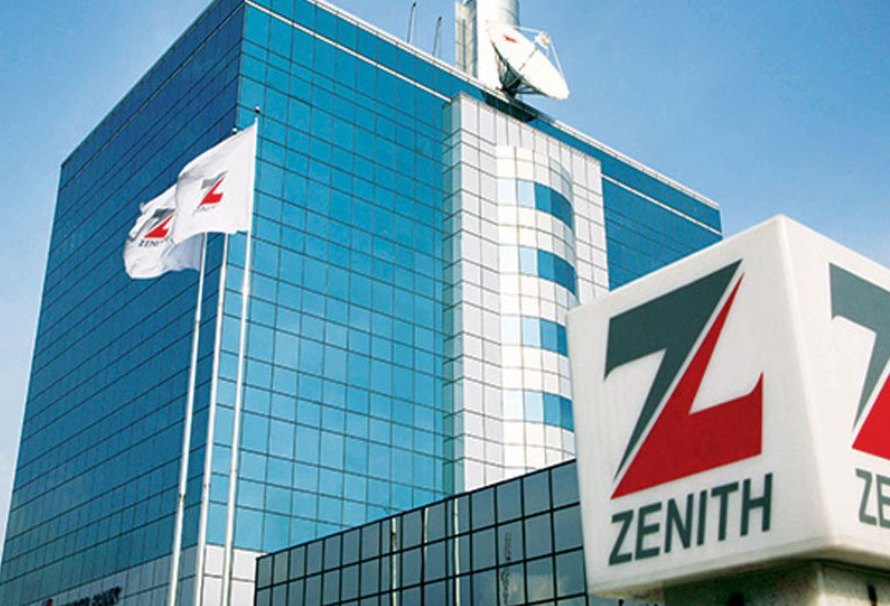
Indeed, the bank’s earnings power allows it to clear forbearance obligations within a single financial year, while still retaining sufficient capital buffers — a key requirement under the ongoing recapitalisation roadmap that runs until March 2026.
The CBN has clarified that the forbearance wind-down is targeted and temporary, affecting only a small number of banks that are still transitioning from earlier pandemic-era support measures. Most banks, the regulator says, are already on track to meet the new capital thresholds well before the 2026 deadline.
Still, the apex bank has also assured affected institutions of time-bound flexibility consistent with global best practices. Similar measures were adopted in Europe and the United States during their respective post-crisis regulatory cycles.
“Nigeria’s banks are operating under more stringent capital rules than the global Basel III minimums,” said Hakama Sidi Ali, acting director of corporate communications at the CBN. “These new steps are standard supervisory tools designed to ensure a resilient financial system.”
Zenith Bank’s consistent placement among the top 1,000 global banks for fifteen consecutive years speaks to its alignment with international standards in governance, capital planning, and risk management.
This global recognition, observers say, will be key as the bank continues to attract capital and partnerships beyond Nigeria’s borders.
Though the new CBN measures temporarily affect dividend distribution for banks under forbearance, Zenith Bank’s long-standing track record of cash generation and conservative capital management suggests a quick return to normal policy once regulatory milestones are met.
The bank has sustained an uninterrupted dividend payment tradition for years, a reflection of both strong earnings and confidence in its operating model.
“Zenith’s management has historically prioritised shareholder value while maintaining prudent capital buffers,” said a source close to the institution. “That balance gives the bank strategic flexibility that’s hard to match.”
The underlying assets tied to forbearance exposures are also beginning to recover. According to analysts, as these assets regain value and begin yielding returns, Zenith Bank stands to benefit from additional earnings boosts that will further reinforce its capital position.
Within the FUGAZ banking group — First Bank, UBA, GTBank, Access Bank, and Zenith Bank — the Dame Adaora Umeoji led institution is widely regarded as a model for how to lead through regulatory evolution.
With systemically important status, deep market presence, and robust digital infrastructure, Zenith continues to serve as a stabilising force in Nigeria’s financial ecosystem.
Its extensive investment in tech upgrades from late 2024 into 2025 – since Umeoji took over as Chief Executive Officer and Managing Director- has also positioned the bank for greater efficiency and service delivery, enhancing its competitive edge even as industry-wide regulatory reforms take shape.
As the CBN continues its deliberate implementation of sector reforms, Zenith Bank’s solid capital base, disciplined risk management, and exceptional profitability profile provide strong assurances of its capacity to thrive through this transition.
With the regulatory environment becoming more predictable and globally aligned, Zenith Bank is expected to not only weather the current adjustments but emerge even stronger — reinforcing its place as one of Nigeria’s most formidable financial institutions.


