

Politics
Half Quotes, Half Truths – Presidential Aide Ogra Punctures Obi’s Resignation Claims, Reels Tinubu’s Gains
“It is now clear that Mr Obi does not want Nigerians to vote”

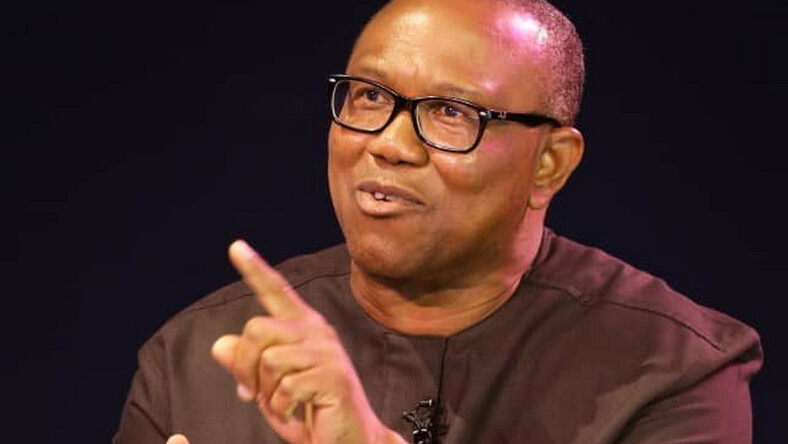
Presidential aide O’tega Ogra has dismissed presidential candidate of the Nigeria Democratic Congress (NDC), Peter Obi’s call for President Bola Tinubu to resign over the country’s electricity challenges, accusing the former Anambra State governor of relying on “half quotes and half truths” while ignoring ongoing reforms and measurable gains recorded in the power sector.
In a detailed response to Obi’s remarks, Ogra explained that the resignation demand was built on an incomplete representation of President Tinubu’s earlier comments on electricity and accountability, insisting that a crucial portion of the President’s statement had been omitted.
Ogra pointed out that, Obi cited only part of Tinubu’s remarks while leaving out a qualifying clause that provided the context for the President’s pledge.
Quoting Tinubu, Ogra said: “Whichever way, by all means necessary, you must have electricity, and you will not pay for estimated bills anymore. A promise made will be a promise kept. If I don’t keep the promise and come back for a second term, unless I give you adequate reasons why I couldn’t deliver.”

Ogra, who is the senior special assistant to the president on digital communications, explained that the phrase, “unless I give you adequate reasons why I couldn’t deliver,” fundamentally altered the meaning of the statement and undermined the basis of Obi’s argument.
“Read that again. ‘Unless I give you adequate reasons why I couldn’t deliver.’ Mr Obi removed that clause, and he had to, because including it would have collapsed his entire argument,” Ogra stressed.
He maintained that the President’s statement was not an unconditional commitment requiring resignation in the event of unmet targets, but rather an invitation for Nigerians to assess his performance at the appropriate time through the electoral process.
“President Tinubu submitted himself to the judgment of the electorate by saying, judge me on the full picture, and if I fall short, vote accordingly. That is a conditional statement. It places the accountability where it belongs, with the electorate, at the ballot box, in 2027,” he emphasized.
Rejecting Obi’s call for the President to step down, Ogra said democratic systems provide constitutional mechanisms through which elected leaders are held accountable, arguing that voters ultimately reserve the right to determine whether an administration deserves another term.
“It is now clear that Mr Obi does not want Nigerians to vote. His poor advice is to skip the vote entirely and demand a resignation. One man is trusting the electorate. The other is trying to bypass them,” he declared.

Ogra also faulted Obi’s comparison of Tinubu’s situation with that of British Prime Minister Keir Starmer, arguing that the United Kingdom operates a parliamentary system while Nigeria runs a presidential system under which leaders derive their mandate directly from voters.
“Mr Obi contested under this very system three years ago. He knows the difference. Did he forget how it works, or does the Constitution only apply when the results go his way?” he queried.
The presidential aide further argued that Obi’s political history reflected a pattern of relying on judicial interventions rather than electoral outcomes, citing his prolonged legal battles following the 2003 Anambra governorship election, his reinstatement after impeachment, and subsequent court victories that returned him to office.
Ogra insisted that, Obi’s victory in the 2010 Anambra governorship election remains the only major election he won outright at the ballot box over the last two decades.
He also referenced Obi’s emergence as vice-presidential candidate in 2019 and presidential candidate in 2023, contending that both tickets came through political arrangements rather than fiercely contested primary elections.
“So when he writes that the President should resign rather than face the electorate, it is not a mystery. Mr Obi does not know what it takes to get on a ticket and win without circumventing the process. What he wants, as always, is a shortcut, and this resignation call is his latest attempt to bypass the democratic process,” Ogra said.
Having challenged what he described as the faulty premise of Obi’s resignation demand, Ogra turned to the substance of the criticism regarding electricity, insisting that the Tinubu administration has made significant progress despite acknowledging that the country’s power challenges have not been fully resolved.
He described the Electricity Act 2023 as the most significant reform of Nigeria’s power sector in two decades, noting that for the first time states now have the authority to generate and distribute electricity independently.
According to him, the legislation dismantled a long-standing centralised bottleneck that previous administrations had left untouched.
Ogra said the national metering ratio has increased from 44 per cent to 57 per cent, while 1.5 million meters have been deployed across distribution company networks within two years.
He added that $700 million has been secured for the deployment of five million smart meters, while 110,000 distribution transformer meters have been installed under the Presidential Metering Initiative.
The presidential aide further highlighted the administration’s N4 trillion bond programme designed to resolve legacy debts that have weighed on the power sector for years.
He noted that N3.48 trillion has already been negotiated as a full and final settlement, while the first N501 billion series was fully subscribed and most generation companies have signed agreements covering about N2.3 trillion.
Ogra also provided insight into the administration’s tariff reforms, stating that 45 per cent of the electricity market is now on cost-reflective tariffs with customers receiving up to 20 hours of electricity daily under Band A.
He added that the remaining 55 per cent of consumers are being accommodated through a redesigned subsidy structure targeted at vulnerable Nigerians.
Ogra asserted that the reforms have already generated savings of N1.2 trillion, with actual expenditure standing at N1.8 trillion compared to a projected N3 trillion without the tariff adjustments.
On electricity generation, he said Nigeria recorded a peak generation of 6,003 megawatts in March 2025, which he described as the highest ever achieved in the country’s history.
The presidential aide further disclosed that more than N287 billion has been committed through the Midstream and Downstream Gas Infrastructure Fund to support 12 gas processing plants across eight states with a combined processing capacity of 381 MMSCFD.
The projects, he said, are aimed at strengthening the infrastructure required to sustain increased power generation over the long term.
“None of the above is hidden. All of it is on the public record,” Ogra said.
He accused Obi of overlooking ongoing developments in the sector while focusing on arguments that failed to acknowledge the scale of reforms underway.
“If Peter Obi would take his time to follow the actual progress happening in his country rather than comparing parliamentary systems that do not apply here, he would know this. But following progress requires engaging with detail, and Mr Obi has never been interested in detail that does not fit a headline,” he said.
Ogra maintained that while criticism remains an important feature of democratic engagement, public debate should be anchored on complete facts and accurate representations of public statements.
“The only thing that should not be manufactured is a quote,” he said, adding that the administration remains focused on implementing reforms and delivering on its promises to Nigerians.