

Politics
Expectations As Strategist Nentawe Yilwatda Becomes New APC National Chairman
followed a unanimous decision by the party’s National Executive Committee

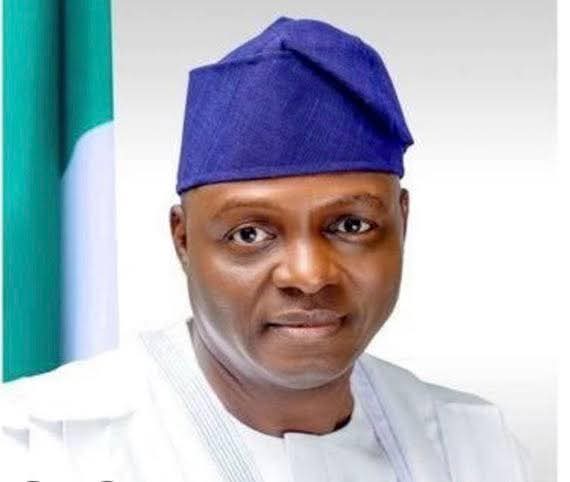
Professor Nentawe Goshwe Yilwatda, Nigeria’s Minister of Humanitarian Affairs and Poverty Reduction, has been elected the new National Chairman of the All Progressives Congress (APC).
His emergence followed a unanimous decision by the party’s National Executive Committee on Thursday, marking a significant leadership shift within the ruling party.
He succeeds Abdullahi Ganduje, who resigned to attend to what party insiders described as “crucial private matters.”
Yilwatda’s appointment represents a pivot towards technocratic leadership in the APC, and for many within and outside the party, it signals an intent to recalibrate the party’s internal management and national appeal ahead of the 2027 elections.
Born on 8 August 1968 in Dungung, Kanke Local Government Area of Plateau State, Yilwatda is a professor of Electronic and Computer Engineering with a career that spans academia, electoral reform, governance, and development work.
His academic journey took him through the Federal University of Agriculture, Makurdi; the Abubakar Tafawa Balewa University (ATBU), Bauchi; and the University of Nigeria, Nsukka, where he earned a PhD.
A former director of ICT at the Federal University of Agriculture, Makurdi, where he served for over two decades, Yilwatda is credited with introducing sweeping digital reforms that automated major administrative processes.
His efforts earned him multiple commendations, including recognition as Best Staff of the Year and Best Director of the Year.
His transition from academia into governance came through consultancy roles with global development institutions such as the European Union, UNICEF, the World Bank, and TECHVILE USA. His focus on using technology to improve systems has long underpinned his professional and public service ethos.
Yilwatda’s national profile rose significantly in 2017 when he was appointed as a Resident Electoral Commissioner at the Independent National Electoral Commission (INEC).
There, he was at the forefront of key policy interventions, including frameworks for the participation of Internally Displaced Persons (IDPs) and Persons With Disabilities (PWDs) in elections, as well as the deepening of technology in electoral processes. He resigned from INEC in 2021 to enter partisan politics, contesting as the APC’s governorship candidate in Plateau State.
During the 2023 general elections, Yilwatda served as the Plateau State Coordinator for the Tinubu/Shettima Presidential Campaign Organisation, a role that further embedded him in the party’s political machinery.
As Minister of Humanitarian Affairs and Poverty Reduction, he has led interventions aimed at reducing extreme poverty, expanding social safety nets, and strengthening humanitarian response mechanisms.
He also sits on the Presidential Economic Management Team and chairs the Euro-African Dialogue on Migration and Development.
Described by allies as meticulous and quietly effective, Yilwatda is seen by many as a bridge between Nigeria’s traditional political class and its emerging technocratic generation.
His capacity to navigate both policy and politics is widely considered an asset, particularly at a time when the APC faces internal discontent, growing opposition, and the challenge of delivering on its national mandate.
As APC chairman, he will be expected to steady the party’s leadership, harmonise its often fractious state chapters, and rebuild public confidence in its national direction. In doing so, Yilwatda brings not only his intellect and networks, but also a track record of institutional reform and a reputation for inclusive governance.
Whether these qualities will be sufficient to reposition the APC in the minds of Nigerians remains to be seen. But what is clear is that, for the first time in a while, the party has turned to a leader with roots in both the laboratory and the campaign trail — a technocrat with a political compass.
