

Society
Backed By Jigawa Data, Nigeria’s Education Reform Earns Global Recognition
they were real numbers, collected daily, showing what is happening

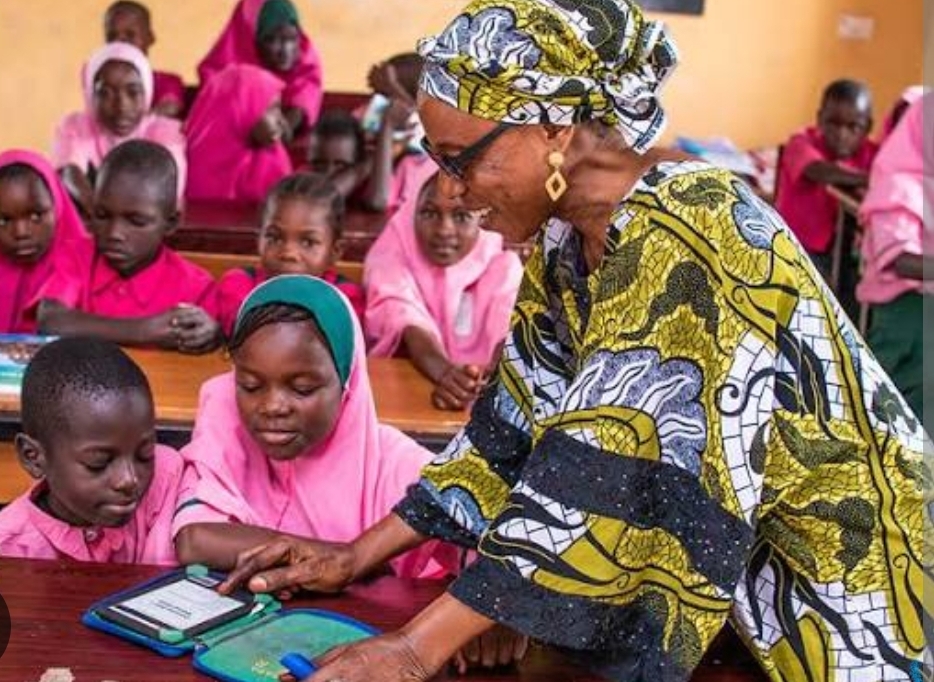
There is a quiet but significant shift happening in Nigeria’s education sector, one that cannot be captured in speeches or policy papers alone.
The proof, as O’tega Ogra, Senior Special Adviser to President Bola Ahmed Tinubu on Digital Engagement, Strategy, and New Media, notes, is in the data.
Last week in San Francisco, at the Comparative and International Education Society conference, classroom-level data from Jigawa State was presented to a global audience.
These were not projections or modeled estimates; they were real numbers, collected daily, showing what is happening inside a functioning public school system.
Attendance, teacher deployment, and classroom activity were all tracked under a digitalised system, giving a level of precision rarely seen in Nigeria’s education reporting.
“What was presented was not a model or an estimate. It was a record of what is happening inside a functioning public system, and it carried weight,” Ogra said, underscoring the distinction between data-driven evidence and conventional policy reporting.
At the heart of this recognition is the JigawaUNITE foundational learning programme.
Within roughly 150 days of implementation, 95 previously understaffed schools were fully staffed—not by hiring new teachers, but by reorganising existing personnel under a digital framework. The pupil-teacher ratio fell from 114:1 to 70:1, while daily attendance nearly doubled from 39 per cent to 77 per cent.
“This shows that reform is not always about new resources, but about using what already exists more efficiently. It is about discipline, execution, and applying data intelligently,” the senior presidential aide explained, highlighting what he sees as the real shift in Nigeria’s education system.
For years, Nigeria has produced policies intended to transform education, yet execution has often lagged. The challenge has never been ideas, but the ability to make those ideas function in classrooms.
The Jigawa example signals that change is possible when systems are reorganised and monitored effectively.
At the federal level, measurable outcomes, foundational learning, and teacher quality are regaining focus. The Minister of Education, Dr. Maruf Tunji Alausa, has emphasised that teaching must align with learning outcomes, while the Universal Basic Education Commission continues to drive interventions aimed at school improvement, insisting that reform must remain system-led.
“There is a growing alignment around foundational skills and data-driven approaches. States are taking ownership, and that makes all the difference,” Ogra said, reflecting on the evolving federal-state dynamics in education reform.
Fiscal reforms under President Tinubu have also expanded allocations to subnational governments, giving states room to act. In Nigeria’s federal system, this matters.
Education is delivered in schools, not in Abuja.
“The classrooms are in the states. What Jigawa demonstrates is what becomes possible when states have resources and the tools to act,” the top aide pointed out.
Jigawa is not alone. In Kwara, teaching is being aligned with students’ actual learning levels. In Lagos and Edo, structured pedagogy and close monitoring are improving consistency.
Across the ecosystem, states, federal bodies, and delivery partners like NewGlobe are pushing at the same question: how do children actually learn better?
“If we use the right tools, provide training, and act on data, foundational learning outcomes can improve at scale. The real risk is delay—allowing learning gaps to become permanent,” Ogra warned, emphasising the urgency of timely reform.
Despite these gains, challenges remain. Nigeria continues to carry one of the largest out-of-school populations in the world, and learning gaps persist.
Progress in one state does not resolve a national crisis, but it does demonstrate that movement is possible.
“Reform does not always require something new. Sometimes it requires using what already exists more honestly and efficiently,” he said.
The timing is also significant. Lagos State is poised to commission the Tolu Schools Complex in Ajegunle, a 36-school facility spread across nearly 12 hectares, designed to accommodate over 20,000 students.
While Jigawa demonstrates structure and efficiency, Lagos is delivering scale and capacity. True progress emerges where both meet: when what is built works effectively, and when enough can be built to reach thousands of learners.
For once, the story of Nigeria’s education reform is not being explained from the outside. It is being measured from within classrooms, tracked by data, and presented on a global stage—and, Ogra says, it is earning the recognition that years of policy alone could not.