

Politics
Why APC May Struggle In Ogun East Without Gbenga Daniel
To many analysts, the comparison illustrates why Ogun East occupies such a strategic place

The All Progressives Congress (APC) has settled one of its biggest internal contests ahead of the 2027 general election with Governor Dapo Abiodun emerging as the party’s candidate for the Ogun East Senatorial District.
But while the primary has produced a winner, political observers say it has also exposed a deeper question that could shape the party’s fortunes in one of its most important strongholds: can the APC retain its dominance in Ogun East without the full backing of Senator Gbenga Daniel’s political structure?
The question has become more pertinent following the bruising primary contest between Abiodun and Daniel, who sought a second term in the Senate, and the subsequent circulation of a leaked audio purportedly involving the former governor and Kensington Adebutu, the wealthy father of PDP gubernatorial candidate Oladipupo Adebutu.
While the recording has generated intense political debate, Daniel’s supporters insist it was invented.
The authenticity of the audio has not been independently verified.
What is beyond dispute, however, is Daniel’s political standing.
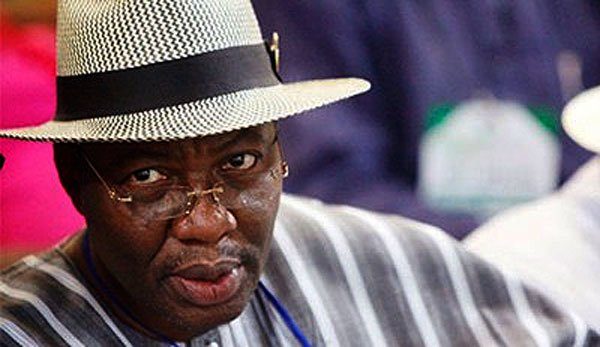
A two-term governor and the outgoing senator representing Ogun East, Daniel remains one of the most influential political figures in Ogun State.
Alongside Governor Abiodun, Senator Solomon Olamilekan Adeola (Yayi), the APC’s governorship candidate, former Governor Ibikunle Amosun and PDP leader Oladipupo Adebutu, Daniel belongs to the small circle of politicians whose structures have consistently shaped electoral outcomes across the state.
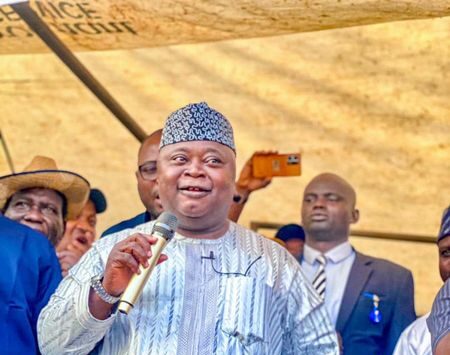
Yet, unlike many former governors whose influence diminishes after leaving office, Daniel has sustained a formidable grassroots organisation through the BATOGD political movement, with loyalists spread across the nine local government areas of Ogun East.
Over the years, the structure has evolved into one of the APC’s strongest mobilisation platforms in the senatorial district, anchored on decades of political relationships, community engagement and party organisation.
The scale of Daniel’s influence was reflected in the 2023 National Assembly election.
He won the Ogun East Senatorial seat with a record-breaking 115,147 votes—the highest ever recorded by a senatorial candidate in the district—defeating his closest challenger, who polled 58,708 votes.
More significantly, he swept all nine local government areas: Ijebu North, Ijebu North-East, Ijebu East, Ijebu Ode, Odogbolu, Sagamu, Remo North, Ikenne and Ogun Waterside. His victory was never challenged before an election tribunal, underscoring the strength of his mandate.
Those figures become even more significant when juxtaposed with the outcome of the 2023 governorship election. Governor Abiodun secured re-election with 276,298 votes against Adebutu’s 262,383 votes—a statewide margin of just 13,915 votes, or about 2.2 percentage points.
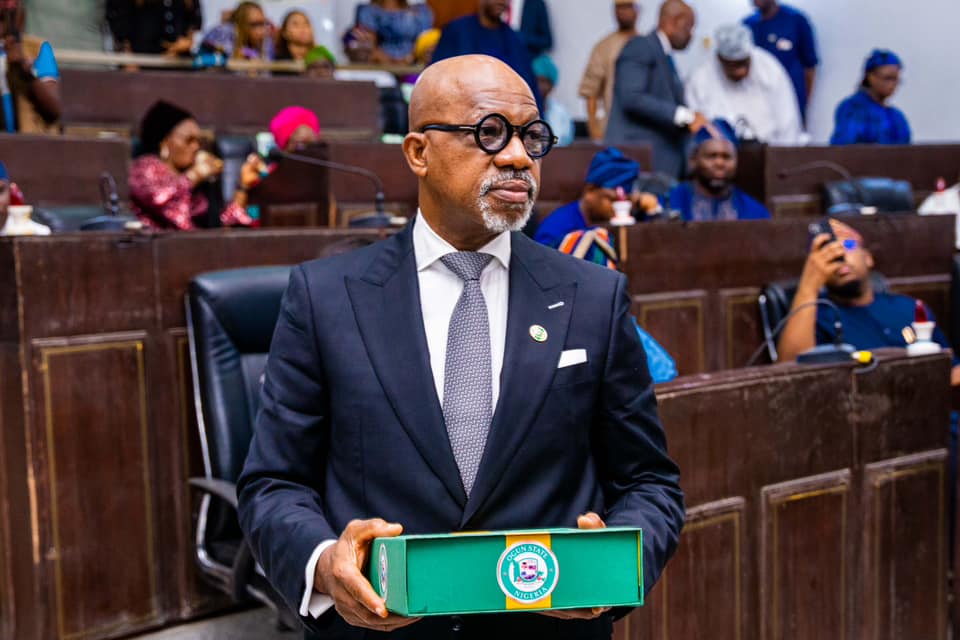
To many analysts, the comparison illustrates why Ogun East occupies such a strategic place in Ogun’s political equation.
While Abiodun won the governorship, Daniel demonstrated overwhelming dominance in the senatorial district, delivering victories across every local government area and reinforcing his reputation as one of the APC’s most dependable vote mobilisers.
It is this political capital that has made the aftermath of the APC primary a subject of close attention.
Although Abiodun has now secured the party’s ticket for Ogun East, the contest left visible cracks within the APC in the district. Some party members believe reconciliation will be essential to prevent disaffection among Daniel’s supporters, many of whom have remained with his political movement for years.
The leaked audio controversy has further complicated the atmosphere. Regardless of the competing claims over its authenticity, the episode has deepened political speculation and heightened tensions at a time when the party is expected to consolidate support ahead of the general election.
For the APC, the challenge extends beyond replacing one candidate with another. It is about preserving one of the party’s most valuable electoral coalitions.
Political parties in Ogun have historically relied as much on influential grassroots structures as on official party platforms.

Daniel’s organisation is widely regarded as one of the state’s most effective political machines, with deep roots across Ijebu and Remo communities and longstanding relationships within the APC that predate the current administration.
Many observers therefore argue that while the APC has settled its senatorial ticket, it cannot afford to lose the confidence and mobilisation capacity of Daniel’s political base.
The experience of the 2023 governorship election, decided by fewer than 14,000 votes, serves as a reminder that internal unity can be just as decisive as opposition strength.
As the countdown to the 2027 general election begins, the APC’s ability to heal the divisions created by a fiercely contested primary and ensure that Daniel’s extensive grassroots network remains invested in the party’s success may ultimately determine whether it retains its dominance in Ogun East—or hands the opposition an opening in one of its most critical electoral battlegrounds.