

Society
Nigerian Army Boosts Legal Capacity For Effective Operations
matched by stronger institutional mechanisms

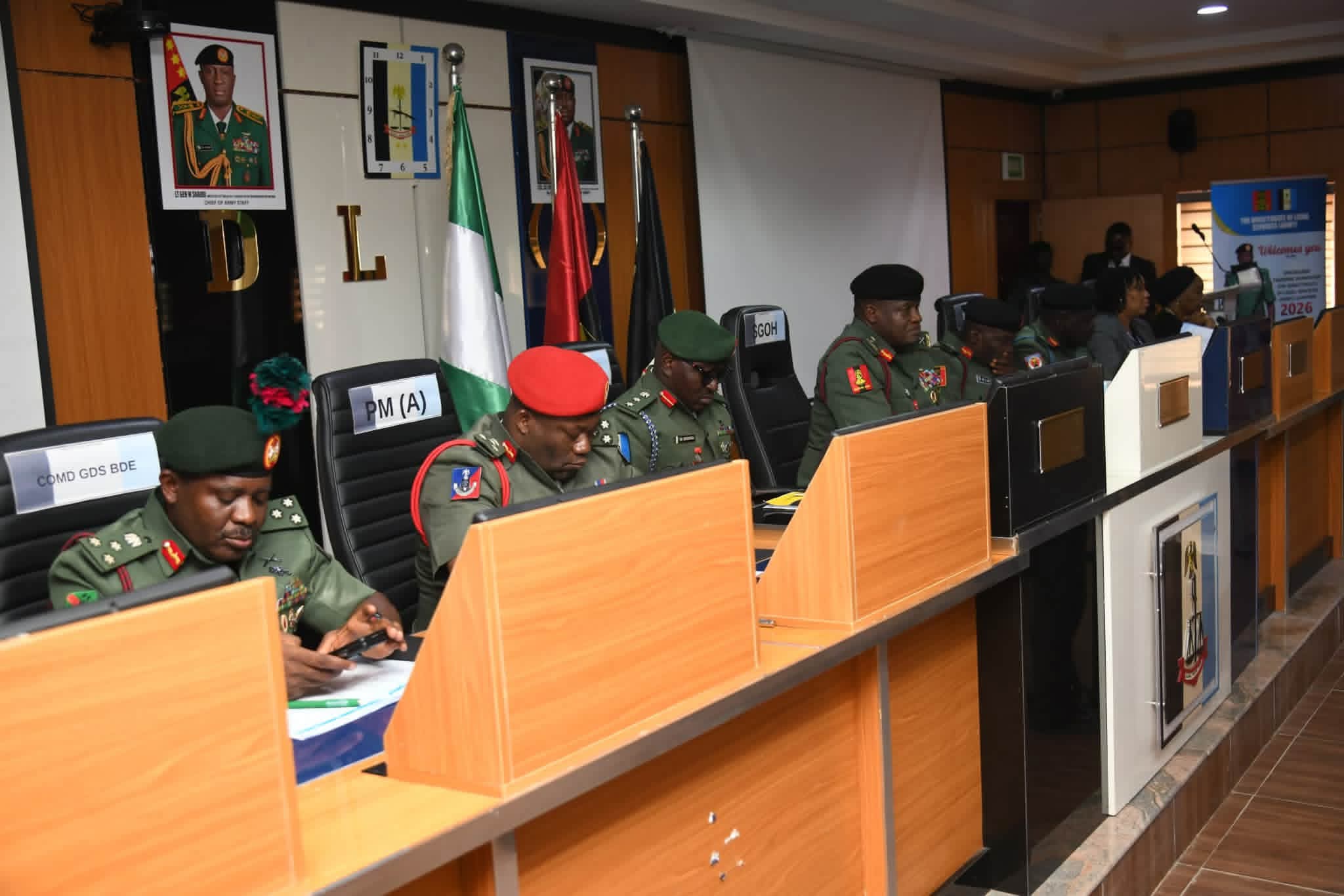
The Chief of Army Staff (COAS), Lieutenant General Waidi Shaibu, has charged Nigerian Army legal practitioners to strengthen their capacity to provide timely and operationally relevant legal advice to commanders, stressing that the ongoing expansion of the Nigerian Army must be matched by stronger institutional mechanisms for compliance with International Humanitarian Law (IHL), human rights and military justice.
The COAS gave the charge on Tuesday, 6 October 2026, while declaring open a specialised training workshop for officers of the Directorate of Legal Services (Army) in Abuja. He noted that as the Nigerian Army expands its force structure, operationalises new formations and units, and extends its presence to emerging security flashpoints across the country, the responsibilities of commanders and their legal advisers have equally become broader and more complex.
Represented by the Chief of Administration (Army), Major General Isa Abdullahi, Lieutenant General Shaibu stated that the increasingly complex and fluid nature of contemporary security operations requires commanders at all levels to have access to sound, timely and practical legal advice. He emphasised that the Army’s expansion is not merely about increasing formations, units and personnel, but also about strengthening the professional, administrative and institutional frameworks required to sustain an effective, disciplined and accountable force.
The COAS explained that the workshop, themed “The Role of Legal Officers in Advising Commanders on Compliance with International Humanitarian Law and Military Justice System,” was designed to enhance the capacity of legal officers to advise commanders on civilian harm mitigation, protection of medical personnel and facilities, emerging technologies, artificial intelligence, autonomous weapon systems and other evolving dimensions of modern warfare.
He stressed that adherence to the principles of military necessity, humanity, distinction, proportionality and precaution remains essential to achieving military objectives while protecting civilians and preserving the legitimacy and public confidence necessary for sustained military operations.
Lieutenant General Shaibu further stated that as newly established formations and units become operational across the country, legal officers must be adequately prepared to support commanders at the strategic, operational and tactical levels. He noted that effective legal support would enable commanders to translate constitutional provisions, applicable international law, statutory military frameworks and Rules of Engagement into lawful and decisive actions in increasingly complex operational environments.
According to the COAS, military lawyers have the dual responsibility of safeguarding discipline within the force and ensuring that the application of military power remains firmly anchored on the rule of law. He added that strengthening the legal capacity of the Army therefore constitutes an important component of the broader transformation and expansion of the Nigerian Army into a more professional, adaptable, combat-ready and resilient force.
Earlier, the Acting Director of Legal Services (Army), Colonel Samson Okebukola, explained that the training would enhance the ability of legal officers to understand operational realities and provide commanders with appropriate legal guidance on the application of IHL and during military support to civil authorities.
He stated that the Nigerian Army’s commitment to lawful operations is reflected in its adherence to IHL principles in Operation HADIN KAI and the protection of fundamental rights guaranteed under Chapter Four of the 1999 Constitution of the Federal Republic of Nigeria (as amended) during internal security operations, including Operation FANSAN YAMMA.
Colonel Okebukola described military legal officers as “soldier-jurists” who carry the rule of law into the operational environment by integrating legal considerations into operational planning, execution, discipline and accountability. He stressed that fair trial, procedural justice and the disciplined application of force remain indispensable to a credible military justice system and operational legitimacy.
He added that strengthening the professional competence of legal officers, particularly as the Nigerian Army expands its formations, units and operational footprint, would enhance commanders’ decision-making, protect civilians and military personnel, reinforce accountability and ultimately strengthen the Army’s capacity to discharge its constitutional responsibilities effectively.
Credit: Appolonia Anele,
Colonel, Acting Director Army Public Relations – 6 October 2026